Blog

  • Local Service Ads for Law Firms: Success in 2026

    Local Service Ads for Law Firms: Success in 2026

    Local Services Ads for Law Firms 2026: Complete Strategy & ROI Tips

    With more people turning to Google for legal help, the way attorneys reach their local communities is rapidly evolving. Local Service Ads offer a powerful option that puts trusted law firms right in front of potential clients at the very moment they are searching for answers.

    Understanding how these ads work can give attorneys a real edge in today’s competitive market.

    What Are Local Service Ads for Law Firms

    Local Service Ads (LSAs) represent a targeted digital marketing solution designed specifically for legal professionals seeking to attract high-intent clients through Google’s search platform. These specialized advertisements appear at the very top of search results, providing law firms with premium visibility when potential clients search for specific legal services in their geographic area.

    Unlike traditional pay-per-click advertising, Local Service Ads help law firms attract new clients with a unique pay-per-lead model. This means attorneys only pay when a potential client actually contacts them through the ad, making it a more cost-effective marketing strategy.

    The ads include a prominent Google Screened badge, which signals to potential clients that the law firm has undergone rigorous background and qualification checks by Google, instantly building credibility and trust.

    The key features of Local Service Ads for law firms include:

    • Prominent placement above organic search results
    • Pay-only-when-contacted pricing model
    • Google Screened verification badge
    • Direct communication channel with potential clients
    • Geographically targeted advertising

    Pro Tip: Optimize your Google Screened profile meticulously, ensuring all professional credentials, licenses, and client reviews are current and comprehensive to maximize your Local Service Ads performance.

    By leveraging Local Service Ads, law firms can strategically position themselves in front of potential clients exactly when they are searching for legal representation, transforming digital marketing from a broad visibility strategy to a precision lead generation tool.

    Here is a summary of what differentiates Local Service Ads from traditional legal advertising options:

    Aspect Local Service Ads Traditional PPC Offline Advertising
    Pricing Model Pay-per-lead Pay-per-click Flat fee or variable
    Placement Top of Google results Below LSAs and organic Billboards, TV, print
    Verification Google Screened badge None Not applicable
    Lead Quality High intent, local Varies by keyword General audience, broad
    Budget Control Weekly adjustability Daily/overall limits Fixed per campaign

    Eligibility and Setup Process for Attorneys

    Navigating the eligibility and setup process for Local Service Ads requires law firms to meet specific professional standards and complete a comprehensive verification process. Law firms must first verify their business credentials through a detailed Google screening procedure that ensures only qualified and reputable attorneys can leverage this advertising platform.

    To be eligible for Local Service Ads, attorneys must satisfy several key requirements:

    • Possess a valid state bar license
    • Maintain active professional insurance
    • Have a clean professional record without significant disciplinary actions
    • Provide comprehensive business documentation
    • Pass Google’s rigorous background check process

    The setup process involves multiple critical steps that attorneys must carefully navigate. Initially, lawyers must create a Google Business Profile with accurate and up-to-date information about their practice. This includes verifying their business address, practice areas, contact details, and professional credentials.

    After initial registration, Google will conduct a thorough background check that examines the attorney’s professional standing, criminal history, and legal credentials.

    Attorney completes Local Service Ads application

    Once approved, attorneys can customize their Local Service Ads by selecting specific practice areas, setting their service radius, and establishing competitive pricing for lead generation. The platform allows lawyers to manage incoming leads, respond to client inquiries, and track the performance of their advertisements in real-time.

    Pro Tip: Meticulously review and update all professional documentation before applying, ensuring every detail matches your current bar registration and professional credentials to expedite the Google Screened verification process.

    Successful implementation of Local Service Ads requires attorneys to view the platform as a strategic marketing tool that demands ongoing management and optimization.

    Key Features and Pay-Per-Lead Model Explained

    Local Service Ads represent a revolutionary approach to legal marketing, with a unique pay-per-lead model that appears prominently at the top of Google search results. Unlike traditional advertising methods, these ads fundamentally transform how law firms attract and engage potential clients by charging only when actual contact is made.

    The key features of Local Service Ads include:

    • Prominent Placement: Positioned above organic search results and standard pay-per-click advertisements
    • Google Screened Badge: A verification symbol that instantly builds trust with potential clients
    • Budget Control: Attorneys can set weekly spending limits tailored to their marketing budget
    • Targeted Reach: Focused on specific geographic areas and practice specialties
    • Performance Tracking: Real-time insights into lead generation and client interactions

    The pay-per-lead model operates on a straightforward principle that benefits law firms by eliminating wasted advertising spend. Instead of paying for clicks that may not convert, attorneys are charged only when a potential client makes direct contact through the ad. This approach ensures that marketing budgets are used more efficiently, with firms paying exclusively for genuine lead opportunities.
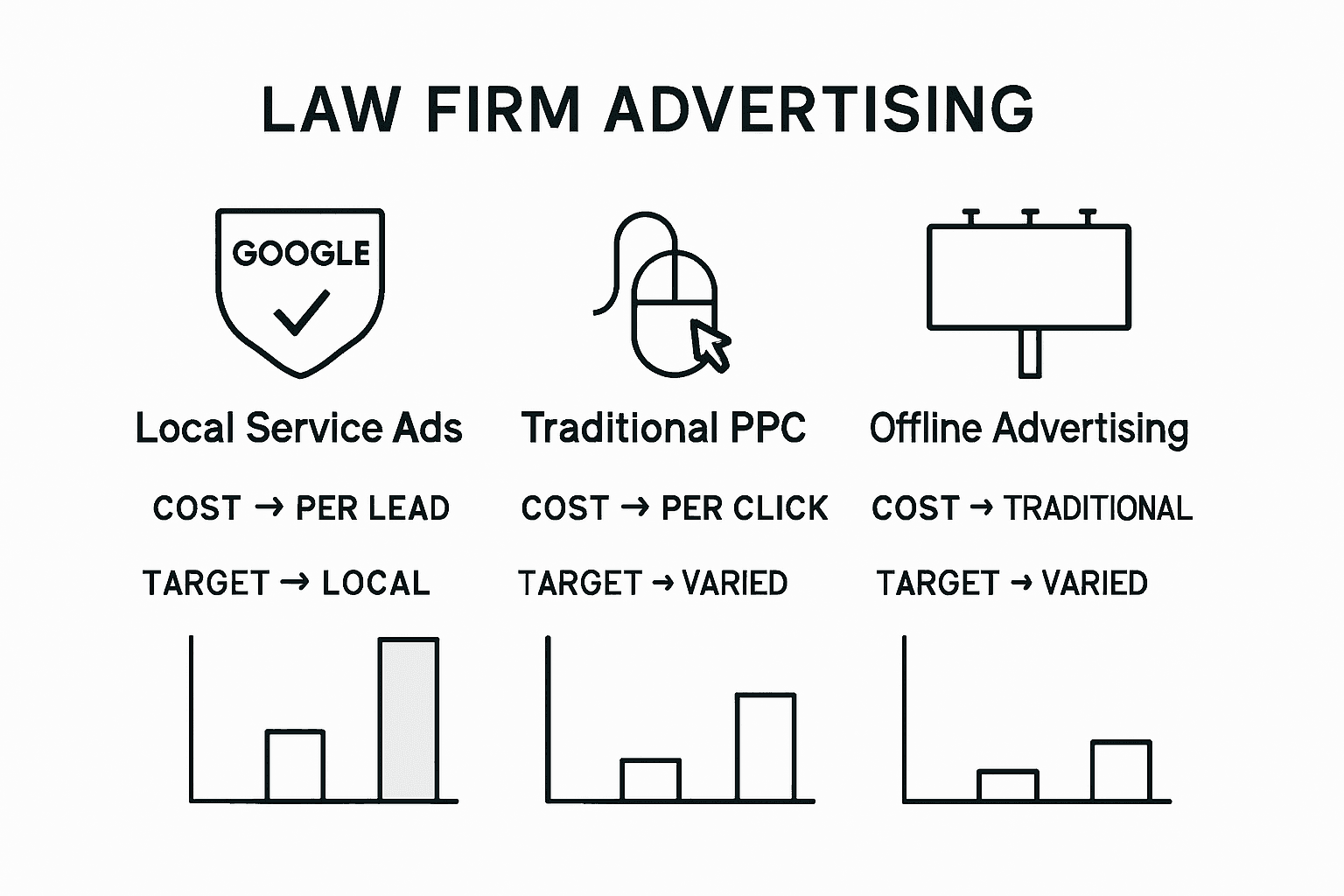
    Infographic compares law firm ad models

    Customization options allow attorneys to fine-tune their Local Service Ads by selecting specific practice areas, defining service radiuses, and setting competitive pricing structures. The platform provides sophisticated lead management tools that enable lawyers to respond quickly to inquiries, track communication effectiveness, and optimize their marketing strategy in real-time.

    Pro Tip: Regularly review and adjust your weekly budget and practice area selections to maximize lead quality and minimize unnecessary spending.

    Successful implementation of Local Service Ads requires a strategic approach that balances targeted marketing with continuous performance optimization.

    Costs, ROI, and Success Rates in 2026

    The financial landscape of Local Service Ads (LSAs) for law firms presents a compelling opportunity for strategic digital marketing in 2026, with projected costs and returns that demonstrate significant potential for legal practices seeking efficient client acquisition. Modern law firms can expect a nuanced pricing model that balances investment with measurable outcomes.

    Cost structures for Local Service Ads typically involve several key financial considerations:

    • Lead Costs: Ranging from $50 to $250 per qualified lead
    • Practice Area Variability: Higher costs for competitive fields like personal injury and criminal defense
    • Geographic Pricing: Metropolitan areas command higher lead prices compared to rural markets
    • Budget Flexibility: Weekly spending limits from $500 to $5,000 depending on firm size
    • Conversion Potential: Estimated 20-40% lead-to-client conversion rates

    Return on Investment (ROI) for Local Service Ads becomes particularly attractive when law firms implement strategic approaches. The pay-per-lead model means attorneys only invest in actual potential client interactions, dramatically reducing wasted marketing expenditures.

    Successful firms are seeing average client acquisition costs drop by 30-50% compared to traditional advertising methods, with specialized practice areas experiencing even more pronounced economic advantages.

    Predictive analytics suggest that by 2026, law firms leveraging Local Service Ads can expect a comprehensive marketing ecosystem that provides granular performance insights. Advanced tracking mechanisms will enable attorneys to understand not just lead generation metrics, but also long-term client value, allowing for unprecedented marketing precision and budget optimization.

    Pro Tip: Develop a tiered budget approach that allocates spending across different practice areas, allowing for dynamic reallocation based on real-time lead quality and conversion performance.

    Successful implementation requires a holistic view of digital marketing that treats Local Service Ads as a strategic investment rather than a standalone advertising channel.

    DIY vs. Agency Management: Pros and Cons

    Law firms face a critical decision when implementing Local Service Ads: whether to manage the platform internally or partner with a specialized digital marketing agency. Both approaches offer unique advantages and challenges that can significantly impact a firm’s marketing effectiveness and lead generation strategy.

    DIY Management Pros and Cons:

    Pros:

    • Lower initial cost
    • Direct control over campaign settings
    • Immediate insights into lead interactions
    • Deeper understanding of marketing processes

    Cons:

    • Steep learning curve
    • Time-consuming campaign optimization
    • Limited expertise in digital advertising nuances
    • Potential for inefficient budget allocation

    Agency management provides a comprehensive solution for law firms seeking sophisticated Local Service Ad strategies. Professional agencies bring specialized expertise, advanced analytics, and dedicated resources that can dramatically improve campaign performance. They understand the intricate algorithms and optimization techniques required to maximize lead quality and minimize wasted advertising spend.

    The financial considerations extend beyond simple cost comparisons. While DIY approaches might seem more cost-effective initially, agencies can often deliver superior results through their specialized knowledge. Experienced marketing professionals can fine-tune targeting, optimize ad copy, and implement advanced tracking mechanisms that individual lawyers might find challenging to execute independently.

    Pro Tip: Conduct a thorough cost-benefit analysis that considers not just monetary expenses, but also the opportunity cost of time spent managing complex digital marketing platforms.

    Ultimately, the choice between DIY and agency management depends on a law firm’s specific resources, technical expertise, and marketing objectives.

    The following table compares managing Local Service Ads yourself to working with an agency:

    Management Approach Expertise Required Time Investment Optimization Potential Typical Cost Structure
    DIY (In-house) Advanced digital marketing knowledge High, ongoing May be limited by experience Software, in-house labor
    Agency Specialized legal marketing skills Low for the firm Advanced targeting & analytics Monthly retainer + ad spend

    Elevate Your Law Firm’s Success with Expert Local Service Ads Management

    Navigating the complexities of Local Service Ads in 2026 can be challenging. From meeting Google’s verification requirements to optimizing a pay-per-lead model that controls budget while maximizing high-intent client contacts, law firms face multiple hurdles. You need more than just visibility—you need strategic digital marketing that converts leads into loyal clients with precision and trust.

    At LawSmiths, we specialize in empowering law firms to overcome these challenges. With over 25 years of experience crafting tailored online marketing solutions for legal professionals, we excel at optimizing your Google Screened profile, managing your Local Service Ads campaigns, and delivering measurable ROI through advanced targeting and budget management.

    Whether you want to take control of your digital advertising or seek expert agency guidance, our full-service digital marketing approach ensures continuous performance improvement and client growth.

    Ready to stop wasting your marketing dollars on guesswork and start generating quality leads with confidence? Discover how our digital marketing services can simplify Local Service Ads management and boost your law firm’s growth.

    Call us today at (833) 217-2991 to schedule a free LSA consultation and take the first step towards dominating your local legal market.

    Frequently Asked Questions

    What is the pay-per-lead model for Local Service Ads?

    The pay-per-lead model allows law firms to pay only when a potential client contacts them through the ad, rather than paying for clicks that may not convert.

    How do Local Service Ads improve the visibility of law firms?

    Local Service Ads are prominently placed at the top of Google search results, offering enhanced visibility compared to traditional pay-per-click ads and organic listings.

    What are the eligibility requirements for attorneys to use Local Service Ads?

    Attorneys must possess a valid state bar license, maintain active professional insurance, have a clean professional record, provide comprehensive business documentation, and pass Google’s background check.

    How can law firms ensure successful implementation of Local Service Ads?

    Successful implementation involves ongoing management and optimization of the ads, careful selection of practice areas, and regular review of budgets and performance metrics.

  • Local Service Ads for Law Firms: 2026 Costs, Setup & ROI Guide

    Local Service Ads for Law Firms: 2026 Costs, Setup & ROI Guide

    TL;DR: Google Local Service Ads place law firms above all other search results and charge only when a prospect calls or messages. The average legal LSA lead costs $131–$250 depending on practice area (WordStream, 2025; Palomobile, 2025), with conversion-to-retainer rates around 34%—roughly 7x higher than standard PPC. Only about one-third of firms use LSAs effectively, leaving significant opportunity for early adopters.

    What Are Local Service Ads for Law Firms?

    About 85% of potential clients now use Google when searching for an attorney (Law Firm Marketing Pros, 2024). Local Service Ads (LSAs) are the first thing those searchers see—positioned above traditional pay-per-click ads, the local map pack, and organic results.

    LSAs work on a pay-per-lead model. You pay only when someone actually calls or messages your firm through the ad. No clicks to pay for, no impressions to waste budget on. Each ad shows your firm name, star rating, hours, and a tappable phone icon.

    The ads carry a Google Screened badge—a green checkmark verifying that your firm passed Google’s license and background checks. In A/B testing, this badge increased conversion trust by up to 17% (Palomobile, 2025).

    Digital marketing search results on laptop screen showing Google search interface

    Image: Pixabay (royalty-free)

    Here is what separates LSAs from other advertising channels:

    Feature Local Service Ads Traditional PPC (Google Ads) Offline Advertising
    Pricing Pay per qualified lead Pay per click Flat fee or variable
    Placement Above all other results Below LSAs Billboards, TV, print
    Verification Google Screened badge None Not applicable
    Avg. Conversion Rate 34% to retainer (Palomobile) 5.09% (WordStream) Varies widely
    Lead Quality Phone-verified, high intent Varies by keyword General audience

    How Much Do Local Service Ads Cost for Attorneys?

    The average Google Ads cost per lead for legal services is $131.63 (WordStream, 2025). LSA leads run higher—between $195 and $250—because each lead is phone-verified and exclusive to your firm (Palomobile, 2025). That premium pays off: LSA leads convert to signed retainers at 34%, making the true cost per signed case $630–$735.

    For comparison, personal injury firms using traditional PPC spend $700–$1,500 per lead with conversion rates around 5% (The National Law Review, 2025). That translates to $14,000–$30,000 per signed case—roughly 20x the LSA cost.

    Your actual costs depend on three variables:

    • Practice area: Personal injury and criminal defense leads cost more than family law or estate planning
    • Market size: Metropolitan areas like Los Angeles or New York command higher bids than mid-size or rural markets
    • Competition density: More firms bidding in your area drives lead prices up

    Bar chart comparing average cost per lead by channel for law firms

    What Do Attorneys Need to Qualify for Google LSAs?

    Google requires attorneys to pass a background and license verification before running LSAs. The screening process takes 5–7 business days on average, handled by Google’s partner Pinkerton (Palomobile, 2025). Firms that have their documentation ready before applying clear the process faster.

    You need five things to qualify:

    1. Valid state bar license for every attorney listed in the ad
    2. Active malpractice insurance with current documentation
    3. Clean professional record without significant disciplinary actions
    4. Business documentation including your EIN and proof of address
    5. Passing Google’s background check on firm owners and individual attorneys

    Attorney reviewing legal documents at desk with law books

    Image: Pixabay (royalty-free)

    The setup process follows these steps:

    1. Sign up at ads.google.com/local-services-ads and select “Legal Services”
    2. Submit bar numbers, insurance certificates, and business documentation
    3. Complete the background check (5–7 days)
    4. Build your profile: upload a professional headshot (720px minimum), write a 75-character service bio, add hours and languages
    5. Set your service area radius, practice categories, and weekly budget
    6. Enable lead notifications via email, SMS, or the Google LSA app

    Tip: Have all documentation ready before you start the application. Incomplete submissions are the most common cause of delays.

    How Does the Pay-Per-Lead Model Work?

    With 78% of law firms already using paid search but 82% dissatisfied with their ROI (CallRail via MyCase, 2026), the LSA pay-per-lead model solves the core problem: you stop paying for clicks that never convert. Instead, you pay a fixed fee only when a prospect calls or messages through your ad.

    Here is how it works in practice:

    • You set a weekly budget. Google distributes your spend across the week to generate leads within that cap.
    • A lead is charged only when someone contacts you directly through the ad—by phone call or message.
    • You can dispute bad leads. Spam calls, wrong numbers, and leads outside your practice area can be flagged within 30 days for a credit.
    • Google records every call. Built-in call recording lets you review lead quality and train your intake team.

    Since 61% of legal inquiries come through phone calls (Ruler Analytics via MyCase, 2026), LSAs are built around how clients actually reach out. The format favors firms with fast phone response times and strong intake processes.

    What Ranking Factors Determine Which Law Firms Appear First?

    Google uses a dynamic auction to rank LSAs, but bid price is only 20% of the equation. Responsiveness and reviews carry more weight than how much you spend (Palomobile, 2025). Firms that reply to every lead within 15 minutes and maintain strong review profiles consistently outrank higher-bidding competitors.

    Google LSA ranking factor weights chart

    The five ranking factors and how to optimize each:

    Factor Weight How to Optimize
    Response Rate 30% Reply to every lead within 15 minutes. Use app push notifications and a 24/7 answering service for after-hours calls.
    Review Score & Count 25% Request reviews via follow-up SMS with a direct LSA review link. Profiles with 15+ reviews see measurably better rankings.
    Bid & Budget 20% Maintain a daily budget of at least 2x your expected CPL. Start with Google’s suggested max, then reduce 10% every 20 leads.
    Proximity 15% Tighten your service radius to under 30 miles in urban markets to improve relevancy signals.
    Business Hours 10% Cover extended hours. Firms using 24/7 answering services capture after-hours leads that competitors miss.

    Should You Manage LSAs In-House or Hire an Agency?

    Roughly one-third of law firms currently use LSAs effectively (Palomobile, 2025). The choice between DIY and agency management depends on your firm’s size, technical comfort, and how many leads you need to generate each month.

    Scales of justice on desk in law office with legal books in background

    Image: Pixabay (royalty-free)

    When DIY Management Works

    • Small firms (1–3 attorneys) with limited budgets under $2,000/month
    • You have time to learn the platform and respond to leads within 15 minutes
    • Your practice area has moderate competition (not personal injury in a major metro)
    • You are comfortable reviewing call recordings and disputing bad leads weekly

    When an Agency Makes Sense

    • Mid-size to large firms spending $5,000+/month on lead generation
    • You are in a competitive market where bid optimization and review management require daily attention
    • You want closed-loop reporting that ties LSA leads to signed retainers through your CRM
    • Your intake team needs training on converting LSA calls to consultations
    Factor DIY Management Agency Management
    Monthly cost $0 (your time only) $500–$2,000/month retainer + ad spend
    Time investment 3–5 hours/week 30 min/week (review reports)
    Optimization skill Learn as you go Immediate access to tested strategies
    Lead dispute handling You review and flag manually Agency handles QA and disputes
    Best for Solo and small firms Firms scaling past 50 leads/month

    How Can Law Firms Maximize Their LSA Return on Investment?

    PPC delivers an average 200% ROI across industries, but firms that optimize their LSA campaigns specifically can push well beyond that baseline (Gladiator Law Marketing, 2025). The difference between mediocre and exceptional LSA results comes down to five practices that most firms skip.

    Lead-to-retainer conversion rate by channel comparison chart

    1. Respond to every lead within 15 minutes. Response rate carries the most ranking weight at 30%. Set up mobile push notifications and use an answering service for evenings and weekends.

    2. Build your review count past 15. Reviews account for 25% of your ranking score. Send a follow-up SMS after each consultation with a direct link to your LSA review page. Coordinate review outreach on Mondays—Google refreshes review signals weekly.

    3. Dispute bad leads within the 30-day window. Listen to 10% of call recordings each week. Flag spam, wrong numbers, and out-of-area leads for credits. Most firms leave money on the table by not disputing.

    4. Segment by practice area. Where bar rules allow, create separate LSA profiles for different practice types (e.g., one for “Car Accident,” another for “Medical Malpractice”). Higher relevancy scores produce better rankings and lower CPL.

    5. Connect LSA leads to your CRM. Route leads into Clio Grow, Litify, or your intake system via Zapier or direct integration. Track which leads become signed cases so you know your true cost-per-retainer—not just cost-per-lead.

    Professional answering phone call at customer service desk with headset

    Image: Pixabay (royalty-free)

    Managing LSA campaigns takes consistent attention to response times, review generation, lead disputes, and bid optimization. If your firm needs help setting up or optimizing Local Service Ads, schedule a free consultation or call (833) 217-2991.

    Frequently Asked Questions

    How much do Local Service Ads cost for law firms?

    The average legal LSA lead costs between $131 and $250, depending on practice area and market size. Personal injury leads run toward the higher end, while family law and estate planning leads tend to cost less. With a 34% conversion-to-retainer rate, the true cost per signed client is typically $630–$735 (Palomobile, 2025).

    What is the Google Screened badge and how do attorneys get it?

    Google Screened is a verification badge displayed on Local Service Ads confirming that an attorney has passed Google’s background and license checks. To earn it, firms submit bar licenses, malpractice insurance, and business documentation. The screening process takes 5–7 business days. The badge increases click-through trust by up to 17% compared to ads without verification (Palomobile, 2025).

    How do Local Service Ads compare to traditional Google Ads for lawyers?

    LSAs convert at 34% from lead to retained client, compared to 5.09% for standard Google Ads in the legal industry (WordStream, 2025). LSAs also appear above PPC ads in search results, charge per lead instead of per click, and include the Google Screened trust badge. The higher per-lead cost ($195–$250 vs. $131 for PPC) is offset by the dramatically higher conversion rate.

    How long does it take to set up Local Service Ads?

    Setup takes 1–2 weeks total. The application itself takes about 30 minutes if your documentation is ready. Google’s background check runs 5–7 business days. After approval, profile optimization (headshot, bio, service areas, budget) takes another day. Most firms begin receiving leads within 48 hours of going live.

    What is the most important factor for ranking in LSA results?

    Response rate carries the most weight at an estimated 30% of the ranking algorithm. Firms that reply to every lead within 15 minutes consistently outrank competitors with higher bids. Review score and count is the second most important factor at 25%. Together, responsiveness and reviews account for over half of your ranking position (Palomobile, 2025).


  • 7 Essential Law Firm Reputation Management Tips for Success

    7 Essential Law Firm Reputation Management Tips for Success

    7 Key Tips to Master Law Firm Reputation Management in 2026

    Most law firms risk losing prospective clients based on just a handful of online reviews. Your firm’s digital reputation carries real consequences. Staying ahead means more than just good legal work.

    This guide reveals practical ways to manage feedback, encourage glowing testimonials, and build a trustworthy presence that attracts clients who value professionalism and results.

    1. Monitor and Respond to Online Reviews Consistently

    Online reviews have become the digital reputation scorecard for law firms, with potential clients heavily weighing client feedback before making hiring decisions. Successfully managing your firm’s online reputation requires a proactive and strategic approach to reviewing and responding to client feedback across multiple platforms.

    The key to effective online review management is creating a systematic process for tracking and addressing reviews promptly. Professionals recommend using the REPH rule for review responses:

    • always be responsible,
    • empathetic,
    • professional,
    • and honest when engaging with client feedback.

    Strategic Review Monitoring Techniques

    • Set up Google Alerts for your law firm’s name
    • Create accounts on all major review platforms like Google My Business, Yelp, and Avvo
    • Assign a dedicated team member to handle review tracking and response
    • Check review sites at least twice weekly

    Best Practices for Review Responses

    When responding to reviews, focus on constructive dialogue. For negative reviews, acknowledge the client’s experience without becoming defensive. Demonstrate your commitment to resolving issues and improving client satisfaction. The American Dental Association emphasizes that potential clients closely evaluate how service providers handle feedback, making your response as important as the review itself.

    Professional Response Framework

    • Thank the reviewer for their feedback
    • Address specific concerns raised
    • Offer to discuss the matter privately
    • Maintain client confidentiality
    • Show willingness to improve

    Consistent and thoughtful review management transforms potential reputation challenges into opportunities to showcase your firm’s commitment to client service and professionalism.

    Monitor and Respond to Online Reviews Consistently

    2. Encourage Satisfied Clients to Leave Positive Feedback

    Client testimonials are the lifeblood of a law firm’s online reputation, serving as powerful social proof that can significantly influence potential clients’ decision making. The Miami Dade Bar highlights how consistent positive reviews can dramatically boost client confidence and attract new business to your practice.

    Successful client feedback generation requires a strategic and professional approach. Most satisfied clients are willing to share their experiences but often need a gentle prompt or clear guidance on how to provide their review.

    Key Strategies for Review Generation

    • Create a systematic post case follow up process
    • Design easy review submission methods
    • Time your review requests perfectly
    • Provide clear instructions for leaving feedback
    • Make the review process seamless and convenient

    Timing and Approach Matter

    The best moment to request a review is immediately after successfully resolving a client’s legal matter. At this point, their appreciation and gratitude are at their peak. Develop a standard workflow where your team sends a personalized email or makes a brief phone call thanking the client and gently suggesting they share their experience online.

    Practical Implementation Steps

    • Draft a template email expressing gratitude
    • Include direct links to review platforms
    • Offer multiple review platform options
    • Explain how their feedback helps other potential clients
    • Keep the request short and respectful

    Remember that authenticity is key. Never fabricate reviews or pressure clients. Instead, create a genuine environment where satisfied clients feel motivated to share their positive experiences voluntarily.

    Pro tip: Consider creating a dedicated page on your website that walks clients through the review process and highlights the platforms where they can leave feedback. This approach demonstrates transparency and makes the review submission process straightforward and user friendly.

    3. Secure Your Law Firm’s Profiles on Key Platforms

    In the digital age, your law firm’s online presence is as crucial as its physical office, with social media and professional platforms serving as critical touchpoints for potential clients.

    Understanding the strategic role of social media marketing begins with establishing a comprehensive and professional digital footprint across multiple platforms.

    Essential Platforms for Law Firms

    Profile Optimization Strategies

    Each platform requires a tailored approach to profile creation. Focus on presenting a consistent professional image that highlights your firm’s expertise, practice areas, and unique value proposition. Ensure all contact information, firm descriptions, and professional credentials are accurate and up to date.

    Key Profile Security Considerations

    • Use professional headshots for all team member profiles
    • Write compelling yet concise professional summaries
    • Include specific practice area specializations
    • Highlight notable case achievements or legal recognitions
    • Verify and update credentials regularly
    • Use consistent branding across all platforms
    • Enable two factor authentication

    Pro tip: Assign a dedicated team member to manage and monitor these profiles. Regular maintenance prevents outdated information and potential security vulnerabilities, ensuring your digital representation remains current and professional.

    Content marketing has become a powerful strategy for law firms to demonstrate expertise, build trust, and attract potential clients. Legal professionals can significantly expand their online reach by creating informative videos and case studies that break down complex legal concepts into digestible information.

    Content Types for Law Firms

    • Blog articles explaining legal processes
    • Short explainer videos
    • Detailed case study breakdowns
    • Infographics about legal rights
    • Podcast episodes discussing legal trends
    • Weekly legal advice newsletters
    • Social media legal tips posts

    Content Creation Strategy

    Successful legal content balances professional expertise with accessibility. Your goal is to educate potential clients while showcasing your firm’s unique approach and depth of knowledge. Focus on addressing common legal questions and concerns that potential clients might have.

    Content Distribution Channels

    • Law firm website blog section
    • YouTube legal education channel
    • LinkedIn professional network
    • Law firm Facebook page
    • Instagram legal insights
    • Twitter legal updates
    • Firm podcast platforms

    Pro tip: Develop a consistent content calendar to maintain regular publishing schedules. This approach helps build audience expectations and demonstrates your firm’s ongoing commitment to client education and transparency.

    Remember that effective legal content transforms complex legal concepts into clear, understandable information that empowers potential clients and positions your firm as a trusted resource.

    5. Engage Professionally on Social Media Channels

    Social media has transformed how law firms communicate and build professional relationships with potential clients and peers. Legal professionals can strategically connect with online communities by offering valuable insights and participating in meaningful discussions that showcase their expertise and build trust.

    Professional Social Media Platforms

    • LinkedIn Professional Network
    • Twitter Legal Discussions
    • Facebook Professional Pages
    • Instagram Professional Profiles
    • Legal Professional Forums
    • YouTube Legal Education Channels
    • Reddit Legal Advice Subreddits

    Engagement Best Practices

    Successful social media engagement requires a strategic and measured approach. Your online interactions should reflect the same professionalism you demonstrate in your physical practice. This means maintaining a consistent tone, sharing valuable content, and responding thoughtfully to comments and inquiries.

    Content and Interaction Guidelines

    • Share informative legal insights
    • Answer general legal questions
    • Post industry trend analyses
    • Highlight client success stories
    • Provide brief legal explanations
    • Maintain strict client confidentiality
    • Avoid controversial personal opinions
    • Use professional language
    • Respond promptly to inquiries

    Pro tip: Create a social media policy for your firm that outlines clear guidelines for online interactions. This ensures all team members understand the expectations for representing the firm professionally across digital platforms.

    Remember that social media is a powerful tool for building your firm’s reputation when used strategically and thoughtfully.

    Engage Professionally on Social Media Channels

    6. Address Negative Comments with Empathy and Solutions

    Negative comments can significantly impact a law firm’s reputation, but they also present a unique opportunity to demonstrate professionalism and commitment to client satisfaction. The Pennsylvania Bar Institute recommends using the REPH rule when responding to critical feedback: being Responsible, Empathetic, Professional, and Honest.

    Negative Feedback Response Framework

    • Acknowledge the client’s experience
    • Express genuine understanding
    • Offer concrete solutions
    • Maintain professional tone
    • Protect client confidentiality
    • Provide clear next steps
    • Follow up privately when needed

    Psychological Approach to Criticism

    Every negative comment represents a client who cares enough to share their experience. View these interactions as opportunities to showcase your firm’s commitment to continuous improvement and client care. The goal is not to win an argument but to demonstrate your firm’s integrity and problem solving capabilities.

    Strategic Response Techniques

    • Respond promptly within 24 hours
    • Thank the client for their feedback
    • Apologize for their negative experience
    • Ask clarifying questions privately
    • Avoid becoming defensive
    • Propose specific resolution steps
    • Document the interaction internally

    Pro tip: Create a standardized response protocol that empowers your team to handle critical feedback consistently and professionally. This approach transforms potential reputation challenges into opportunities to build trust and demonstrate your firm’s exceptional client service.

    7. Highlight Client Success Stories and Testimonials

    Client success stories are powerful narratives that transform abstract legal services into tangible, relatable experiences. Law firms can build credibility and trust by strategically showcasing client testimonials that demonstrate their capability and commitment to achieving positive outcomes for clients.

    Effective Testimonial Strategy

    • Select diverse client experiences
    • Focus on specific legal challenges
    • Highlight measurable outcomes
    • Represent different practice areas
    • Maintain client confidentiality
    • Use authentic language
    • Include client first names or initials

    Testimonial Presentation Formats

    Multimedia testimonials can significantly enhance authenticity and audience engagement, offering potential clients a more comprehensive view of your firm’s capabilities. Consider creating varied content types that showcase your successes.

    Recommended Testimonial Formats

    • Written quotes with client photos
    • Short video interviews
    • Detailed case study narratives
    • Social media client success highlights
    • Podcast client experience segments
    • Infographics showcasing legal victories
    • Audio testimonial clips

    Ethical Considerations

    Always obtain explicit client consent before sharing their stories. Anonymize details when necessary and ensure that testimonials represent genuine client experiences without exaggeration. Authenticity builds trust more effectively than overly polished or fabricated narratives.

    Pro tip: Create a systematic approach to collecting testimonials by implementing a post case follow up process that invites client feedback and creates opportunities for sharing success stories.

    Elevate Your Law Firm’s Reputation with Expert Digital Marketing Support

    Managing your law firm’s online reputation is crucial for attracting and retaining clients.

    At LawSmiths, we specialize in transforming these challenges into growth opportunities with over 25 years of experience serving legal practices.

    Our comprehensive services include tailored social media marketing to help you engage clients thoughtfully, professional web design that boosts your credibility, and expert SEO strategies ensuring your firm stands out in competitive markets.

    Elevate Your Law Firm’s Reputation with Expert Digital Marketing Support

    Ready to safeguard and enhance your online reputation? Call us at (833) 217-2991 for a free law firm reputation management consultation and discover how our full-service digital marketing solutions can position your law firm for lasting success.

    Frequently Asked Questions

    How can I consistently monitor my law firm’s online reviews?

    To consistently monitor your law firm’s online reviews, set up alerts for your firm on major review platforms and Google. Check these platforms at least twice a week to track and respond to reviews promptly.

    What is the best way to encourage satisfied clients to leave positive feedback?

    To encourage satisfied clients to leave positive feedback, follow up shortly after their case has concluded and express gratitude for their business. Request a review by providing clear instructions and direct links to the review platforms where they’d like to share their experience.

    Which platforms should my law firm secure profiles on for maximum visibility?

    Your law firm should secure profiles on essential platforms such as Google My Business, LinkedIn, and Avvo. Make sure to present a consistent and professional image across these platforms to enhance your visibility.

    What types of educational content should our law firm create?

    Your law firm should create a variety of educational content, including blog articles, explainer videos, and infographics. Focus on simplifying complex legal concepts to provide value and attract potential clients.

    How should we address negative comments online?

    When addressing negative comments, a prompt and empathetic response is crucial. Acknowledge the client’s experience, provide solutions, and offer to discuss their concerns privately to show your commitment to improving client satisfaction.

    How can we effectively highlight client success stories?

    To effectively highlight client success stories, collect testimonials that represent diverse client experiences and focus on specific legal challenges. Use various formats, such as written quotes, videos, and infographics, to showcase these success stories engagingly.

  • SEO and PPC Marketing for Law Firm: What’s the Difference?

    SEO and PPC Marketing for Law Firm: What’s the Difference?

    Law Firm Marketing: Key Differences Between PPC and SEO and Which Drives Better Results

    Over 80% of law firms now invest in digital marketing, yet many still struggle to decide between SEO and PPC strategies. Online competition among attorneys grows fiercer every year, making the right marketing approach more important than ever for attracting high-quality clients.

    This guide clarifies how SEO and PPC work, compares costs and risks, and reveals how a smart combination of both can boost your law firm’s results.

    SEO and PPC Marketing Defined for Lawyers

    Search Engine Optimization (SEO) and Pay-Per-Click (PPC) marketing represent two powerful digital strategies that can dramatically transform how law firms attract and convert potential clients online. While both approaches aim to increase visibility and generate leads, they operate through distinctly different mechanisms.

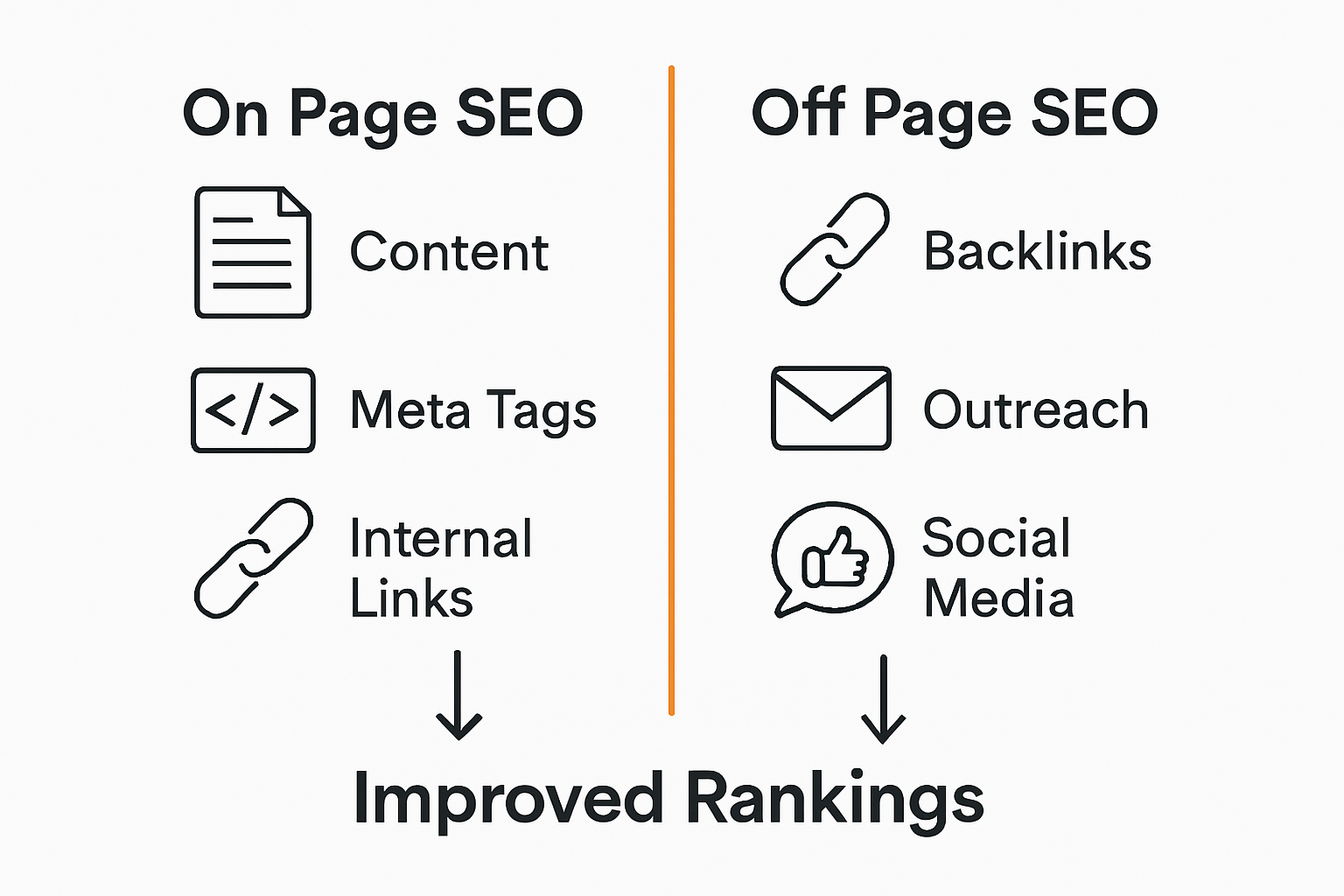
    SEO focuses on improving a law firm’s organic search ranking through strategic content development, website optimization, and building authoritative backlinks.

    When executed effectively, PPC marketing enables targeted advertising that places your firm’s website at the top of search results for specific legal keywords.

    Unlike traditional advertising, these digital strategies allow precise targeting based on geographic location, practice area, and potential client demographics.

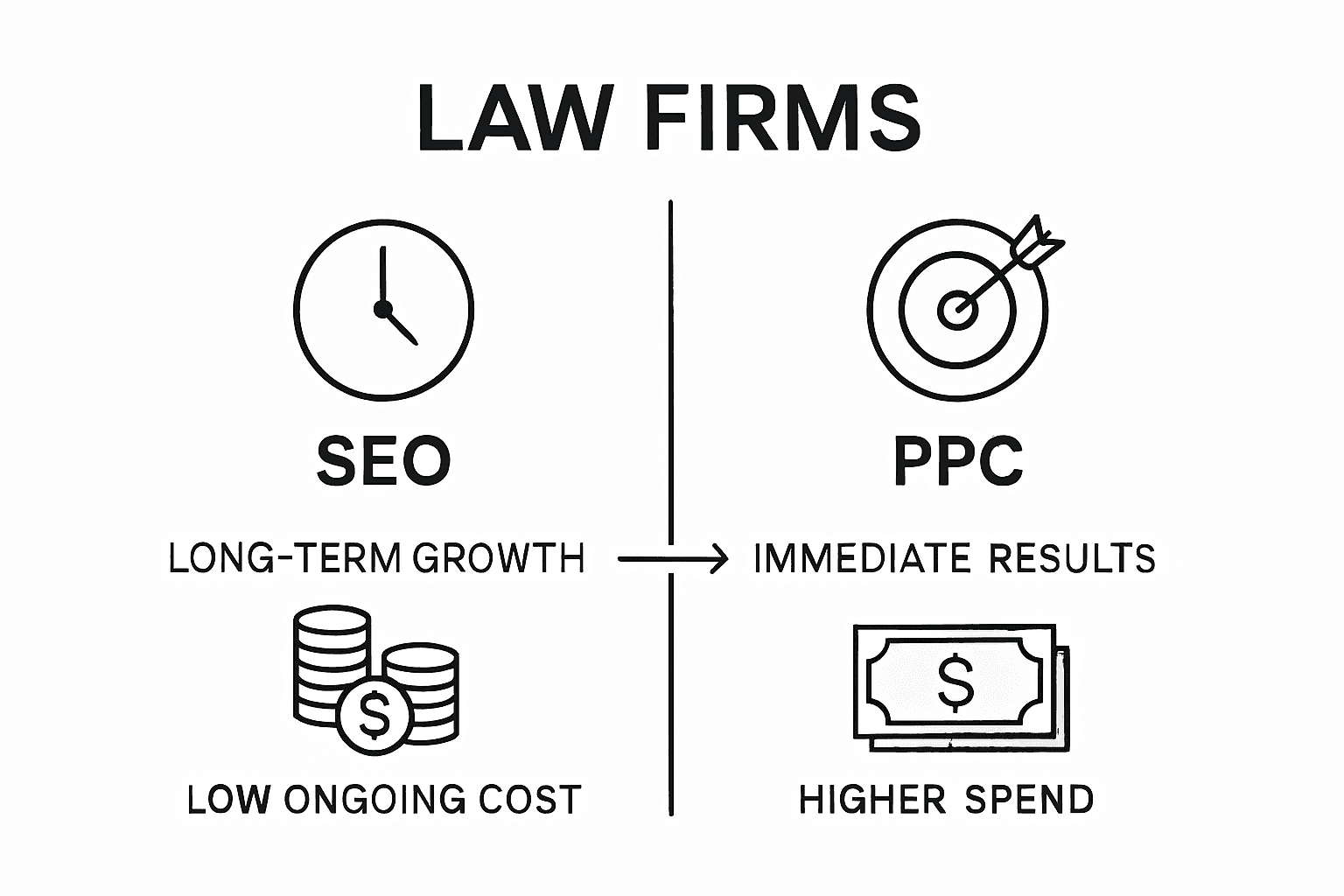
    The fundamental difference between SEO and PPC lies in their approach and cost structure. SEO represents a long-term investment that gradually builds your online credibility, while PPC provides immediate visibility through paid advertisements.

    Successful law firms often combine both strategies to maximize their digital marketing effectiveness. SEO builds sustained organic traffic, and PPC offers quick, targeted client acquisition opportunities.

    Lawyers can leverage these complementary approaches to create a comprehensive digital marketing strategy that consistently attracts high-quality legal leads.

    Pro Tip: Integrate SEO and PPC data systematically. Track keyword performance across both channels to refine your overall digital marketing strategy and optimize your law firm’s online presence.

    Here’s a side-by-side comparison of SEO and PPC strategies for law firms:

    Aspect SEO (Search Engine Optimization) PPC (Pay-Per-Click Advertising)
    Time to Results Months to build rankings Immediate search visibility
    Ongoing Costs Mainly content and maintenance Recurring ad spend required
    Targeting Precision Broader, organic reach Highly specific, real-time targeting
    Traffic Sustainability Continues after investment Stops when funding stops
    Risk of Wasted Spend Lower with long-term view High if campaigns are unmanaged

    SEO and PPC Marketing Defined for Lawyers

    Types of SEO Versus PPC Advertising Channels

    Law firms have multiple digital marketing channels within SEO and PPC that offer unique strategies for attracting potential clients. These channels require different approaches and tactical implementations to maximize online visibility and lead generation.

    Organic SEO Channels include several key strategies:

    • content marketing,
    • local SEO,
    • technical website optimization,
    • and link building.

    Search engine marketing strategies enable lawyers to improve their website’s ranking through high-quality, relevant content that addresses potential clients’ legal questions.

    Local SEO specifically helps law firms target geographically relevant searches by optimizing Google My Business listings, gathering client reviews, and creating location-specific content.

    PPC Advertising Channels provide more immediate and targeted visibility. These include search network ads, display network advertising, remarketing campaigns, and platform-specific options like Google Ads, Bing Ads, and social media advertising platforms.

    Each channel offers unique targeting capabilities, allowing law firms to reach specific demographics, practice area interests, and potential client segments with precision.

    The core advantage of PPC is the ability to generate immediate visibility and track precise return on investment through detailed performance metrics.
    Pro Tip: Develop a hybrid marketing approach that balances organic SEO growth with strategic PPC investments, ensuring a comprehensive digital marketing strategy that maximizes both immediate lead generation and long-term online authority.

    How SEO and PPC Work Together for Law Firms

    Successful digital marketing for law firms requires a strategic integration of SEO and PPC approaches that leverage the unique strengths of each channel.

    Pay-per-click advertising for competitive legal practice areas provides an immediate visibility boost while organic SEO builds long-term credibility and sustainable client acquisition strategies.

    The symbiotic relationship between SEO and PPC becomes evident through data sharing and strategic insights. PPC campaigns generate rapid keyword performance data that can inform SEO content strategies, allowing law firms to understand which search terms generate the most engagement.

    Conversely, organic SEO insights can help refine PPC targeting, creating a continuous feedback loop of optimization. For instance, keywords that perform well in organic search can be prioritized in paid advertising campaigns, maximizing overall digital marketing efficiency.

    Law firms can create a comprehensive digital marketing ecosystem by using PPC to test market demand and SEO to establish lasting online authority. PPC provides immediate visibility for new practice areas or competitive legal niches, while SEO builds a robust foundation of credible, informative content that attracts clients through valuable resources and thought leadership.

    This integrated approach allows law firms to capture both immediate leads and build a sustainable online presence that positions them as trusted legal experts.

    Pro Tip: Synchronize your SEO and PPC keyword strategies by cross-referencing performance data, ensuring a unified approach that maximizes your law firm’s digital marketing effectiveness and client acquisition potential.

    Comparing Costs, ROI, and Risks for Attorneys

    Understanding the financial implications of digital marketing strategies is crucial for law firms seeking to maximize their online presence and client acquisition efforts.

    PPC advertising costs in competitive legal markets can quickly escalate, requiring attorneys to carefully evaluate the potential return on investment and associated risks.

    The cost structure for SEO and PPC differs significantly, with PPC demanding immediate financial investment and SEO representing a more gradual, long-term approach.

    PPC campaigns require continuous funding to maintain visibility, with costs varying based on keyword competition, practice area, and geographic targeting.

    Law firms might spend anywhere from $500 to $5,000 monthly on targeted advertising, with high-competition legal keywords potentially costing $50 to $200 per click.

    Organic SEO, by contrast, requires upfront content development and technical optimization expenses but generates sustainable traffic without ongoing per-click charges.

    Infographic comparing law firm SEO and PPC costs

    Risk assessment becomes critical when comparing these marketing strategies. PPC offers immediate visibility but carries the risk of rapid budget depletion without guaranteed conversions. SEO presents lower financial risk, building credibility through consistent content development and strategic link building.

    Successful law firms often adopt a hybrid approach, using PPC for immediate lead generation while simultaneously investing in long-term organic search strategy.

    This balanced method allows attorneys to capture immediate client  opportunities while establishing a robust online reputation that continues generating leads even after initial marketing investments.

    Pro Tip: Implement a monthly performance review process that tracks conversion rates, cost per acquisition, and long-term client value across both SEO and PPC channels to optimize your digital marketing budget allocation.

    Common Mistakes Law Firms Make with SEO and PPC

    Digital marketing for law firms requires strategic precision, and many attorneys unknowingly sabotage their online marketing efforts through common, preventable errors. Essential law firm marketing guidelines highlight the importance of understanding these critical pitfalls that can drain marketing budgets and undermine digital strategy.

    Keyword Targeting Mistakes represent a significant challenge for law firms. Many attorneys make the error of selecting overly broad or generic keywords that generate high traffic but low-quality leads. Successful digital marketing demands hyper-specific keyword strategies that target potential clients with precise legal needs.

    For instance, instead of targeting a generic term like “lawyer,” firms should focus on specialized phrases such as “personal injury attorney in Chicago” or “divorce lawyer for complex asset division” that attract more qualified potential clients.

    Another critical mistake involves neglecting continuous performance monitoring and adaptation. Law firms often treat SEO and PPC as static strategies, failing to regularly analyze conversion rates, adjust keyword targeting, and refine ad copy.

    Effective digital marketing requires constant optimization, tracking metrics like click-through rates, cost per acquisition, and overall return on investment. Attorneys must view their digital marketing as a dynamic process, making data-driven adjustments to maximize client acquisition and minimize wasted advertising spend.

    The table below summarizes common digital marketing mistakes and their business consequences for law firms:

    Mistake Type Example Impact on Firm
    Generic Keywords Bidding on ‘lawyer’ only Attracts unqualified leads
    Poor Optimization Ignoring metrics reviews Wasted marketing budget
    Outdated Strategy Never updating content Declining search visibility
    Ignoring Local SEO No Google Business Profile Fewer local client inquiries

    Pro Tip: Implement a quarterly digital marketing audit that systematically reviews keyword performance, conversion metrics, and competitive landscape to ensure your law firm’s SEO and PPC strategies remain agile and effective.

    Elevate Your Law Firm’s Online Presence with Expert SEO and PPC Strategies

    Struggling to find the perfect balance between long-term SEO growth and immediate visibility through PPC?

    From targeting the right keywords to managing budget risks, law firms need a knowledgeable partner to maximize lead generation without wasting resources. You want a digital marketing approach that delivers sustainable organic traffic while capturing the power of targeted paid advertising.

    At LawSmiths, we specialize in helping law firms build this winning combination with over 25 years of experience. Our tailored services include SEO, precise PPC campaign management, and customized content creation designed to attract high-quality clients in competitive practice areas.

    Don’t wait to build the lasting online authority your firm deserves. Call us at (833) 217-2991 for a free law firm marketing consultation now and turn complex SEO and PPC strategies into clear client acquisition success.

    Frequently Asked Questions

    What is the difference between SEO and PPC marketing for law firms?

    Search Engine Optimization (SEO) focuses on improving organic search rankings through strategic content and optimization, while Pay-Per-Click (PPC) provides immediate visibility through paid advertisements. SEO is a long-term strategy, whereas PPC generates quick results.

    How can law firms integrate SEO and PPC strategies effectively?

    Law firms can integrate these strategies by sharing data insights; using PPC performance data to refine SEO content and leveraging successful SEO keywords for targeted PPC campaigns. This combination enhances overall digital marketing efficiency.

    What are the common mistakes law firms make in SEO and PPC marketing?

    Common mistakes include:

    • targeting overly broad keywords,
    • neglecting performance monitoring,
    • not optimizing continuously,
    • and failing to utilize local SEO strategies.

    These errors can lead to wasted budgets and unqualified leads.

    How do costs compare between SEO and PPC for law firms?

    SEO typically involves upfront costs for content development and optimization, leading to sustainable traffic without ongoing fees, while PPC involves immediate, ongoing expenses linked to ad placement and click costs, which can fluctuate based on competition.

  • Guide to Legal PPC Campaigns for Law Firms Success

    Guide to Legal PPC Campaigns for Law Firms Success

    Ultimate Guide to PPC for Law Firms: Strategies for Success

    Staying ahead means more than just running ads. Without a focused strategy and strict compliance, even the best campaigns can fall short or risk regulatory trouble.

    Discover practical steps to create legal PPC campaigns that attract the right cases and protect your American law firm’s reputation.

    Step 1: Define clear goals and compliance requirements

    Designing a successful legal PPC campaign starts with establishing precise objectives and understanding the complex regulatory landscape. Your goals will not only drive strategic decisions but also ensure you remain compliant with professional advertising standards.

    Begin by mapping out specific, measurable outcomes for your digital marketing efforts. Are you targeting personal injury claims, seeking family law consultations, or expanding your criminal defense practice? Each practice area requires a nuanced approach.

    The American Bar Association’s Model Rules of Professional Conduct provide a critical framework for ensuring your advertising remains ethical and transparent.

    Attorney writing campaign goals on whiteboard

    Your compliance checklist should include careful review of state specific advertising regulations, which can vary significantly across jurisdictions.

    Pro Tip: Document your compliance process. Create a written protocol that outlines how you validate advertising claims and review marketing materials before publication. This proactive approach can help protect your firm from potential ethical violations.

    With clear goals and a robust compliance strategy in place, you are now ready to move forward with crafting targeted PPC campaign messaging that resonates with potential clients while maintaining the highest professional standards.

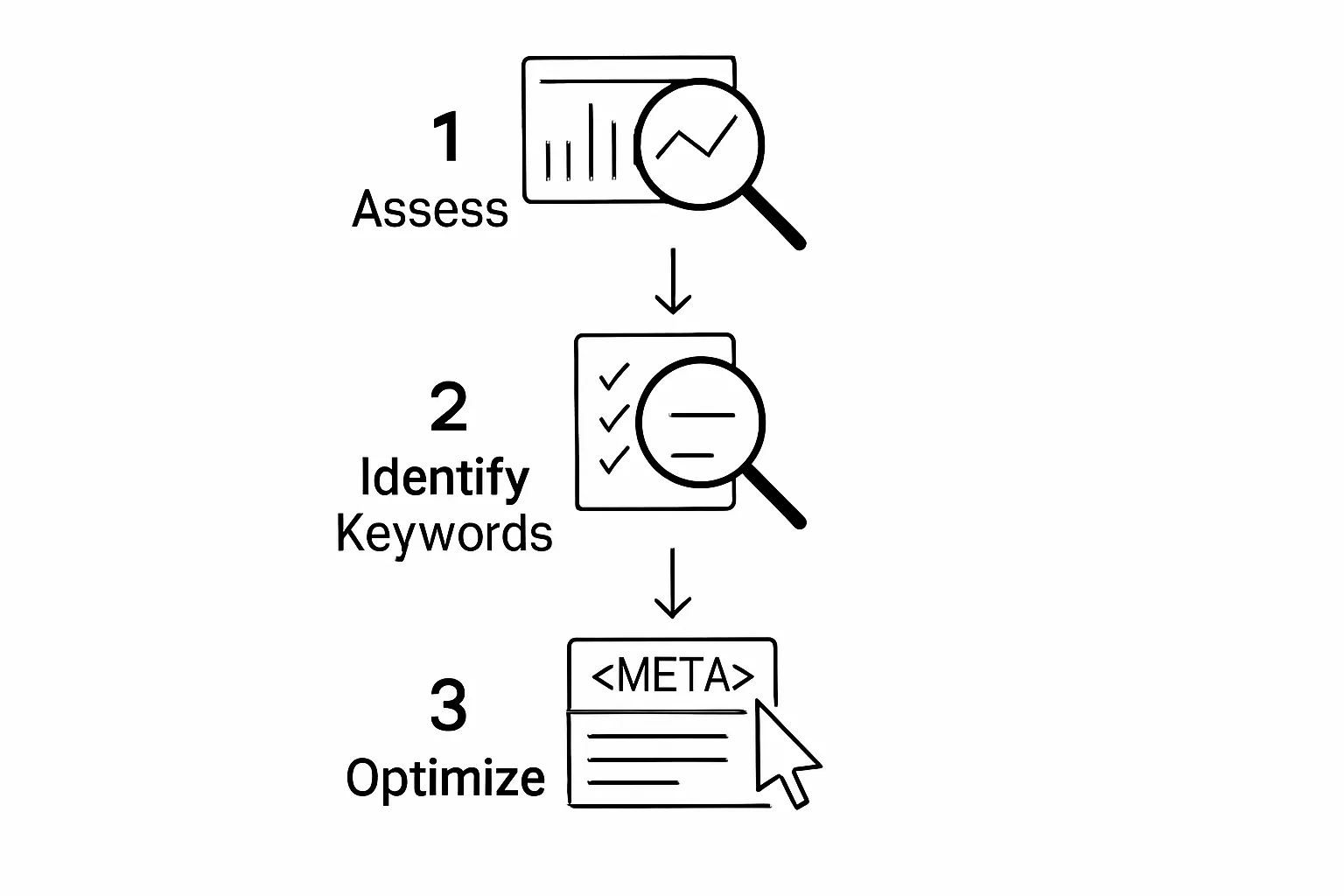
    Choosing the right keywords is fundamental to creating a successful legal PPC campaign that attracts potential clients and maximizes your advertising investment. Your keyword strategy will determine how effectively you connect with individuals seeking legal representation across different practice areas.

    Start by understanding the specific language potential clients use when searching for legal services. This means diving deep into long-tail keywords that reflect genuine legal needs. For example, instead of broad terms like “lawyer,” target more specific phrases such as “car accident injury attorney in Chicago” or “child custody lawyer near me.”

    Understanding search engine ranking factors can help you refine your keyword selection strategy and improve overall campaign performance.

    When researching keywords, consider the intent behind the search. Are people looking for information, seeking immediate legal consultation, or comparing law firms? Group your keywords into categories like informational, navigational, and transactional.

    Focus on high-intent keywords that signal a potential client is ready to take action. Look for search terms with strong commercial intent, such as “free legal consultation” or “best personal injury lawyer.”

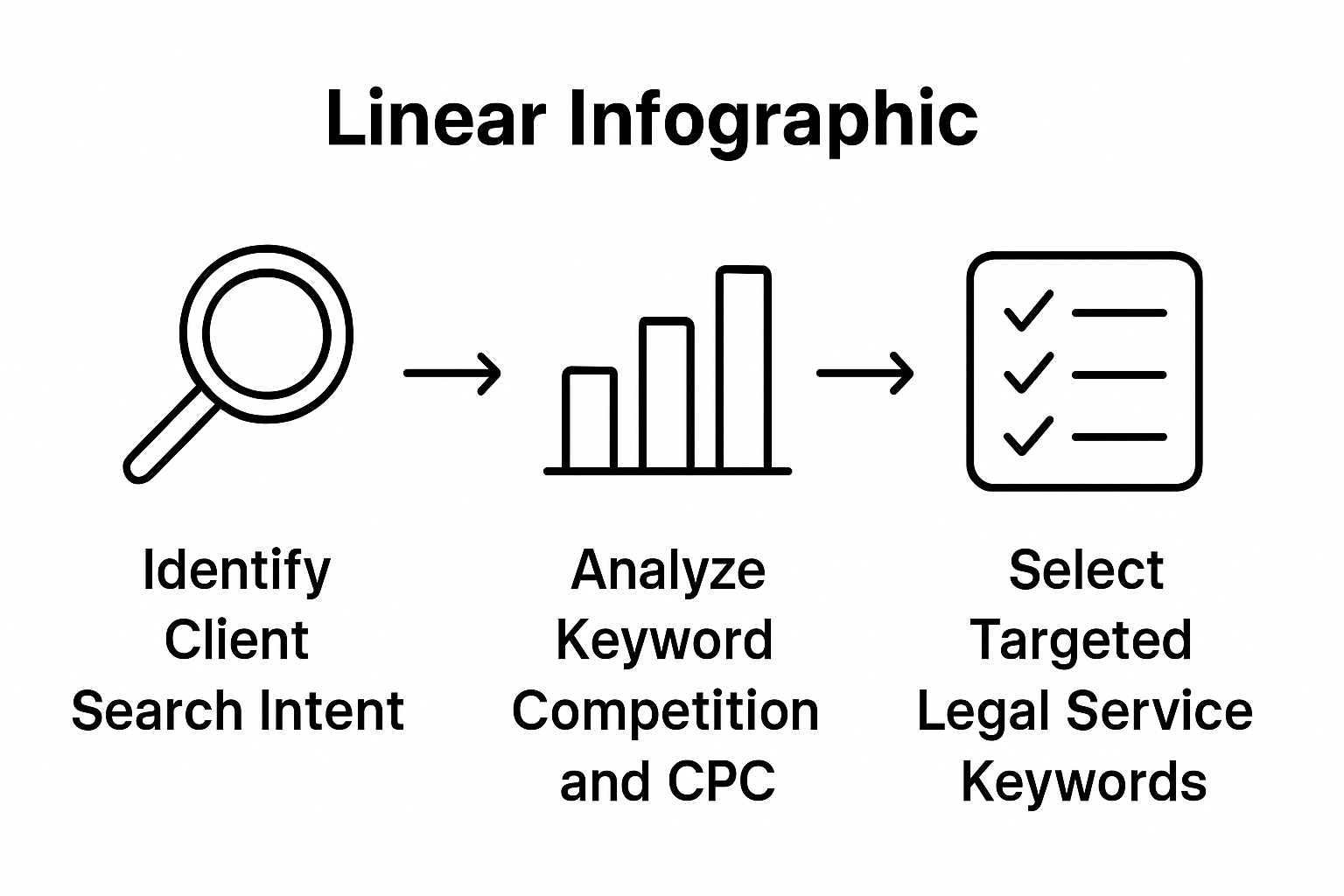
    Infographic legal PPC keyword research steps

    Pro Tip: Utilize keyword research tools to analyze search volume, competition, and cost per click. Pay special attention to location-based keywords that can help you target clients in your specific geographic market.

    With a robust keyword strategy in place, you are now prepared to craft compelling ad copy that speaks directly to potential clients’ needs and positions your law firm as the ideal solution to their legal challenges.

    Step 3: Design compelling PPC ads for attorneys

    Crafting powerful PPC ads for your law firm requires a strategic approach that captures potential clients attention and differentiates your services in a competitive legal marketplace. Your ad copy must simultaneously inform, persuade, and motivate potential clients to take immediate action.

    Compelling ad strategies for lawyers demand a laser focus on your unique value proposition. Highlight what sets your law firm apart such as specialized expertise, proven track record, or personalized client service.

    Use strong action oriented language that speaks directly to potential clients legal challenges.

    For instance, instead of generic phrases like “legal help,” craft more specific messages such as “Aggressive Criminal Defense Attorney Fighting for Your Rights” or “Compassionate Divorce Lawyers Protecting Your Future.”

    Maximize your ad effectiveness by implementing strategic ad extensions that provide additional contact information and credibility signals. Location extensions can help potential clients understand your geographic reach, while call extensions enable immediate contact. Ensure your ad copy includes clear value propositions and a strong call to action that encourages potential clients to reach out.

    Pro Tip: Always match your ad copy closely with the landing page content to improve quality scores and conversion rates. Consistency between your advertisement and destination page builds trust and improves overall campaign performance.

    With a compelling ad strategy in place, you are now prepared to launch targeted PPC campaigns that effectively connect potential clients with your law firm’s expertise.

    Step 4: Set up targeted landing pages for conversions

    Creating high-converting landing pages is the critical bridge between your PPC advertisements and potential client acquisition. Your landing page must not only match the promise of your ad but also guide visitors seamlessly toward taking action.

    Start by designing landing pages that speak directly to specific legal service needs. Each page should have a single focused purpose whether targeting personal injury claims, divorce consultations, or criminal defense representation.

    Optimize your landing pages through strategic A/B testing to understand which design elements and messaging resonate most strongly with potential clients. This might involve experimenting with different headline styles, call to action placements, or testimonial presentations.

    Ensure your landing page includes critical conversion elements, such as:

    • a clear value proposition,
    • compelling client testimonials,
    • professional credentials,
    • and an easy to use contact form.

    Remove any potential distractions that might prevent visitors from taking the next step.

    Your contact form should be prominently displayed and require minimal information gathering essentially creating a frictionless path for potential clients to reach out.

    Pro Tip: Mobile responsiveness is non negotiable. With over 60% of legal searches happening on mobile devices, your landing page must load quickly and display perfectly across smartphones and tablets.

    With a meticulously crafted landing page in place, you are now ready to transform interested website visitors into actual consultation requests for your law firm.

    Step 5: Monitor performance and optimize campaigns

    Successful PPC campaigns require continuous monitoring and strategic refinement. Think of your campaign as a living system that demands regular attention and precision adjustments to maximize your return on investment.

    Optimize your campaign performance through strategic geo targeting to ensure your advertising budget is laser focused on the most relevant potential clients.

    Track key performance indicators such as:

    • click through rate,
    • conversion rate,
    • cost per click,
    • and total return on ad spend.

    Use Google Analytics and Google Ads dashboard to gain granular insights into how potential clients interact with your advertisements.

    Implement a systematic approach to campaign optimization. Review your keyword performance weekly, identifying high performing terms and removing underperforming keywords.

    Analyze your ad copy variations to understand which messaging resonates most strongly with your target audience. Adjust bidding strategies dynamically based on performance data tracking which practice areas and geographic regions generate the highest quality leads.

    Pro Tip: Set up conversion tracking to understand the true value of each click. Not all conversions are equal tracking phone calls consultation requests and actual client retentions will provide a more comprehensive view of your marketing effectiveness.

    With a robust monitoring and optimization strategy in place, you are now equipped to continuously improve your law firms digital marketing performance and maximize client acquisition potential.

    Navigating the complexities of legal PPC campaigns demands a clear strategy, compliance awareness, and targeted messaging that resonates with potential clients. If you face challenges like selecting high-converting legal keywords, crafting compelling ad copy, or designing landing pages that convert visitors into consultations, you are not alone.

    Many law firms struggle to balance ethical advertising requirements while driving measurable results. Whether your goal is to increase quality leads in personal injury, family law, or criminal defense, mastering these aspects is critical.

    LawSmiths specializes in empowering law firms with tailored digital marketing solutions that align perfectly with the goals outlined in this guide. Our expertise spans PPC campaign management, SEO, content creation, and law firm website design, all designed to amplify your firm’s visibility and attract motivated clients.

    Benefit from over 25 years of industry experience and hands-on support that ensures your campaigns stay compliant, targeted, and optimized for maximum ROI.

    Ready to transform your legal advertising into a consistent lead-generation engine? Stop struggling with complex PPC setup and let our team help you craft campaigns that deliver. Get a free PPC campaign evaluation by calling (833) 217-2991.

    Frequently Asked Questions

    Begin by defining clear goals and understanding compliance requirements. Create specific, measurable outcomes for your campaign, such as targeting personal injury claims or family law consultations, and ensure you adhere to regulatory advertising standards.

    Select high-converting legal keywords by focusing on specific phrases that potential clients use when searching for legal services. Utilize long-tail keywords like “car accident injury attorney” to connect with clients ready to take action, and aim for keywords with strong commercial intent.

    What elements should I include in my PPC ad copy for law firms?

    Craft compelling ad copy by highlighting your unique value proposition and using strong action-oriented language. Ensure your ads convey specific legal services, maintain clarity, and include a strong call to action, such as “Contact us for a free legal consultation.”

    How can I design landing pages that convert from PPC ads?

    Create targeted landing pages that align with the specific services in your PPC ads. Each page should focus on a single service, feature a clear value proposition, and include prominent contact forms to streamline the conversion process for potential clients.

    Continuously track key performance indicators such as click-through rates, conversion rates, and total return on ad spend. Regularly analyze and adjust your keyword performance and ad copy to improve results, aiming for noticeable improvements within 30 days.

    Develop a compliance checklist that includes reviewing state-specific advertising regulations and validating all advertising claims for truthfulness. Document your compliance process to proactively avoid ethical violations and maintain transparency in your marketing efforts.

  • 7 Essential Local SEO Tips 2026 for Law Firms’ Success

    7 Essential Local SEO Tips 2026 for Law Firms’ Success

    Over eighty percent of legal clients now search online before choosing a law firm. With digital competition at an all time high, your online presence can make or break your success. Claiming and optimizing your law firm’s Google Business Profile sets you apart and connects you with the local clients who matter most. Mastering this step unlocks visibility, builds credibility, and helps your firm stand out in the competitive American legal market.

    1. Claim and Optimize Your Google Business Profile

    Your Google Business Profile serves as your law firm’s digital storefront in local search results. An optimized profile can dramatically improve your visibility and attract potential clients searching for legal services in your area.

    Successful attorneys understand that a comprehensive Google Business Profile goes far beyond basic contact information. By strategically documenting your professional credentials and community involvement, you create a compelling digital representation of your legal practice.

    Key Optimization Strategies:

    • Verify Your Business Listing: Complete the official verification process to gain full control of your profile
    • Select Precise Categories: Choose legal practice categories that precisely match your specialization
    • Upload Professional Images: Include high quality headshots, office interior images, and professional team photos
    • Write a Compelling Business Description: Highlight your unique legal expertise and practice areas
    • Enable Client Reviews: Encourage satisfied clients to share their experiences

    Pro Tip: Implement UTM parameters on your profile URLs to track performance metrics in Google Search Console. This allows you to understand how potential clients discover and interact with your online presence.

    Remember that an optimized Google Business Profile is more than a digital listing. It represents your professional brand and serves as a critical touchpoint for potential clients seeking legal representation.

    By dedicating time to crafting a comprehensive and authentic profile, you position your law firm as a trustworthy and accessible local legal resource.

    Your law firm’s online credibility hinges on maintaining precise and uniform Name, Address, and Phone (NAP) information across every digital platform. Search engines treat these details as a critical trust signal when determining local search rankings.

    Establishing a canonical NAP format becomes crucial for enhancing search engine confidence and ensuring your law firm appears consistently across multiple online directories. Even minor variations like abbreviated street names or different phone number formatting can undermine your local search performance.

    Why NAP Consistency Matters:

    • Search Engine Trust: Identical listings signal legitimate business information
    • Local Search Rankings: Uniform data improves visibility in geographic search results
    • Client Credibility: Professional presentation reduces potential client confusion
    • AI Algorithm Recognition: Consistent information helps machine learning algorithms validate your business

    Practical Implementation Steps:

    1. Create a definitive ‘Master Data Set’ with your precise business information
    2. Audit existing online directories for current listings
    3. Update all platforms to match your master reference exactly
    4. Use professional citation management tools to track and synchronize listings

    Pro Strategy: Conduct a comprehensive NAP audit to identify and correct potential discrepancies in your online business information. This systematic approach ensures your law firm presents a unified digital identity across all platforms.

    Remember that NAP consistency is not a one time task but an ongoing process of maintaining accurate and synchronized business information.

    3. Request and Showcase Client Reviews

    Client reviews represent powerful social proof that can significantly enhance your law firm’s online credibility and local search visibility. Strategic review management transforms satisfied client experiences into a compelling digital marketing asset.

    Maintaining an actively updated review profile is essential for law firms seeking visibility in AI mediated search results, creating trust and demonstrating professional competence to potential clients.

    Why Client Reviews Matter:

    • Search Engine Ranking: Positive reviews signal business reliability
    • Client Trust: Authentic testimonials provide transparency
    • Conversion Optimization: Reviews help potential clients make informed decisions
    • Competitive Differentiation: Showcasing client satisfaction sets you apart

    Strategic Review Collection Process:

    1. Create a systematic approach to requesting reviews
    2. Make review submission easy for clients
    3. Respond professionally to all reviews
    4. Highlight best reviews across multiple platforms

    Pro Tip: Develop a simple post case workflow where you politely request client feedback. Consider sending a follow up email with clear instructions on how to leave a review on Google or your preferred platform.

    Remember that authenticity is key. Genuine client experiences communicate more effectively than manufactured praise. By treating review collection as a professional service improvement tool, you transform client feedback into a strategic marketing asset.

    4. Leverage Local Content to Target Your Area

    Local content marketing represents a powerful strategy for law firms to connect directly with potential clients in their geographic region. By creating targeted, location specific content, you transform your website into a valuable community resource that search engines recognize and reward.

    Developing thought leadership content that addresses local legal issues can significantly boost your law firm’s online visibility, establishing your practice as an authoritative voice in your community.

    Strategic Local Content Elements:

    • Neighborhood Legal Guides: Create comprehensive resources about local regulations
    • Case Study Spotlights: Highlight successful cases from your specific geographic area
    • Local Legal Event Summaries: Provide insights into regional legal developments
    • Community Impact Stories: Showcase your firm’s involvement in local initiatives

    Content Creation Approach:

    1. Research local legal trends and community specific challenges
    2. Develop content that directly addresses regional audience needs
    3. Include location specific keywords naturally
    4. Optimize content for local search intent

    Pro Tip: Understand that local content goes beyond simple geographic mentions. Each piece should provide genuine value to your community while strategically demonstrating your legal expertise.

    The goal is not just to rank in search results but to become a trusted local resource that potential clients genuinely want to read and share.

    5. Implement Location-Based Service Pages

    Location-based service pages transform your law firm’s online presence from generic to geographically targeted. These specialized landing pages act as precise digital entry points for potential clients searching for legal services in specific communities.

    Developing location specific landing pages can dramatically enhance your law firm’s visibility in local search queries, allowing you to capture market share more effectively across different geographic regions.

    Key Components of Effective Location Pages:

    • Localized Page Titles: Include city or region names
    • Unique Geographic Content: Address area specific legal challenges
    • Local Contact Information: Display precise local phone numbers
    • Neighborhood Specific Testimonials: Showcase area relevant client experiences
    • Geo Targeted Keywords: Integrate natural local search terms

    Strategic Page Development Process:

    1. Research local legal market characteristics
    2. Create individualized content for each service area
    3. Include clear location specific calls to action
    4. Optimize metadata for local search algorithms

    Pro Tip: Think beyond simple geographic mentions. Each location page should reflect the unique legal landscape and community needs of that specific area.

    Successful location based service pages demonstrate your law firm’s deep understanding of local legal environments while providing potential clients with precisely targeted information.

    Building a robust network of legal industry citations and backlinks is crucial for establishing your law firm’s digital authority and improving search engine rankings. These strategic connections signal to search algorithms that your firm is a credible and recognized player in the legal landscape.

    Claiming and fully optimizing profiles on specialized legal directories can significantly enhance your law firm’s online visibility and professional credibility, creating multiple touchpoints for potential clients to discover your services.

    Strategic Citation and Backlink Approach:

    • Legal Directory Listings: Create comprehensive profiles on platforms like Avvo, Justia, Martindale-Hubbell
    • Professional Association Memberships: Secure links from legal professional organizations
    • Guest Blogging: Contribute articles to reputable legal publications
    • Local Bar Association Connections: Obtain backlinks from official legal networks
    • Peer Recognition: Seek mentions from respected legal professionals and firms

    Backlink Quality Criteria:

    1. Focus on relevance over quantity
    2. Target authoritative legal and local websites
    3. Maintain consistent NAP information
    4. Monitor and audit your link profile regularly

    Pro Tip: Approach backlink building as a relationship building exercise. Genuine connections and valuable content will naturally attract high quality links that boost your search rankings.

    Remember that thoughtful, strategic link building is about demonstrating expertise and building trust within the legal community.

    7. Track Results and Adjust Your SEO Strategy

    Successful local SEO for law firms requires continuous monitoring and strategic refinement. Your digital marketing efforts are not a set it and forget it endeavor but an ongoing process of analysis and optimization.

    Implementing strategic tracking parameters enables law firms to effectively monitor their online performance and make data driven adjustments, transforming raw metrics into actionable insights.

    Critical Tracking Metrics:

    • Google Search Console Data: Monitor search appearance and click through rates
    • Website Traffic Analytics: Analyze visitor behavior and source channels
    • Keyword Performance: Track ranking changes for target search terms
    • Conversion Rate: Measure lead generation effectiveness
    • Local Search Visibility: Assess geographic search result positioning

    Strategic Tracking Process:

    1. Set up comprehensive analytics tools
    2. Establish baseline performance metrics
    3. Conduct monthly performance reviews
    4. Implement incremental strategy adjustments
    5. Continuously experiment with optimization techniques

    Pro Tip: View SEO as a dynamic ecosystem. Small consistent improvements compound over time, gradually enhancing your law firm’s digital presence.

    Remember that successful SEO tracking is about understanding trends and responding strategically rather than reacting to individual data points.

    Below is a comprehensive table summarizing the key strategies for enhancing a law firm’s online presence discussed throughout the article.

    Strategy Implementation Expected Results
    Claim and Optimize Google Business Profile Verify listing, select precise categories, upload images, write compelling descriptions, enable reviews Improved visibility, attract local clients, enhanced professional brand
    Ensure Consistent NAP Across Directories Create master data, audit and update directories, use citation management tools Increased search engine trust, better local rankings, consistent client experience
    Request and Showcase Client Reviews Systematic review requests, easy submission, professional responses Enhanced credibility, improved rankings, competitive advantage
    Leverage Local Content Create neighborhood guides, case studies, event summaries Boosted visibility, established authority, targeted engagement
    Implement Location-Based Service Pages Develop localized content, include specific calls to action Enhanced local search visibility, targeted client acquisition
    Use Legal Industry Citations and Backlinks Optimize directory profiles, secure backlinks, guest blogging Improved digital authority, higher search rankings
    Track Results and Adjust SEO Strategy Use analytics tools, perform regular reviews, adjust strategies Optimized performance, data-driven decisions, continuous improvement

    Elevate Your Law Firm’s Local SEO with Expert Guidance and Proven Solutions

    Navigating the complex world of local SEO can be a daunting challenge for law firms aiming to boost their online visibility and attract quality clients. From optimizing your Google Business Profile to maintaining flawless NAP consistency and developing targeted location-based service pages, the pain points are clear: without a strategic, comprehensive approach, your firm risks falling behind in competitive local search results. The article’s focus on authentic client reviews, authoritative backlinks, and ongoing performance tracking highlights critical areas where many legal practices struggle and seek guidance.

    At LawSmiths, we understand these challenges deeply. Our specialized digital marketing services for law firms combine 25 years of experience with tailored strategies that address each key component of local SEO described. Whether you need seamless profile optimization, content creation built around local legal trends, or targeted PPC campaigns that capture high-intent leads, we offer an integrated partnership to grow your practice. Don’t let visibility issues limit your potential client base. Discover how our expertise in SEO and digital marketing can transform your local search presence today.

    Are you ready to stand out as the trusted legal authority in your community? Take the next step by contacting us at 1-833-217-2991 and unlock customized solutions designed to maximize your local SEO impact and generate consistent, quality leads now.

    Frequently Asked Questions

    What is a Google Business Profile, and how do I optimize it for my law firm?

    Your Google Business Profile is your law firm’s digital presence on Google, and optimizing it can significantly increase your visibility. Start by verifying your listing, selecting the correct categories for your practice, and adding professional images and a compelling business description. Aim to complete these steps to enhance your profile within a month.

    Why is maintaining consistent Name, Address, and Phone (NAP) information important for my law firm?

    Consistent NAP information builds trust with search engines and improves local search rankings. Ensure that your master data set matches across all platforms, and perform regular audits to keep all listings aligned. Completing this process can help improve your local search visibility in as little as two weeks.

    How can I effectively request client reviews for my law firm?

    To effectively request client reviews, create a structured approach that makes leaving feedback easy for clients. Send a follow-up email after case completion with clear instructions on how to leave a review on your chosen platform. Implement this process consistently to see an increase in reviews within a few months.

    What type of local content should I create to engage clients in my community?

    Generating local content can include neighborhood legal guides, case studies, or summaries of local legal events that resonate with your target audience. Focus on addressing community-specific legal challenges and incorporate local keywords naturally. Start producing this content regularly to see enhanced online visibility over the next few months.

    How do I create effective location-based service pages for my law firm?

    Effective location-based service pages should include unique content tailored to specific geographic areas while featuring local contact information and relevant keywords. Research local legal markets to inform the content on these pages, and ensure that your calls to action are clear. Implement these pages systematically to capture local searches in a matter of weeks.

    What metrics should I track to evaluate the effectiveness of my local SEO strategy?

    Key metrics to track include Google Search Console data for search appearance, website traffic analytics, and local search visibility. Set baseline metrics and conduct monthly reviews to monitor changes in performance, adjusting your strategy as needed. Aim to refine your SEO approach based on these insights consistently, generating notable improvements over a few months.

  • What Is On Page SEO and Off Page? Complete Overview

    What Is On Page SEO and Off Page? Complete Overview

    Most businesses overlook the fact that nearly 90 percent of online experiences begin with a search engine. For law firms and other professional services, understanding both on page and off page SEO can mean the difference between digital invisibility and new client inquiries. This guide sheds light on how mastering both strategies can give your American firm a powerful advantage in attracting and converting clients online.

    On Page SEO and Off Page SEO Defined

    Search engine optimization (SEO) is a comprehensive strategy divided into two primary components: on page SEO and off page SEO. These approaches work together to improve a website’s visibility and ranking in search engine results. Law firm SEO strategies require understanding both techniques to maximize online visibility.

    On page SEO focuses on optimizing elements directly within your website to improve search rankings. This includes strategic keyword integration, high-quality content development, metadata optimization, and improving site structure. Search engine ranking factors demonstrate that on page elements significantly influence how search engines evaluate and rank web pages. Key on page tactics involve:

    • Crafting compelling, relevant content
    • Optimizing title tags and meta descriptions
    • Improving website loading speed
    • Creating clean, logical site architecture
    • Using header tags effectively
    • Implementing internal linking strategies

    Off page SEO, conversely, involves activities conducted outside your website to enhance domain authority and credibility. These external signals help search engines understand your website’s reputation and relevance. Off page optimization primarily revolves around building high-quality backlinks, engaging in social media marketing, and establishing digital partnerships that signal your website’s trustworthiness. Unlike on page tactics that you directly control, off page SEO requires strategic outreach and relationship building with other reputable online platforms.

    By implementing a balanced approach that combines robust on page optimization with strategic off page efforts, law firms can significantly improve their digital marketing performance and attract more potential clients through enhanced search engine visibility.

    Key On Page SEO Techniques for Law Firms

    Law firms seeking to enhance their digital presence must master on page SEO techniques that strategically improve search engine visibility. Law firm SEO content strategies play a critical role in attracting potential clients and establishing online credibility. These techniques go beyond simple keyword placement, focusing on comprehensive website optimization that signals expertise and relevance to search engines.

    Effective on page SEO for legal websites involves several key optimization strategies. On page techniques require careful attention to content quality, technical elements, and user experience. The most crucial components include:

    • Creating practice area-specific, informative content
    • Optimizing title tags with targeted legal keywords
    • Developing compelling meta descriptions that highlight legal expertise
    • Ensuring fast and mobile-responsive website design
    • Implementing clear, descriptive URL structures
    • Using header tags to organize content hierarchy
    • Adding internal links between related legal service pages

    Technical optimization remains paramount for law firms looking to improve their search rankings. This means focusing on website performance metrics like page loading speed, mobile compatibility, and secure hosting. Content should demonstrate deep legal expertise while remaining accessible to potential clients. Strategic keyword integration should feel natural, addressing specific legal questions and showcasing the firm’s unique value proposition.

    IT specialist reviews technical SEO audit screen

    Ultimately, successful on page SEO for law firms requires a holistic approach that balances technical optimization with high-quality, client-focused content. By implementing these techniques, legal practices can significantly improve their online visibility, attract more potential clients, and establish themselves as authoritative voices in their practice areas.

    Major Off Page SEO Strategies Explained

    Off page SEO represents the critical external strategies that build a law firm’s digital reputation and authority beyond its own website. Law firm digital marketing requires sophisticated approaches that extend a practice’s online influence through strategic external engagement. These techniques focus on generating credibility signals that search engines use to evaluate a website’s trustworthiness and relevance.

    The foundation of successful off page SEO revolves around strategic link building and digital reputation management. Key strategies include:

    • Generating high-quality backlinks from authoritative legal websites
    • Developing robust social media engagement
    • Creating and distributing valuable legal content across multiple platforms
    • Participating in legal industry forums and discussions
    • Obtaining professional directory listings
    • Encouraging client reviews and testimonials
    • Engaging in guest blogging and expert commentary

    Professional networking and digital outreach represent powerful off page SEO techniques for law firms. By establishing connections with legal publications, industry blogs, and professional associations, attorneys can create meaningful backlink opportunities that signal expertise and credibility. Strategic content distribution across platforms helps amplify a law firm’s digital presence, allowing potential clients to discover their services through multiple channels.

    Ultimately, off page SEO is about building a comprehensive digital ecosystem that supports and enhances a law firm’s online reputation. By consistently demonstrating expertise, engaging with professional communities, and generating valuable external content, legal practices can improve their search engine rankings and attract more potential clients through enhanced digital visibility.

    Comparing On Page vs. Off Page SEO

    Search engine optimization requires a strategic balance between on page and off page techniques that work synergistically to improve digital visibility. Law firm SEO strategies demonstrate that understanding the nuanced differences between these approaches is critical for successful digital marketing. While both methods aim to improve search engine rankings, they operate through distinctly different mechanisms.

    On page SEO focuses exclusively on elements directly controlled within a website, including:

    • Content quality and relevance
    • Keyword optimization
    • Site structure and navigation
    • Page loading speed
    • Mobile responsiveness
    • Internal linking strategies
    • HTML metadata configuration

    Conversely, off page SEO encompasses external factors that build a website’s authority and credibility from outside sources. These strategies include generating high-quality backlinks, social media engagement, professional directory listings, and establishing digital reputation through external content distribution. The primary difference lies in control: on page techniques are directly manageable by website owners, while off page strategies require building relationships and earning recognition from external platforms.

    Ultimately, a comprehensive SEO approach integrates both on page and off page techniques. Law firms must recognize that these strategies are complementary rather than competitive. Effective digital marketing requires a holistic approach that optimizes internal website elements while simultaneously building external credibility and authority. By implementing a balanced strategy, legal practices can significantly enhance their online visibility, attract more potential clients, and establish themselves as authoritative voices in their specialized practice areas.

    Infographic comparing on page and off page SEO

    Common Mistakes and Best Practices

    Navigating the complex landscape of SEO requires understanding both critical pitfalls and strategic approaches. Law firm digital marketing demands meticulous attention to detail to avoid common errors that can undermine a website’s search engine performance.

    Common SEO mistakes law firms frequently encounter include:

    • Keyword stuffing and unnatural content placement
    • Neglecting mobile website optimization
    • Using duplicate or low-quality content
    • Ignoring metadata and header tag optimization
    • Inconsistent NAP (Name, Address, Phone) information
    • Failing to implement internal linking strategies
    • Overlooking local SEO opportunities

    Best practices for effective SEO implementation involve creating high-quality, original content that genuinely addresses potential client needs. This means developing comprehensive practice area pages, maintaining consistent and accurate information across digital platforms, and ensuring technical website elements support optimal search engine performance. Law firms should focus on producing substantive, practice-specific content that demonstrates expertise while adhering to technical SEO guidelines.

    Ultimately, successful SEO is about striking a delicate balance between technical optimization and meaningful content creation. Legal practices must approach digital marketing holistically, recognizing that search engine visibility requires continuous refinement, strategic thinking, and a commitment to providing genuine value to potential clients through informative, accessible online resources.

    Elevate Your Law Firm’s SEO with Expert Support

    Understanding the distinctions between on page SEO and off page SEO is critical for law firms striving to increase their online visibility and attract quality leads. This article highlights the challenges law firms face in optimizing website content, improving site architecture, and building authoritative backlinks to stand out in a competitive digital landscape. If you are seeking to overcome these hurdles and implement a balanced SEO strategy that drives results, expert guidance is essential.

    If you are looking for clean on-page technical SEO as well as targeted off page SEO that yields results, contact our SEO experts at LawSmiths, we can customize an SEO plan for your law firm that actually brings in more clients.

    Frequently Asked Questions

    What is on page SEO?

    On page SEO refers to the optimization techniques applied directly on a website to improve its ranking in search engine results. This includes aspects like keyword integration, content quality, metadata optimization, and site structure.

    What are the key components of off page SEO?

    Off page SEO involves strategies that take place outside of your website to build authority and credibility. Key components include backlink building, social media engagement, and digital reputation management.

    How do on page and off page SEO work together?

    On page and off page SEO are complementary strategies that boost a website’s visibility. While on page SEO focuses on optimizing elements within your site, off page SEO enhances your site’s authority through external factors, leading to better search engine rankings.

    What are some common mistakes to avoid in SEO?

    Common SEO mistakes include keyword stuffing, neglecting mobile optimization, using duplicate content, and ignoring metadata and internal linking strategies. Focusing on high-quality content and technical optimization can help avoid these pitfalls.


  • 7 Effective Content Marketing Ideas for Law Firms

    7 Effective Content Marketing Ideas for Law Firms

    Every law firm wants to stand out and win the trust of clients, but figuring out how to actually capture attention feels impossible with so much competition. Most attorneys still rely on the same tired marketing tactics, hoping for better results. Yet, Thomson Reuters research found that law firms who deeply understand their audience are 3x more likely to generate quality leads. That means the real advantage is not what you say, but how closely you connect with what people truly need.

    1: Understand Your Audience’s Needs

    Successful content marketing for law firms begins with a deep understanding of your target audience. Every legal practice serves unique client segments with specific legal challenges and emotional needs. By developing a comprehensive audience persona, you can create content that resonates and drives engagement.

    To effectively understand your audience’s needs, start by conducting thorough demographic and psychographic research. This means going beyond basic age and location data and exploring the underlying motivations, concerns, and pain points that drive potential clients to seek legal assistance.

    The most effective audience research involves multiple strategic approaches:

    • Analyze existing client intake forms and consultation records
    • Review common questions received through website contact forms
    • Conduct periodic client satisfaction surveys
    • Examine website analytics to understand user behavior

    Legal marketing research from Thomson Reuters reveals that law firms who invest time in understanding client personas are 3x more likely to generate quality leads and improve client conversion rates.

    Key considerations when developing audience personas include understanding:

    • Specific legal challenges faced by different client segments
    • Emotional states during legal proceedings
    • Preferred communication channels
    • Information consumption habits

    By creating targeted content that speaks directly to these nuanced needs, law firms can position themselves as empathetic, knowledgeable partners rather than transactional service providers. This approach transforms content from mere information delivery into a powerful client attraction and trust-building mechanism.

    Remember that audience needs evolve. What worked two years ago might not resonate today. Regular review and refinement of your audience understanding ensures your content marketing remains relevant, compelling, and effective in attracting and retaining potential clients.

    2: Create Educational Blog Posts

    Blog posts represent a powerful content marketing strategy for law firms seeking to establish thought leadership and attract potential clients. Educational content transforms your website from a simple service listing into a valuable legal resource that builds trust and credibility.

    The most effective legal blog posts go beyond surface level information and provide in depth insights into complex legal topics. By breaking down intricate legal concepts into digestible, accessible language, you demonstrate expertise while helping potential clients understand their legal challenges.

    Content Marketing Institute research indicates that law firms publishing consistent educational blog content experience 67% higher client engagement rates compared to firms with static websites.

    Successful legal blog strategies should focus on:

    • Addressing common client questions and concerns
    • Explaining recent legal developments
    • Providing practical guidance within specific practice areas
    • Offering clear, actionable insights

    When crafting educational blog posts, attorneys should prioritize several critical elements:

    • Clarity of language: Avoid complex legal jargon
    • Practical relevance: Connect theoretical information to real world scenarios
    • Authoritative tone: Demonstrate professional expertise without sounding intimidating
    • SEO optimization: Use relevant keywords naturally

    Blog content should also showcase the unique perspective of your legal practice. While maintaining professional standards, inject personality and genuine understanding of client challenges. This approach transforms blog posts from dry informational pieces into engaging narratives that potential clients can relate to.

    Remember that educational blog posts serve multiple purposes. They improve website search rankings, establish professional credibility, provide value to potential clients, and create opportunities for potential client engagement. By consistently producing high quality, informative content, law firms can position themselves as trusted advisors in an increasingly competitive digital marketplace.

    3: Leverage Video Content for Engagement

    Video content has emerged as a powerful medium for law firms to connect with potential clients, transforming complex legal information into accessible, engaging narratives. Visual storytelling provides an opportunity to humanize legal services and build trust in ways traditional text-based content cannot.

    Wyzowl video marketing research reveals that 89% of people are convinced to purchase a product or service after watching a video, highlighting the immense potential for legal practices to attract clients through strategic video content.

    Effective video content strategies for law firms should include:

    • Client testimonial videos
    • Explainer videos about legal processes
    • Attorney introduction and personal background videos
    • Short legal advice and FAQ segments

    Law firms can create multiple types of video content to showcase expertise and connect with potential clients. Authenticity is key when producing these videos. Potential clients want to see real attorneys who demonstrate genuine understanding and compassion for their legal challenges.

    Key considerations for producing compelling legal video content include:

    • Professional but approachable presentation
    • Clear, concise explanations of legal concepts
    • High quality audio and video production
    • Addressing common client concerns

    With our law firm video animation services, attorneys can transform complex legal information into visually engaging narratives that capture potential client attention. These animations can simplify intricate legal processes, making them more understandable and less intimidating.

    Video content also significantly improves search engine optimization. Websites with embedded videos tend to have longer visitor engagement times and higher ranking potential. By creating informative, professionally produced videos, law firms can simultaneously educate potential clients and improve their online visibility.

    4: Utilize Social Media for Client Interaction

    Social media platforms have transformed how law firms communicate and engage with potential clients, offering unprecedented opportunities for building trust and demonstrating professional expertise. Strategic social media engagement goes far beyond simple posting and requires a nuanced approach tailored to legal professional standards.

    Hootsuite social media research indicates that law firms actively using social media experience 45% higher client engagement and significantly improved brand recognition.

    Law firms should approach social media with careful consideration of professional ethics and client confidentiality. Effective strategies include:

    • Sharing general legal insights
    • Highlighting firm achievements

    Professional networking platforms like LinkedIn offer particularly valuable opportunities for attorneys to showcase expertise. By publishing thoughtful content, attorneys can position themselves as thought leaders in their specific legal practice areas.

    Key considerations for law firm social media strategy include:

    • Maintaining a consistent professional tone
    • Protecting client confidentiality
    • Providing value through informative content
    • Responding promptly to client interactions

    Our law firm social media marketing services help attorneys navigate the complex landscape of online professional communication. These services ensure that social media becomes a strategic tool for client attraction and relationship building.

    Different social platforms serve unique purposes. LinkedIn works best for professional networking, Twitter for quick legal updates, and Facebook for community engagement. Understanding each platform’s strengths allows law firms to create targeted, meaningful content that resonates with potential clients.

    Successful social media strategies transform these digital platforms from mere communication channels into powerful client engagement tools. By sharing valuable insights, attorneys can demonstrate expertise, build trust, and ultimately attract new clients through genuine, professional online interactions.

    5: Develop an Informative Newsletter

    Newsletters represent a sophisticated content marketing channel that allows law firms to maintain consistent communication with potential and existing clients. Direct communication through email newsletters enables attorneys to share valuable legal insights while keeping their practice top of mind.

    Campaign Monitor email marketing research reveals that professional service newsletters achieve an average open rate of 21.33%, significantly higher than many other industries.

    A successful legal newsletter should focus on delivering genuine value rather than aggressive self promotion. Key content strategies include:

    • Summarizing recent legal developments
    • Offering practical legal advice
    • Highlighting firm achievements
    • Sharing client success stories

    Professional newsletters require careful consideration of content and design. Compelling subject lines and concise, informative text are critical for maintaining reader engagement. Potential clients want substance over style.

    Effective newsletter strategies involve:

    • Maintaining consistent publication schedule
    • Segmenting email lists by practice area
    • Using mobile responsive design
    • Tracking engagement metrics

    Our law firm social media management services can help integrate newsletter strategies with broader digital marketing approaches, ensuring a cohesive communication strategy.

    Newsletters also provide an excellent opportunity for search engine optimization. By consistently producing high quality, keyword rich content, law firms can improve their digital visibility while providing genuine value to their audience.

    The most successful legal newsletters strike a delicate balance between professional expertise and approachable communication. They transform complex legal information into digestible insights that potential clients find both informative and engaging, ultimately building trust and positioning the law firm as a reliable legal resource.

    6: Host Webinars and Online Workshops

    Webinars and online workshops represent powerful content marketing tools that enable law firms to demonstrate expertise, engage potential clients, and build meaningful professional connections. Interactive digital events provide a unique opportunity to showcase legal knowledge while directly addressing client concerns.

    ON24 webinar engagement research indicates that 76% of professionals consider webinars their preferred method of professional learning and engagement.

    Successful legal webinars require strategic planning and execution. Key topics for consideration include:

    • Current legal trend analyses
    • Practice area specific insights
    • Legal rights and process explanations
    • Practical guidance for potential clients

    Technical preparation is crucial for delivering professional online workshops. High quality audio, clear visual presentations, and smooth technological integration can significantly enhance audience engagement and perception of professional competence.

    Essential webinar planning considerations include:

    • Selecting relevant, timely legal topics
    • Developing interactive presentation formats
    • Providing opportunities for audience Q&A
    • Recording sessions for future content repurposing

    Our law firm social media reputation management services can help attorneys promote and leverage these digital events to maximize audience reach and engagement.

    Webinars offer multiple strategic benefits beyond immediate client interaction. Recorded sessions become valuable evergreen content that can be shared across websites, social media platforms, and email newsletters. This approach transforms a single event into a comprehensive content marketing asset.

    By consistently delivering high quality, informative online workshops, law firms can position themselves as thought leaders. These digital events transcend traditional marketing approaches, providing genuine value while simultaneously attracting potential clients through demonstrated expertise and professional credibility.

    7: Share Success Stories and Case Studies

    Success stories and case studies represent powerful content marketing tools that transform abstract legal concepts into compelling, relatable narratives. Real world examples provide potential clients with tangible proof of a law firm’s expertise and effectiveness.

    Legal Marketing Association research demonstrates that law firms using detailed case studies experience a 67% increase in client trust and engagement.

    Effective case studies go beyond simple outcome reporting. They should provide comprehensive insights into:

    • Complex legal challenges encountered
    • Strategic problem solving approaches
    • Meaningful client impact
    • Quantifiable resolution details

    Narrative structure is critical when developing compelling case studies. Attorneys must balance professional confidentiality with engaging storytelling, focusing on the legal strategy and positive outcomes without revealing sensitive client information.

    Key considerations for creating impactful case studies include:

    • Obtaining client consent
    • Anonymizing sensitive details
    • Highlighting unique legal strategies
    • Demonstrating measurable results

    Our law firm social media management services can help attorneys effectively distribute and promote these powerful client success narratives across multiple digital platforms.

    Successful case studies serve multiple strategic purposes. They educate potential clients about complex legal processes, showcase the firm’s problem solving capabilities, and build credibility through documented achievements. By presenting legal challenges as solvable puzzles, attorneys can transform potential client anxiety into confidence.

    Case studies also provide an opportunity to demonstrate a law firm’s versatility across different practice areas. By presenting a diverse range of successfully resolved legal challenges, attorneys can attract clients with varied legal needs, positioning their practice as a comprehensive, trustworthy legal resource.

    Below is a comprehensive table summarizing the core content marketing strategies, their goals, benefits, and key implementation steps for law firms discussed throughout the article.

    Strategy Primary Goal Key Benefits Implementation Highlights
    Understand Your Audience Tailor content to real client needs 3x more quality leads, deeper trust, improved conversions Audience personas, client research, regular refinement
    Educational Blog Posts Demonstrate expertise and build authority 67% higher engagement, better SEO, increased inquiries Answer questions, practical advice, clear/SEO-optimized
    Video Content Humanize the firm, engage visually Builds trust, longer site visits, higher conversion Testimonials, explainers, professional production
    Social Media Engagement Reach and interact with prospective clients 45% higher engagement, stronger brand recognition Platform strategy, ethical standards, valuable insights
    Informative Newsletters Maintain ongoing client relationships High open rates, sustained visibility, repeat business Recent legal news, practical tips, consistent schedule
    Webinars and Online Workshops Showcase expertise, provide real-time answers Trusted authority, reusable evergreen content Timely topics, interactive Q&A, quality production
    Success Stories and Case Studies Prove effectiveness and build credibility 67% higher trust and engagement, diverse appeal Client consent, anonymization, compelling storytelling

    Transform Your Law Firm’s Content Into Real Client Growth

    Are you struggling to turn your blog posts, social media updates, or webinars into actual new client inquiries? This article highlights challenges like building trust, creating educational resources, and using content marketing to attract quality leads in a crowded legal market. Many law firms pour effort into video content, newsletters, and case studies but still face problems such as low visibility, limited engagement, or a lack of strategy to connect your expertise with the needs of real clients.

    LawSmiths specializes in turning these same content strategies into measurable results. With over 25 years of experience helping law firms stand out online, we offer solutions that unify your SEO, web design, and content to actually reach the clients you want. Ready to bridge the gap between expert content and true client growth? Discover how our digital marketing agency built exclusively for attorneys can help. Call us at (833) 217-2991 or fill out the form for a free consultation.

    Frequently Asked Questions

    What is content marketing for law firms?

    Content marketing for law firms involves creating and distributing valuable, relevant content that addresses the needs and concerns of potential clients, enhancing the firm’s credibility and attracting new clients.

    How can law firms effectively understand their audience’s needs?

    Law firms can better understand their audience by conducting demographic and psychographic research, analyzing client intake forms, reviewing common questions from clients, and examining website analytics to gauge user behavior.

    Why are educational blog posts important for law firms?

    Educational blog posts are crucial as they establish the firm’s authority, provide valuable information to potential clients, and improve website engagement and search engine visibility.

    What types of video content should law firms consider creating?

    Law firms should consider producing client testimonial videos, explainer videos detailing legal processes, attorney introduction videos, and short segments addressing common legal FAQs.

  • How to Do SEO for Website Step by Step for Law Firms

    How to Do SEO for Website Step by Step for Law Firms

    Law firms now face a digital battleground where just showing up online is no longer enough. More than 90 percent of people turn to the web first when searching for legal help and most never click past the first page of results. But here is what surprises many attorneys. Some of the most successful law firms online are not always the oldest or the largest. Instead, they excel at practical SEO strategies anyone can use. The real power comes from knowing the exact steps to leave your competition in the dust.

    Quick Summary

    Key Point Explanation
    1. Assess Digital Performance First Conduct a comprehensive website audit to identify areas needing improvement and establish a data-driven SEO foundation.
    2. Develop Targeted Keyword Strategy Identify 20-30 relevant keywords, focusing on both broad and long-tail options that align with user intent and legal services offered.
    3. Optimize On-Page SEO Elements Implement keyword-rich title tags, meta descriptions, and content structures to improve search visibility and enhance user experience.
    4. Create High-Quality, Client-Focused Content Develop authoritative legal content that answers client questions and showcases your expertise while integrating targeted keywords appropriately.
    5. Continuously Monitor and Adjust Strategies Regularly track SEO performance metrics and adjust strategies based on data insights to maintain competitiveness and online visibility.

    Step 1: Assess Your Current Website Performance

    Assessing your law firm’s website performance is the crucial first step in developing an effective SEO strategy. This foundational analysis provides a clear snapshot of your digital presence and identifies areas requiring strategic improvement. Your comprehensive assessment will involve examining multiple technical and content-related aspects that directly impact search engine rankings and user experience.

    Begin by conducting a thorough website audit using professional diagnostic tools. Google Analytics and Google Search Console are free, powerful platforms that offer comprehensive insights into your website’s current performance. These tools will reveal critical metrics such as organic traffic volume, user engagement rates, page loading speeds, mobile responsiveness, and existing search query performance specific to your legal practice.

    Within Google Search Console, pay special attention to your website’s core web vitals and technical health indicators. Look for potential issues like crawl errors, indexing problems, or structured data implementation gaps. Analyze your current keyword rankings to understand which legal services and geographic areas you’re already performing well in, and where significant optimization opportunities exist. Learn more about our technical SEO services for law firms to get professional insights into comprehensive website diagnostics.

    Your assessment should also include a competitive analysis. Examine other law firms’ websites in your practice area and geographic region to benchmark your digital performance. Compare factors like website structure, content depth, user experience, and search engine visibility. This comparative approach will help you identify strategic advantages and potential improvement areas that can differentiate your online presence.

    Key verification criteria for a successful initial assessment include:

    Three-step SEO workflow visualization: audit, keywords, optimization

    • Comprehensive report of current website performance metrics
    • Identification of at least 3-5 specific technical SEO improvement areas
    • Clear understanding of existing keyword rankings
    • Benchmark comparison with competitor websites

    By meticulously completing this first step, you’ll establish a solid foundation for developing a targeted, data-driven SEO strategy that enhances your law firm’s online visibility and attracts potential clients more effectively.

    Identifying target keywords is a strategic process that transforms how potential clients discover your law firm online. This critical step goes beyond simple word selection and requires a nuanced understanding of legal search behaviors, user intent, and the specific language potential clients use when seeking legal representation.

    Start by developing a comprehensive keyword strategy that captures the full spectrum of legal services your firm offers. Begin with broad practice area terms like “personal injury lawyer” or “criminal defense attorney” and then drill down into more specific, long-tail keywords that reflect precise client needs. Long-tail keywords are particularly powerful because they represent more specific search queries with higher conversion potential. For instance, instead of just “divorce lawyer,” target phrases like “child custody lawyer in [your city]” or “high asset divorce attorney specializing in complex property division.”

    Explore our comprehensive guide on law firm digital marketing to understand how targeted keyword strategies can transform your online visibility. Your keyword research should incorporate multiple dimensions including geographic specificity, practice area expertise, and client pain points. Utilize professional keyword research tools like Google Keyword Planner, SEMrush, or Ahrefs to analyze search volumes, competition levels, and potential ranking opportunities specific to legal services.

    Consider the intent behind different keyword categories. Transactional keywords indicate someone ready to hire a lawyer (“hire criminal defense lawyer”), while informational keywords suggest someone seeking legal guidance (“what to do after a car accident”). Balancing these keyword types creates a robust content strategy that captures potential clients at various stages of their legal decision making process.

    Key verification criteria for successful keyword identification include:

    • Minimum of 20-30 targeted keywords across different intent categories
    • Keywords with reasonable search volume (50+ monthly searches)
    • Balanced mix of broad and long-tail keywords
    • Keywords aligned with your specific legal practice areas

    By meticulously developing a keyword strategy tailored to your law firm’s unique strengths and client needs, you’ll create a powerful foundation for attracting and converting potential clients through strategic online visibility.

    Step 3: Optimize On-Page Elements for SEO

    Optimizing on-page elements represents the critical foundation of transforming your law firm’s website into a search engine powerhouse. This strategic process involves meticulously crafting every page element to communicate clearly with both search algorithms and potential clients, ensuring your legal services are precisely positioned for maximum online visibility.

    Title tags and meta descriptions serve as your website’s digital billboards, providing the first impression in search results. Craft compelling, keyword-rich title tags that accurately represent each page’s content while incorporating targeted legal service terms. Each title should be concise yet descriptive, typically ranging between 50-60 characters to ensure full display in search results. Meta descriptions should provide a clear, engaging summary of the page content, utilizing targeted keywords naturally and compelling potential clients to click through.

    Explore our comprehensive technical SEO insights for law firms to understand the nuanced approach required for digital optimization. Implement header tags strategically, using H1 tags for primary page titles and H2-H3 tags to structure content hierarchically. Each header should incorporate relevant keywords while maintaining readability and logical content flow. Pay special attention to your website’s content structure, ensuring that each page provides comprehensive, valuable information about your specific legal services, practice areas, and client solutions.

    Content optimization extends beyond mere keyword placement. Focus on creating high-quality, informative content that directly addresses potential clients’ legal questions and concerns. Each page should demonstrate expertise, build trust, and provide clear value. Integrate your target keywords naturally within the content, avoiding keyword stuffing. Utilize internal linking to connect related practice area pages, creating a robust, interconnected website structure that helps both users and search engines navigate your site effectively.

    Key verification criteria for successful on-page optimization include:

    • Unique, keyword-optimized title tags for each page
    • Compelling meta descriptions under 160 characters
    • Strategic use of header tags with incorporated keywords
    • Clean, readable content that provides genuine value
    • Consistent internal linking between related legal service pages

    By implementing these on-page optimization strategies, your law firm’s website will communicate more effectively with search engines, improving visibility and attracting more potential clients through strategic digital positioning.

    on-page SEO optimization law firm

    Step 4: Create Quality Content Tailored to Clients

    Creating quality content is the cornerstone of effective law firm SEO, transforming your website from a digital brochure into an authoritative resource that attracts and converts potential clients. This step requires a strategic approach that balances informative legal expertise with compelling, client-focused storytelling that addresses real-world legal challenges and questions.

    Content development begins with understanding your potential clients’ precise needs and concerns. Develop comprehensive practice area pages that dive deep into specific legal issues, explaining complex legal concepts in clear, accessible language. Each piece of content should anticipate and answer the questions potential clients are most likely to ask. For personal injury lawyers, this might mean creating detailed guides about accident claims, medical treatment protocols, and compensation processes. Criminal defense attorneys could develop informative content explaining legal rights, potential defense strategies, and navigating the court system.

    Learn more about our specialized law firm SEO content writing services to understand how targeted content can elevate your online presence. Focus on creating long-form, authoritative content that demonstrates your legal expertise while remaining approachable and empathetic. Incorporate real-world examples and case studies that showcase your firm’s successful outcomes without breaching client confidentiality. Video content, FAQ sections, and comprehensive legal guides can provide additional value and improve user engagement.

    Your content strategy should extend beyond practice area pages. Develop a robust blog that addresses current legal trends, recent legislative changes, and practical advice relevant to your target clients. Each piece of content should be meticulously researched, professionally written, and optimized with the keywords identified in previous steps. Ensure your writing maintains a balance between technical legal accuracy and conversational readability that makes complex legal information accessible to potential clients.

    Key verification criteria for quality content creation include:

    • Minimum of 10 comprehensive practice area content pages
    • Regular blog posts addressing current legal topics
    • Content that directly answers potential client questions
    • Incorporation of targeted keywords in natural, readable language
    • Diverse content formats including written guides, videos, and FAQs

    By developing a strategic, client-focused content approach, your law firm will establish online authority, build trust with potential clients, and significantly improve your search engine visibility.

    Backlink building represents a sophisticated strategy for establishing your law firm’s digital authority and improving search engine rankings. This critical step involves strategically acquiring high-quality links from respected legal websites, professional associations, and authoritative online platforms that signal your firm’s credibility and expertise to search algorithms.

    Professional networking forms the foundation of effective backlink acquisition. Begin by identifying and connecting with reputable legal directories, bar association websites, and professional legal publications that offer link opportunities. Local bar association websites, legal education platforms, and industry-specific directories provide excellent starting points for building authoritative backlinks. Focus on generating links from sources that demonstrate genuine relevance to your specific legal practice areas, such as personal injury, criminal defense, or family law specialty websites.

    Discover our specialized law firm link building strategies to understand the nuanced approach required for digital authority development. Create compelling, shareable content that naturally attracts backlinks from professional sources. This might include comprehensive legal guides, research papers, detailed analysis of recent legal precedents, or thought leadership articles that showcase your firm’s deep understanding of complex legal issues. Guest posting on respected legal blogs and contributing expert commentary to online legal publications can significantly enhance your backlink profile while establishing your attorneys as industry thought leaders.

    Develop a systematic approach to backlink acquisition that prioritizes quality over quantity. Avoid purchasing links or engaging in manipulative link schemes, as these tactics can result in severe search engine penalties. Instead, focus on earning links through genuine value creation, professional relationships, and demonstrating authentic expertise. Leverage your attorneys’ professional achievements, speaking engagements, and academic credentials as opportunities to generate high-quality backlinks from educational institutions, conference websites, and professional recognition platforms.

    Key verification criteria for successful backlink building include:

    • Minimum of 10 high-quality backlinks from reputable legal sources
    • Links from diverse domains including bar associations, legal directories
    • Backlinks that demonstrate relevance to your specific practice areas
    • Organic link acquisition through valuable content and professional networking
    • Consistent monitoring and management of your backlink profile

    By implementing a strategic, ethical approach to backlink development, your law firm will enhance its online authority, improve search engine visibility, and establish a robust digital reputation that attracts potential clients.

    Step 6: Monitor SEO Performance and Adjust Strategies

    Monitoring SEO performance is the crucial final step that transforms your digital strategy from a static plan into a dynamic, responsive system for continuous improvement. This ongoing process involves meticulously tracking key performance indicators, analyzing data, and making strategic adjustments that keep your law firm’s online presence competitive and effective.

    Digital analytics tools provide the foundation for comprehensive performance tracking. Google Analytics and Google Search Console will be your primary instruments for understanding how potential clients interact with your website. These platforms offer granular insights into organic traffic, user behavior, keyword rankings, and conversion rates specific to your legal services. Pay close attention to metrics like average time on page, bounce rate, and click-through rates for different practice area content. These indicators reveal how effectively your content resonates with potential clients and where strategic refinements might be necessary.

    Learn more about our advanced law firm digital marketing techniques to understand sophisticated performance monitoring strategies. Develop a consistent monthly review process where you systematically examine your website’s performance metrics. Look for trends in keyword rankings, identifying which legal service pages are performing strongly and which might require content optimization. Track the sources of your organic traffic to understand which marketing channels and content strategies are most effective in attracting potential clients.

    Your performance monitoring should extend beyond basic website metrics. Conduct periodic competitive analysis to benchmark your digital performance against other law firms in your practice areas. Use tools like SEMrush or Ahrefs to compare your keyword rankings, backlink profiles, and content strategies with competing legal practices. This comparative approach allows you to identify emerging opportunities, understand market trends, and develop proactive SEO strategies that keep your firm ahead of the competition.

    Key verification criteria for effective SEO performance monitoring include:

    • Monthly comprehensive analytics review
    • Tracking of key performance indicators across all practice area pages
    • Quarterly competitive landscape assessment
    • Documented strategy adjustments based on performance data
    • Regular keyword ranking and traffic trend analysis

    By implementing a rigorous, data-driven approach to SEO performance monitoring, your law firm will maintain a dynamic online presence that continually adapts to changing digital marketing landscapes and client search behaviors.

    Below is a checklist table to help you easily verify that each step of your law firm SEO process meets key criteria for success.

    Step Verification Criteria How to Confirm
    Assess Website Identify 3-5 technical SEO issues, review keyword rankings, benchmark competitors Create audit report from Google Analytics, Search Console, and competitor analysis
    Keyword Research 20-30 targeted keywords, balanced mix, 50+ monthly searches Record keyword list with intent categories, verify volume in SEMrush, Ahrefs, or Keyword Planner
    On-Page Optimization Unique title tags, compelling meta descriptions, header tags, value content, internal linking Review each page for meta-tag accuracy, content structure, and internal links
    Content Creation 10+ comprehensive practice pages, regular blogs, answers to common questions, diverse formats List all content assets, review for keyword alignment and variety
    Backlink Building 10+ links from reputable legal sources, diverse domains, organic methods Monitor backlinks in Search Console or SEO tools, review for source credibility
    Performance Monitoring Monthly analytics review, track KPIs, quarterly competitive review, adjustments based on data Maintain records of reviews, create strategy adjustment logs

    Elevate Your Law Firm’s Online Growth with Proven SEO Expertise

    Feeling overwhelmed trying to master law firm SEO step by step on your own? If assessing your site’s performance, optimizing content, or building authority links seems like a full-time job, you are not alone. Many attorneys struggle with turning digital goals into measurable results because legal marketing is uniquely complex. Your success depends on rising above competitors, ranking for the right keywords, and making sure your expertise is visible to the clients who need you most.

    Now is the perfect moment to turn your strategy into action. With over 25 years supporting attorneys nationwide, LawSmiths specializes in tailored SEO strategies that address every challenge in this article – from technical audits to authoritative content and high-impact backlink building.

    Discover the difference a dedicated legal marketing partner can make. Explore how our SEO services for law firms drive real growth, or get started today by visiting LawSmiths and requesting your personalized website assessment. Give your practice the competitive edge it deserves and secure your place at the top of legal search results now by calling us at (833) 217-2991 or fill out the form for a free consultation.

    Frequently Asked Questions

    What are the first steps to assess my law firm’s website performance?

    Begin by conducting a thorough website audit using tools like Google Analytics and Google Search Console to evaluate metrics such as organic traffic, user engagement rates, and page loading speeds.

    How do I identify targeted keywords for my law firm’s SEO strategy?

    Develop a comprehensive keyword strategy by starting with broad practice area terms and drilling down into specific long-tail keywords that reflect potential client needs. Use professional keyword research tools to analyze search volumes and competition levels.

    What on-page elements should I optimize for better SEO results?

    Focus on optimizing title tags, meta descriptions, and header tags. Ensure that each page has unique, keyword-rich titles and compelling meta descriptions that summarize the content effectively.

    Connect with reputable legal directories, bar association websites, and create shareable content like legal guides to naturally attract backlinks. Prioritize quality over quantity and aim for links from relevant, authoritative sources.


  • Understanding the Role of Social Media Marketing

    Understanding the Role of Social Media Marketing

    Law firms used to rely on billboards and business cards to get noticed. Now, almost every legal professional is sharing content across platforms and building their brand online. But fewer realize that social media attracts over 4.8 billion active users worldwide, and with the right strategy, lawyers are capturing audiences they never could before. Turns out, the biggest shift is not just about reaching more people but about making law approachable and building trust long before that first consultation.

    Quick Summary

    Takeaway Explanation
    Social media enhances visibility for lawyers Effective use of social media platforms can significantly boost a law firm’s professional visibility and client engagement.
    Build trust through valuable content Sharing educational insights and success stories fosters trust with potential clients before consultations.
    Understand ethical guidelines Legal professionals must navigate strict ethical rules to maintain professionalism while engaging online.
    Utilize targeted audience strategies Lawyers can precisely target their marketing to connect with individuals actively seeking legal help.
    Analyze performance for improvement Regularly reviewing activity metrics allows law firms to refine their approach and enhance outreach effectiveness.

    Social media marketing in the legal field represents a strategic digital communication approach where law firms and legal professionals leverage online platforms to build brand awareness, engage potential clients, and establish professional credibility. Unlike traditional marketing methods, social media provides attorneys with unprecedented opportunities to showcase expertise, share valuable legal insights, and connect directly with individuals seeking legal guidance.

    In the legal profession, social media marketing goes beyond simple advertising. It involves creating a comprehensive digital presence that demonstrates a law firm’s professional capabilities, specializations, and commitment to client service. Legal professionals can effectively use social media to humanize their practice, breaking down traditional barriers between attorneys and potential clients.

    Key objectives of social media marketing for law firms include:

    • Establishing thought leadership in specific legal practice areas
    • Building trust through transparent, informative content
    • Expanding professional networks and referral opportunities
    • Attracting potential clients through targeted engagement

    Strategic Content Development

    Successful social media marketing in the legal sector requires carefully crafted content that balances professional insights with approachable communication. Attorneys must navigate ethical guidelines while creating compelling digital narratives that resonate with their target audience. Research from Hubspot suggests that strategic content can significantly improve client acquisition and brand recognition.

    Law firms can differentiate themselves by sharing:

    • Simplified explanations of complex legal concepts
    • Recent case studies and legal trend analyses
    • Community involvement and pro bono work highlights
    • Client success stories (with appropriate anonymity)

    By embracing social media marketing, legal professionals transform their online presence from a passive information channel to an active client engagement platform. Explore our comprehensive law firm social media marketing strategies to understand how digital communication can elevate your legal practice.

    Why the Role of Social Media Marketing Matters for Lawyers

    In an increasingly digital world, social media marketing has transformed from an optional strategy to a critical component of legal practice growth and client acquisition. Lawyers who understand and effectively leverage these platforms can significantly enhance their professional visibility, credibility, and client engagement.

    Expanding Client Reach and Accessibility

    Social media provides attorneys with a powerful mechanism to transcend traditional geographic and communication barriers. According to the American Bar Association, digital platforms enable lawyers to connect with potential clients who might otherwise never discover their services. This expanded reach is particularly crucial for specialized legal practices seeking to attract clients with specific legal needs.

    Infographic comparing benefits of social media marketing for law firms

    Key advantages of social media marketing for legal professionals include:

    • Breaking through traditional marketing limitations
    • Providing immediate, accessible legal information
    • Demonstrating expertise without direct personal interaction
    • Creating opportunities for targeted client engagement

    Building Professional Reputation and Trust

    In the legal profession, reputation is everything. Social media marketing allows attorneys to showcase their expertise, share valuable insights, and build trust with potential clients before they even schedule a consultation. Research from Hubspot indicates that consistent, high-quality content can significantly improve professional perception and credibility.

    Lawyers can strategically use social media to:

    • Share legal analysis and commentary on current events
    • Highlight successful case outcomes
    • Demonstrate professional commitment to client education
    • Humanize their legal practice through authentic communication

    Competitive Advantage in a Digital Marketplace

    Modern clients expect professionals to have a robust online presence. Learn more about our law firm social media management strategies that can help attorneys stay ahead of the competition. By embracing digital communication channels, lawyers can differentiate themselves in a saturated market, showcasing not just their legal expertise, but also their ability to adapt to changing client communication preferences.

    Ultimately, social media marketing is no longer just an option for lawyers it is a strategic necessity for sustainable practice growth and client acquisition in the digital age.

    How Social Media Marketing Works to Enhance Visibility

    Social media marketing for law firms operates through strategic digital mechanisms designed to elevate professional visibility and create meaningful connections with potential clients. By understanding the intricate dynamics of online platform algorithms and user engagement, attorneys can systematically improve their digital presence and attract targeted legal service seekers.

    Algorithmic Content Optimization

    Research from Sprout Social reveals that strategic content placement and consistent engagement are fundamental to enhancing online visibility. Social media platforms utilize complex algorithms that prioritize content based on relevance, engagement rates, and user interaction. For law firms, this means crafting content that not only demonstrates expertise but also encourages active audience participation.

    Key algorithmic visibility strategies include:

    • Creating consistent, high-quality legal content
    • Generating meaningful user interactions
    • Using relevant hashtags and professional keywords
    • Timing posts during peak audience engagement hours

    Targeted Professional Networking

    Social media marketing transcends traditional advertising by enabling precise audience targeting. Attorneys can leverage platform-specific tools to reach individuals specifically seeking legal guidance in their practice areas. Professional networks like LinkedIn provide unique opportunities for lawyers to connect with potential clients, referral sources, and industry peers.

    Effective targeting mechanisms involve:

    • Developing detailed audience personas
    • Utilizing platform-specific demographic filters
    • Creating content addressing specific legal challenges
    • Engaging with professional community discussions

    Analytical Performance Tracking

    Understanding visibility requires comprehensive performance measurement. Social media platforms offer sophisticated analytics tools that provide insights into content reach, engagement rates, and audience demographics. Learn more about our advanced social media management techniques to transform data into actionable marketing strategies.

    By continuously analyzing these metrics, law firms can refine their social media approach, ensuring their digital marketing efforts remain dynamic and responsive to audience preferences. The goal is not just visibility, but meaningful, conversion-driving professional visibility that translates online interactions into genuine client relationships.

    lawyer creating social content

    Social media marketing in the legal sector encompasses sophisticated strategies that extend far beyond simple online advertising. It represents a nuanced approach to digital communication that requires understanding complex professional dynamics, ethical considerations, and strategic engagement techniques specific to legal practices.

    Professional Content Strategy

    Research from the Legal Marketing Association demonstrates that successful social media marketing for attorneys hinges on developing a strategic content framework that balances professional expertise with approachable communication. Lawyers must craft content that simultaneously educates, builds trust, and adheres to strict professional standards.

    Critical elements of a professional content strategy include:

    • Maintaining strict client confidentiality
    • Providing value through educational content
    • Demonstrating specialized legal expertise
    • Presenting complex legal concepts in accessible language

    Ethical Digital Communication

    Unlike other industries, legal professionals operate under rigorous ethical guidelines that significantly impact their social media approach. Attorneys must carefully navigate potential conflicts of interest, avoid creating unintended attorney client relationships, and ensure all digital communications comply with professional conduct rules.

    Key ethical considerations involve:

    • Avoiding direct legal advice in public posts
    • Protecting client confidentiality
    • Maintaining professional boundaries
    • Ensuring transparent and accurate representations

    Brand Positioning and Reputation Management

    Social media provides lawyers with unprecedented opportunities to shape their professional narrative and distinguish themselves in a competitive marketplace. Learn more about our comprehensive social media reputation management strategies to understand how strategic digital positioning can transform your legal practice’s visibility.

    Successful brand positioning requires attorneys to authentically communicate their unique professional values, highlight their specialized expertise, and demonstrate a genuine commitment to client service. The most effective social media marketing strategies transform digital platforms from mere advertising channels into powerful tools for building meaningful professional relationships.

    The table below compares three essential aspects of social media marketing for law firms, summarizing their main purposes and core components in the context of legal digital strategy.

    Aspect Main Purpose Core Components
    Professional Content Strategy Educate and engage the audience while building trust Educational posts, accessible language, confidentiality focus
    Ethical Digital Communication Protect professionalism and client interests Comply with ethics, avoid direct advice, protect confidentiality
    Brand Positioning & Reputation Management Differentiate firm and manage public image Showcase expertise, communicate values, engage authentically

    Take Control of Your Law Firm’s Online Visibility Today

    Are you struggling to transform your social media marketing into real visibility and valuable client connections? As discussed in the article, standing out in a digital marketplace is no longer just about having an online presence. Attorneys face unique challenges with establishing credibility, building trust, and navigating ethical digital communications. If you want to translate your expertise and professional reputation into measurable growth, you need a partner who understands both legal industry demands and advanced digital strategies.

    Unlock the full potential of your law firm’s online presence with LawSmiths. With more than 25 years of experience supporting law practices just like yours, we provide expert guidance and hands-on solutions in law firm social media marketing. Let us help you attract quality leads, elevate your brand, and outperform competitors. Give us a call at (833) 217-2991 or fill out the form for a free consulation.

    Frequently Asked Questions

    Social media marketing in the legal field is a strategic digital approach used by law firms to build brand awareness, engage clients, and establish credibility through online platforms.

    Why is social media important for lawyers and law firms?

    Social media is crucial for lawyers as it expands client reach, enhances visibility, builds professional reputation, and allows for targeted engagement with potential clients seeking legal guidance.

    How can lawyers create effective content for social media?

    Lawyers can create effective content by developing a professional content strategy that includes clear explanations of legal concepts, sharing case studies, highlighting community involvement, and engaging with their audience authentically.

    What are the ethical considerations for attorneys using social media?

    Attorneys must navigate ethical guidelines that include avoiding direct legal advice in public posts, maintaining client confidentiality, and ensuring all communications comply with professional conduct rules.