Blog

  • What is Local SEO? Understanding Its Importance for Lawyers

    What is Local SEO? Understanding Its Importance for Lawyers

    What is Local SEO? Its Importance for Lawyers

    Legal clients are searching online every day for help right in their neighborhoods. Over 70 percent of people end up contacting a business they find in a local search. Most law firms throw money at ads or generic web traffic and hope for the best. Only a few master the art of showing up exactly where clients are looking. That is where local SEO changes everything for attorneys who want real clients, not just website clicks.

    Quick Summary

    Takeaway Explanation
    Claim Your Google Business Profile Verifying and optimizing your profile is crucial for local visibility. It helps potential clients find essential information about your firm easily.
    Ensure Consistent NAP Information Maintaining an identical name, address, and phone number across platforms boosts search engine credibility and rankings. Consistency is key for local SEO success.
    Generate Localized Legal Content Producing content that resonates with your local audience increases relevance on search engines, improving your chances of appearing in targeted search results.
    Manage Online Reviews Actively Engaging with client feedback enhances reputation and can improve local search rankings. Positive reviews attract more potential clients to your law firm.
    Adapt to Voice Search Trends As voice search grows, optimize for conversational queries to connect with more clients. This means adjusting content to match how people typically speak.

    Defining Local SEO: What It Is and How It Works

    Local SEO represents a specialized digital marketing strategy designed specifically to help businesses, particularly law firms, improve their visibility in geographically targeted online search results. When potential clients search for legal services within their local area, local SEO ensures your law practice appears prominently in those search outcomes.

    The Core Mechanics of Local Search Optimization

    At its fundamental level, local SEO operates through strategic online positioning that signals search engines about your law firm’s geographic relevance. Search engines like Google utilize complex algorithms that prioritize proximity, relevance, and prominence when displaying local search results.

    The process involves several key optimization strategies:

    Three icons: proximity, relevance, prominence for local SEO

    • Claiming and verifying your Google Business Profile
    • Ensuring consistent business name, address, and phone number (NAP) across online platforms
    • Generating local content relevant to your legal practice’s geographic area
    • Acquiring location-specific backlinks from reputable local sources

    Understanding Geographic Search Signals

    Search engines analyze multiple signals to determine which local businesses to display in search results.

    For law firms, these signals include:

    • Physical location within a specific service area
    • Number and quality of online reviews
    • Website content mentioning local geographic terms
    • Social media engagement from local followers

    Learning about the intricacies of local SEO can help attorneys develop a robust online marketing strategy that attracts more clients from their immediate geographic region.

    Local SEO represents a critical digital strategy for law firms seeking to establish a robust online presence and attract clients within their specific geographic market. Unlike traditional broad-based marketing approaches, local SEO enables attorneys to precisely target potential clients who are actively searching for legal services in their immediate area.

    Connecting with Targeted Local Clients

    Potential legal clients overwhelmingly prefer working with lawyers who are geographically accessible and understand local legal nuances. When someone needs legal representation, they typically search for attorneys who are nearby, familiar with regional regulations, and easily reachable. Local SEO ensures your law practice appears prominently in these location-specific search results, dramatically increasing your visibility to potential clients.

    The strategic advantages of local SEO for law firms include:

    • Increased online visibility within your specific service area
    • Higher conversion rates from geographically targeted searches
    • Enhanced credibility through localized online presence
    • More cost-effective marketing compared to traditional advertising methods

    Competitive Advantage in Digital Marketing

    In an increasingly digital marketplace, law firms that neglect local SEO risk becoming invisible to potential clients.

    The following table compares traditional digital marketing with local SEO for law firms, highlighting the distinct advantages of focusing on geographic targeting for legal practices.

    Approach Focus Area Target Audience Cost Efficiency Key Benefit
    Traditional Digital Broad/national search terms General web users Lower Wider reach
    Local SEO for Lawyers Local/geographic search terms Nearby, service-seeking clients Higher Relevant local visibility

    Digital marketing strategies play a crucial role in transforming how legal practices connect with their local community. According to research from local SEO experts, law firms that effectively implement local SEO can experience significant increases in client inquiries and overall practice visibility.

    By understanding and implementing local SEO techniques, attorneys can create a powerful online presence that not only attracts more clients but also establishes their practice as a trusted, accessible legal resource within their community.

    Key Components of Local SEO: Understanding the Basics

    Local SEO comprises several strategic elements that work together to enhance a law firm’s online visibility and attract geographically targeted clients. These components are designed to signal search engines about a firm’s relevance, proximity, and credibility within a specific local market.

    Below is a table summarizing the key components of local SEO for law firms and their primary features, helping you quickly understand each element’s role in effective optimization.

    Component Primary Features
    Google Business Profile Accurate info, professional photos, updates, service details, reviews
    Local Citations Consistent NAP, claimed listings, wide online coverage
    Localized Legal Content Geo-targeted topics, regional keywords, relevant FAQs
    Online Reviews & Reputation Client engagement, prompt responses, positive ratings
    Location-Specific Backlinks Links from local sources, community sites, and legal directories

    Google Business Profile Optimization

    The Google Business Profile represents the foundational cornerstone of local SEO for law firms. This free digital listing allows attorneys to control how their practice appears in Google Search and Maps, providing potential clients with critical information such as contact details, service areas, operating hours, and professional credentials.

    Key elements of an effective Google Business Profile include:

    • Complete and accurate business information
    • High-quality professional photographs
    • Regular updates and posts about legal services
    • Comprehensive service descriptions
    • Active management of client reviews

    woman looking at google search profile online

    Local Citation and Online Reputation Management

    Local citations refer to online mentions of a law firm’s name, address, and phone number across various digital platforms. Consistent and accurate citations across websites, directories, and social media channels significantly impact local search rankings. Search engines use these references to validate a business’s legitimacy and geographic relevance.

    The critical components of effective local citation management involve:

    • Maintaining consistent NAP (Name, Address, Phone Number) information
    • Monitoring and claiming business listings across multiple platforms
    • Generating positive client reviews
    • Responding professionally to all client feedback

    According to research from local SEO experts, law firms that meticulously manage their online citations can dramatically improve their local search visibility and client acquisition potential.

    Explore our comprehensive digital marketing services to understand how strategic local SEO implementation can transform your legal practice’s online presence.

    Real-World Implications: How Local SEO Impacts Law Firms

    Local SEO is not merely a digital marketing technique but a transformative strategy that directly influences a law firm’s client acquisition, reputation management, and competitive positioning. By strategically optimizing online presence, attorneys can create meaningful connections with potential clients precisely when they are seeking legal representation.

    Client Acquisition and Visibility

    In the digital age, potential clients predominantly begin their search for legal services online. Local SEO ensures that law firms appear prominently when individuals search for specific legal services in their geographic area. This targeted visibility dramatically increases the likelihood of converting online searches into actual client consultations.

    The tangible benefits of effective local SEO include:

    • Increased organic traffic to law firm websites
    • Higher conversion rates from geographically targeted searches
    • Reduced marketing expenditure compared to traditional advertising
    • Improved credibility through high search engine rankings
    • Enhanced brand recognition within local legal markets

    Competitive Differentiation

    Local SEO provides law firms with a strategic advantage in increasingly saturated legal markets. Firms that effectively optimize their online presence can differentiate themselves from competitors by demonstrating accessibility, expertise, and community engagement. Search engines reward law firms that provide comprehensive, locally relevant information with higher search rankings.

    Key competitive differentiators through local SEO involve:

    • Showcasing specialized legal expertise
    • Highlighting community involvement
    • Demonstrating professional credentials
    • Sharing client testimonials and success stories
    • Providing valuable localized legal content

    According to research from local SEO experts, law firms that implement comprehensive local SEO strategies can experience significant increases in client inquiries and overall practice visibility.

    Learn more about advanced SEO strategies to understand how targeted digital marketing can transform your legal practice’s growth trajectory.

    The digital marketing landscape for legal professionals is continuously evolving, with emerging technologies and sophisticated search algorithms reshaping how law firms connect with potential clients. Understanding these transformative trends is crucial for attorneys seeking to maintain a competitive edge in an increasingly digital marketplace.

    Artificial intelligence is revolutionizing local SEO by enabling more nuanced, personalized search experiences. Search engines now utilize advanced machine learning algorithms that can interpret user intent, geographic context, and individual search histories with unprecedented precision. For law firms, this means developing content and online strategies that go beyond traditional keyword optimization.

    Key AI-driven local SEO developments include:

    • Hyper-localized search result customization
    • Predictive user intent matching
    • Dynamic content personalization
    • Intelligent recommendation systems
    • Context-aware search result delivery

    Voice Search and Conversational Queries

    The rising popularity of voice-activated digital assistants is fundamentally transforming how potential clients search for legal services. Lawyers must adapt their digital strategies to accommodate more conversational, long-tail search queries that mirror natural speech patterns. This shift requires a more nuanced approach to content creation and keyword optimization.

    Critical considerations for voice search optimization involve:

    • Implementing natural language content strategies
    • Creating comprehensive FAQ sections
    • Developing content that answers specific legal questions
    • Optimizing for conversational search phrases
    • Ensuring mobile-friendly website experiences

    According to research from local SEO experts, law firms that proactively adapt to these emerging digital trends can significantly enhance their online visibility and client acquisition potential.

    Explore our latest law firm SEO insights to stay ahead of the rapidly evolving digital marketing landscape and understand how these trends can transform your legal practice’s online strategy.

    Take Local SEO From Concept to Results with LawSmiths

    Your law firm deserves to be visible to the people who need you the most. The article revealed how local SEO directly impacts your client intake, reputation, and competitive position. Many lawyers struggle to appear in local searches, find it hard to manage online reviews, or get frustrated by inconsistent online profiles that drive clients to other firms. These challenges can leave your practice feeling invisible, even when your expertise stands apart.

    LawSmiths turns that pain into progress. With over 25 years helping firms like yours conquer local SEO barriers, our team offers personalized digital marketing solutions tailored for attorneys. From perfecting your Google Business Profile to driving high-value leads, we manage every step for you. Ready to finally stand out in the crowded legal market? Connect with our legal marketing experts today and discover how a custom strategy can put your practice on the map. Start building a visible and trusted online presence for your law firm right now by calling 1-833-217-2991 for a free consultation.

    Frequently Asked Questions

    What is local SEO and how does it work for law firms?

    Local SEO is a digital marketing strategy that helps law firms improve their visibility in online search results for local clients. It works by optimizing various elements such as Google Business Profile, maintaining consistent business information, and generating relevant local content to signal to search engines a firm’s geographic relevance.

    Why is local SEO important for lawyers?

    Local SEO is crucial for lawyers because it allows them to target potential clients actively searching for legal services in their area. It increases online visibility, drives more local traffic to their websites, and enhances credibility and trust within the community.

    How can law firms optimize their Google Business Profile?

    Law firms can optimize their Google Business Profile by ensuring accurate and complete business information, adding high-quality images, regularly updating the profile with posts, providing detailed service descriptions, and actively managing client reviews to enhance engagement.

    What are local citations and why do they matter for law firms?

    Local citations are mentions of a law firm’s name, address, and phone number on various online platforms and directories. They matter because consistent and accurate citations help establish a firm’s legitimacy and geographic relevance, which is critical for achieving higher local search rankings.

  • How to Attract Law Clients Online: Proven Strategies

    How to Attract Law Clients Online: Proven Strategies

    Law firms are discovering that attracting clients online takes much more than putting up a good-looking website. Over 60 percent of legal clients now begin their search for an attorney on the internet, yet most law firms barely scratch the surface of what actually brings in high-quality leads. Most people think all you need is keywords and a few blog posts but the real edge comes from deeply understanding your ideal client’s needs and matching those to your unique legal expertise. The strategies that separate thriving legal practices from the rest will probably surprise you.

    Quick Summary

    Key Point Explanation
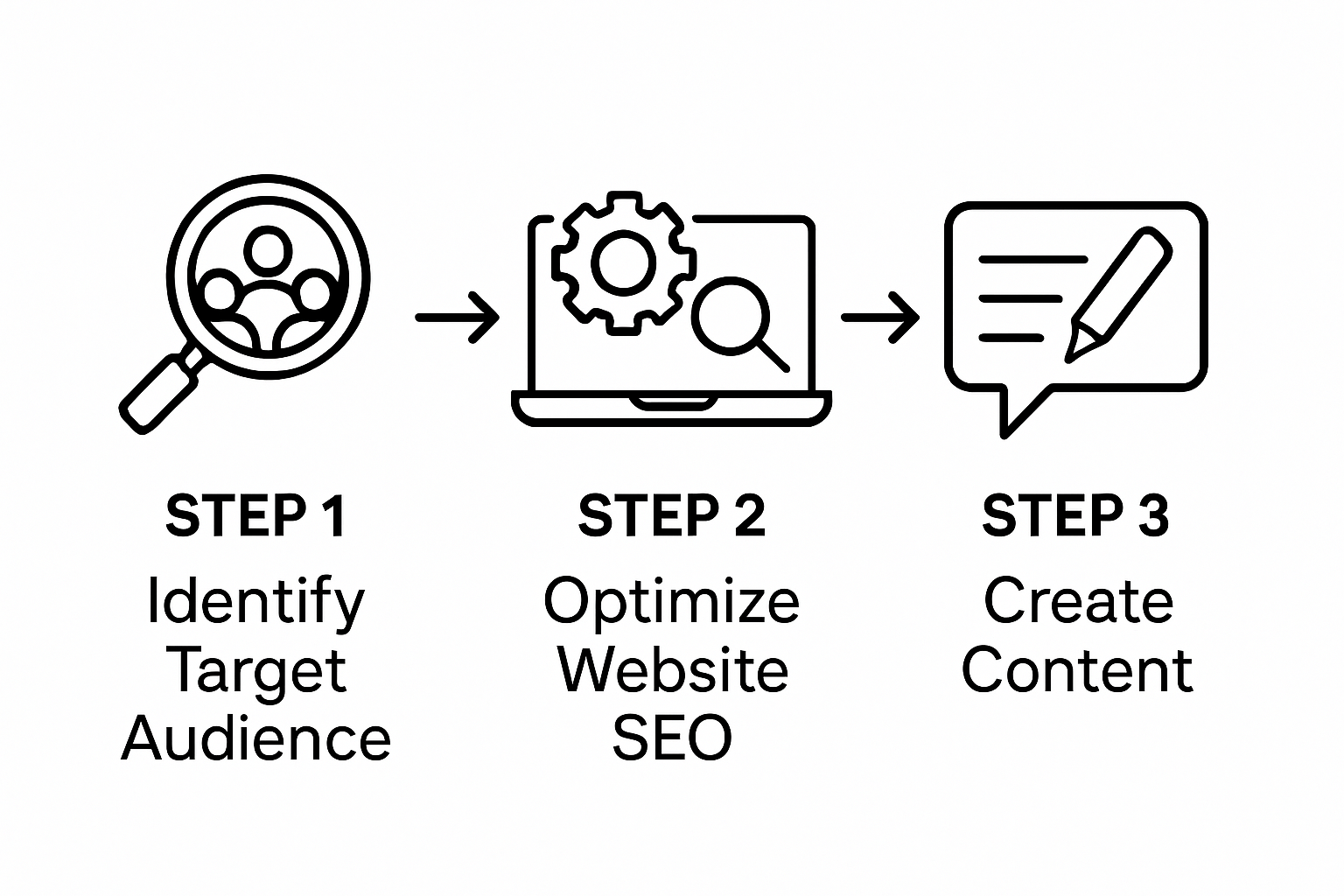
    1. Identify your ideal client profile Analyze current clients to determine specific legal needs and characteristics that align with your expertise.
    2. Optimize website for SEO with keywords Use targeted, relevant keywords throughout your site to attract clients searching for specific legal services.
    3. Create content addressing client concerns Develop engaging content that answers common legal questions and resonates with potential clients’ needs.
    4. Use social media for client engagement Leverage social media platforms to showcase expertise, build relationships, and provide valuable legal insights.
    5. Track and adjust marketing strategies continually Regularly evaluate your digital marketing performance and refine strategies based on analytics to enhance client acquisition.

    Step 1: Identify Your Target Audience and Niche

    Successfully attracting law clients online begins with a crystal clear understanding of exactly who you want to serve. Your target audience isn’t just a broad demographic its a precise group of potential clients whose specific legal needs align perfectly with your professional expertise and practice areas.

    Start by conducting a detailed examination of your current client base and the types of cases you handle most effectively. Analyze the common characteristics of your most successful and satisfying client interactions. Are they small business owners facing contract disputes? Individuals navigating complex family law challenges? Accident victims seeking personal injury representation? Each detail matters when defining your ideal client profile.

    According to research from the University of Houston’s Small Business Development Center, understanding your target audience requires examining comprehensive characteristics including values, lifestyle, challenges, and specific legal pain points. This means going beyond basic demographics like age and income to truly comprehend the psychological and emotional drivers that lead someone to seek legal representation.

    To refine your niche, consider your unique strengths as a legal professional.

    Three-step online law client attraction process illustrated with icons What specialized knowledge or experience sets you apart from other attorneys in your practice area? Perhaps you have an engineering background that makes you exceptional at intellectual property cases, or you speak multiple languages, allowing you to serve diverse community populations more effectively. These distinctive qualities transform you from a generic legal service provider into a targeted solution for specific client needs.

    Your niche selection should balance your professional passion with market demand. Research local legal needs, examine community trends, and identify underserved areas where your expertise can provide maximum value. This strategic approach ensures you are not just choosing a target audience but creating a meaningful connection with potential clients who genuinely need your specialized legal services.

    Step 2: Optimize Your Law Firm’s Website for SEO

    Search engine optimization transforms your law firm’s online presence from invisible to irresistible. Your website isn’t just a digital business card it’s a powerful client acquisition tool that requires strategic technical and content optimization to attract potential legal clients searching for representation.

    Keyword research becomes your foundational strategy. Focus on terms potential clients actually use when seeking legal help. Instead of generic phrases like “lawyer,” target specific, intent driven keywords such as “personal injury attorney in Chicago” or “divorce lawyer for child custody cases.” These precise keywords signal exactly what services you provide and match potential clients’ specific needs.

    According to research from Yale University’s ‘The Verdict’ blog, most clients begin their legal service search online, making strategic keyword placement critical. Incorporate these keywords naturally throughout your website content, including practice area descriptions, attorney bios, case studies, and blog posts. Avoid keyword stuffing which can make content feel unnatural and potentially harm your search rankings.

    Technical website elements dramatically impact your search visibility. Ensure your website loads quickly, functions seamlessly on mobile devices, and provides clear navigation. Create descriptive page titles, compelling meta descriptions, and include relevant internal links that help search engines understand your content’s context. Structure your website with header tags (H1, H2, H3) that incorporate target keywords and make content easily scannable.

    Consider our comprehensive guide on law firm digital marketing for deeper insights into creating an SEO optimized online presence. Remember that SEO is an ongoing process requiring consistent content updates, monitoring performance metrics, and adapting to evolving search engine algorithms. Regularly review your website’s performance using tools like Google Analytics to track visitor behavior, identify high performing content, and continuously refine your optimization strategy.

    Step 3: Create Engaging Content that Addresses Client Needs

    Content creation is the bridge that connects your legal expertise with potential clients searching for solutions to their legal challenges. Your content must transform complex legal concepts into accessible, compelling narratives that resonate with your target audience’s specific needs and concerns.

    Start by mapping out the most common legal questions and pain points within your practice area. This means diving deep into the emotional and practical challenges your potential clients face. For a personal injury attorney, this might involve creating content that explains the claims process, details compensation possibilities, and addresses the overwhelming feelings victims experience after an accident. Your goal is to provide clarity, demonstrate empathy, and showcase your professional understanding.

    According to research from Yale University’s publication, authoritative blog posts can significantly enhance your firm’s online visibility by generating valuable backlinks and establishing thought leadership. Focus on creating long form, in depth articles that thoroughly explore legal topics, provide practical insights, and demonstrate your specialized knowledge. Each piece of content should answer specific client questions, offer actionable advice, and subtly highlight your firm’s unique approach to solving legal challenges.

    Diversify your content strategy to maintain audience engagement. Mix written blog posts with video explanations, infographics that break down complex legal processes, and short social media clips that provide quick legal tips. Check out our guide on law firm SEO content writing to refine your approach. Remember that potential clients are not just seeking legal information they are looking for a trusted advisor who understands their specific situation.

    Verify the effectiveness of your content by tracking key metrics such as page views, time spent on page, social shares, and most importantly, client inquiries generated. Content that consistently attracts and converts potential clients indicates you are successfully addressing their needs and positioning your firm as a go to resource for legal guidance.

    Step 4: Leverage Social Media Platforms Effectively

    Social media transforms from a casual communication platform to a strategic client acquisition tool for modern law firms. Your social media presence should demonstrate professional expertise while humanizing your legal practice, creating connections that transform online interactions into potential client relationships.

    Prioritize platforms where your target audience actively seeks legal information. LinkedIn offers a professional networking environment perfect for connecting with business clients and displaying thought leadership. Facebook provides opportunities for community engagement and localized targeting, while Instagram can showcase your firm’s human side through behind the scenes glimpses and professional achievements. Each platform requires a nuanced approach tailored to its specific audience and communication style.

    Below is a comparison table to help you choose the most effective social media platforms for your law firm, based on target audience and strengths.

    Platform Audience Type Key Strength
    LinkedIn Professionals, Businesses Networking, Thought Leadership, B2B Visibility
    Facebook Local Community, General Public Community Engagement, Local Targeting
    Instagram Younger Demographics, General Public Brand Humanization, Visual Storytelling
    Twitter General Public Real-Time Updates, Legal News Sharing
    YouTube All Demographics Educational Video Content, Trust Building

    According to research from Northwestern Law Review, lawyers who use social media strategically by offering practical information and demonstrating thought leadership build significant online reputation. Create content that provides genuine value such as brief legal explanations, case study insights, and answers to common legal questions. Avoid overly technical language and focus on making complex legal concepts accessible and understandable.

    Explore our comprehensive law firm social media marketing strategies to refine your approach. Develop a consistent posting schedule that maintains audience engagement without overwhelming followers. Use a mix of educational content, firm achievements, client testimonial highlights, and occasional personal insights that showcase your team’s personality and professional commitment.

    Verify your social media effectiveness by tracking key metrics: engagement rates, follower growth, content shares, and most critically, the number of direct inquiries or consultations generated through these platforms. Success means transforming social media from a passive communication channel into an active client acquisition strategy that builds trust, demonstrates expertise, and positions your law firm as an approachable, knowledgeable legal resource.

    Step 5: Implement Paid Advertising Strategies to Reach Clients

    Paid advertising represents a precision instrument for connecting directly with potential legal clients who are actively seeking representation. Unlike organic marketing strategies, paid advertising allows you to target specific demographics, geographic locations, and search intent with remarkable accuracy.

    Google Ads and social media advertising platforms offer sophisticated targeting capabilities that enable law firms to reach individuals precisely when they need legal assistance. For instance, personal injury attorneys can target users searching for keywords related to accident claims, while family law practitioners can focus on individuals searching for divorce or child custody information. The key is crafting compelling ad copy that speaks directly to the potential client’s immediate legal concerns.

    Design your advertising strategy with laser focused precision. Create separate ad campaigns for each practice area, ensuring that the messaging and landing pages align perfectly with the specific legal service being advertised. This means developing unique ad sets for personal injury, criminal defense, family law, and other practice areas. Each campaign should include highly specific keywords, compelling ad copy that addresses potential client pain points, and landing pages designed to convert visitors into consultation requests.

    Learn more about our specialized PPC marketing strategies for law firms to maximize your online advertising effectiveness. Budget allocation is critical set aside a realistic monthly ad spend that allows for meaningful testing and optimization. Start with a conservative budget and gradually increase investment as you identify the most effective targeting and messaging strategies.

    Measure your advertising success through key performance indicators such as click through rates, cost per lead, conversion rates, and most importantly the actual number of quality client consultations generated. Successful paid advertising transforms from an expense to an investment when you can track a clear return demonstrate that each advertising dollar spent directly contributes to acquiring new clients for your law firm.

    law firm paid advertising

    Step 6: Track, Analyze, and Adjust Your Online Strategies

    Tracking and analyzing your digital marketing efforts transforms raw data into actionable insights that continuously improve your law firm’s online client acquisition strategy. Digital marketing is not a set it and forget it approach but a dynamic process of constant refinement and strategic adaptation.

    Implement comprehensive tracking using tools like Google Analytics, which provides deep insights into website visitor behavior, traffic sources, and conversion rates. Pay special attention to metrics that directly relate to potential client engagement such as time spent on practice area pages, consultation request form submissions, and phone call tracking. These indicators reveal not just how many people visit your website, but how effectively your digital strategies convert casual browsers into actual clients.

    According to research on web best practices, understanding user experience goes beyond simple numerical metrics. Analyze the complete user journey from initial website landing to consultation request. Examine which content generates the most engagement, which advertising campaigns produce the highest quality leads, and where potential clients might be dropping off in your conversion funnel.

    Review our top marketing tips for law firms to gain additional strategic insights. Establish a monthly review process where you systematically evaluate your digital marketing performance. Compare key performance indicators across different channels like organic search, paid advertising, social media, and email marketing. Look for patterns that indicate which strategies are most effective for your specific practice areas and target client demographics.

    Successful tracking means being willing to make data driven adjustments. If certain practice area pages have high bounce rates, redesign their content and layout. When specific advertising keywords generate more qualified leads, reallocate your budget to double down on those high performing strategies. Your online marketing approach should be a living, breathing strategy that evolves continuously based on real world performance data.

    Turn Proven Strategies Into Real Results For Your Law Firm

    You have identified your target audience, learned to optimize your website, and started building engaging content. Yet, the real challenge remains: how do you put these proven strategies into action and achieve measurable growth for your law practice? Many law firms struggle to translate digital marketing knowledge into consistent client acquisition. If you feel overwhelmed by SEO, paid advertising, or the constant need for quality online content, you are not alone. Investing energy into these areas without expert support can lead to frustration and missed opportunities.

    This is where LawSmiths becomes your partner for lasting success. With over 25 years of specialized experience helping attorneys stand out online, our suite of digital marketing services for law firms covers everything from results-driven SEO and content creation to advanced PPC marketing solutions. Let us turn your digital marketing plan into a powerful engine for attracting high-quality clients. Ready to accelerate your growth? Connect with LawSmiths today and discover how a customized approach can set your firm apart right now.

    Frequently Asked Questions

    Start by examining your current client base to identify common characteristics and specific legal needs. You can also consider psychological and emotional drivers that lead potential clients to seek legal representation.

    What SEO strategies should I implement for my law firm’s website?

    Focus on keyword research to identify specific terms potential clients use. Optimize your website’s technical elements, create descriptive meta tags, and ensure your content is easily scannable and informative.

    How can I create engaging content for my law firm?

    Map out common legal questions and pain points, and create content that transforms complex legal concepts into accessible narratives. Use various formats, such as blogs, videos, and infographics, to maintain audience engagement.

    What metrics should I track to measure the effectiveness of my online marketing strategy?

    Monitor key performance indicators like website traffic, conversion rates, client inquiries generated, and social media engagement to assess how well your strategies are converting potential clients.

  • 10 Essential Law Firm Blogging Best Practices

    10 Essential Law Firm Blogging Best Practices

    Law Firm Blogging Best Practices

    Law firm blogs are everywhere, but most barely scratch the surface. Nearly 70 percent of law firm blogs fail to connect with their ideal audience, wasting valuable effort and opportunity. Turns out, it is not just about writing more—it is about strategic steps that transform random posts into must-read legal resources.

    Quick Summary

    Takeaway Explanation
    Define Your Target Audience Understand your ideal clients’ needs to tailor your blog content effectively.
    Choose Relevant Topics Create content that addresses specific legal concerns of your audience for better engagement.
    Optimize Posts for SEO Use keywords strategically to enhance your blog’s visibility and attract more clients.
    Create Engaging Content Write clearly and empathetically to connect with potential clients and build trust.
    Use a Consistent Posting Schedule Regular posting establishes reliability and helps maintain audience interest in your blog.

    1: Define Your Target Audience

    Successful law firm blogging starts with understanding precisely who you want to reach. Your target audience determines everything from content tone to legal topics you will discuss. Most law firms mistakenly write generic content that attempts to appeal to everyone, which ultimately resonates with no one.

    Defining your target audience requires a strategic approach that goes beyond basic demographics. You need to develop a comprehensive client persona that captures not just age and location, but deep psychological and professional motivations.

    According to the Canadian Bar Association, creating a detailed profile of your ideal client helps focus your marketing strategy and ensures your blog content speaks directly to their needs.

    Key considerations for defining your target audience include:

    • Practice Area Specificity: Identify the exact legal services your ideal clients require
    • Client Pain Points: Understand the specific legal challenges and concerns your potential clients face
    • Professional Background: Determine whether you are targeting individuals, small businesses, corporate entities, or specific industry sectors
    • Geographic Limitations: Consider whether your services are local, regional, or national

    By developing a nuanced understanding of your target audience, you transform your law firm blog from a generic information platform into a tailored, compelling resource that attracts and engages potential clients. Your content becomes a strategic tool that demonstrates your understanding of their unique legal needs and positions your firm as the ideal solution to their challenges.

    2: Choose Relevant Topics for Your Audience

    Selecting the right topics for your law firm blog is crucial to attracting and engaging potential clients. Your content must go beyond generic legal information and provide genuine value that addresses specific client needs and concerns.

    Topics should emerge directly from your understanding of your target audience, reflecting their most pressing legal questions, challenges, and interests. This approach transforms your blog from a passive information repository into an active client engagement tool.

    Research from the American Bar Association highlights that successful law firm blogs focus on solving real client problems rather than showcasing legal expertise through complex terminology.

    Effective topic selection strategies include:

    • Addressing Common Legal Questions: Create content that directly answers frequent client inquiries
    • Exploring Recent Legal Changes: Provide insights into new legislation or judicial decisions affecting your practice areas
    • Sharing Practical Legal Advice: Develop content that helps potential clients understand complex legal processes
    • Highlighting Case Studies: Demonstrate your firm’s expertise through anonymized success stories

    When brainstorming topics, consider the intersection between your legal expertise and your audience’s most significant concerns. Practical, actionable content builds trust and positions your firm as a knowledgeable, approachable resource. This means moving beyond theoretical legal discussions to provide clear, understandable guidance that potential clients can immediately apply to their situations.

    Remember that topic relevance is dynamic. Regularly review your blog’s performance, track client interactions, and stay informed about emerging legal trends to ensure your content remains current and compelling.

    3: Optimize Posts for SEO

    Search engine optimization transforms your law firm blog from an overlooked digital document into a powerful client attraction tool. SEO is not about tricking search engines, but creating valuable content that genuinely helps potential clients.

    According to Stanford Medicine’s web guidelines, effective SEO requires strategic keyword placement and thoughtful site structure. This means selecting keywords that potential clients actually use when searching for legal services.

    Your SEO strategy should focus on several critical elements:

    • Keyword Research: Identify terms potential clients use when seeking legal advice
    • Natural Integration: Incorporate keywords seamlessly into your content
    • Metadata Optimization: Craft compelling page titles and meta descriptions
    • Link Building: Create internal and external links that enhance content credibility

    When writing blog posts, prioritize clarity and relevance over keyword density. Search engines now prioritize content that provides genuine value. This means writing comprehensive, well-researched articles that directly address client questions and concerns.

    Consider our law firm SEO content writing service for professional assistance in developing a targeted SEO strategy. Technical optimization matters, but high-quality, informative content remains the most crucial SEO factor.

    Remember that SEO is an ongoing process. Regularly analyze your blog’s performance, track keyword rankings, and be prepared to adjust your strategy based on emerging search trends and client needs.

    4: Create Engaging and High-Quality Content

    Engaging content is the cornerstone of a successful law firm blog. Your writing must transform complex legal concepts into accessible, compelling narratives that resonate with potential clients. Generic, dry legal prose will quickly drive readers away.

    According to Walter Effross’s research on legal web content, creating high-quality blog posts requires a strategic approach that balances professional expertise with reader-friendly communication.

    Key strategies for developing engaging content include:

    • Storytelling Approach: Use real-world scenarios and case examples to illustrate legal concepts
    • Clear Language: Eliminate unnecessary legal jargon and explain complex terms
    • Practical Insights: Provide actionable advice readers can immediately understand
    • Emotional Connection: Address client concerns and demonstrate empathy

    Writing for a legal blog demands more than technical accuracy. Your content should anticipate and answer potential client questions before they even ask them. This means going beyond surface-level explanations and diving deep into the practical implications of legal issues.

    Consider the human element in your writing. Potential clients are often stressed, confused, or anxious about their legal challenges. Your blog posts should offer not just information, but genuine understanding and guidance.

    Avoid academic language that alienates readers. Instead, write as if you were having a direct conversation with a client sitting across your desk. Use clear, straightforward language that demystifies legal processes and makes your expertise approachable.

    Remember that high-quality content is about building trust. Each blog post is an opportunity to demonstrate your firm’s knowledge, compassion, and commitment to client success.

    5: Use a Consistent Posting Schedule

    Consistency is the secret weapon of successful law firm blogs. Sporadic, unpredictable posting undermines your credibility and prevents you from building a loyal readership. Potential clients want to know they can rely on your firm for regular, dependable legal insights.

    A consistent posting schedule signals professionalism and commitment. It demonstrates that your firm is active, engaged, and continuously providing valuable legal information. Think of your blog as a professional communication channel, not a random collection of occasional thoughts.

    The frequency of your posts matters less than maintaining a predictable rhythm. Whether you choose to publish weekly, bi-weekly, or monthly, the key is unwavering regularity.

    Considerations for developing a sustainable posting schedule include:

    • Resource Allocation: Determine how much time your team can realistically dedicate to content creation
    • Content Pipeline: Develop a content calendar to plan topics in advance
    • Quality Over Quantity: Prioritize well-researched posts over frequent, shallow content
    • Team Collaboration: Distribute writing responsibilities to maintain consistency

    Effective scheduling requires strategic planning. Create a content calendar that maps out topics, assigns writers, and sets firm publication dates. This approach transforms blog writing from a reactive task to a proactive marketing strategy.

    Remember that consistency extends beyond just publishing dates. Maintain a uniform tone, style, and quality across all blog posts. Your readers should instantly recognize your firm’s unique voice and perspective.

    Technology can help. Use scheduling tools to draft, review, and automatically publish content, ensuring you never miss a planned posting date. A well-managed blog becomes a powerful tool for demonstrating your firm’s expertise and reliability.

    6: Promote Your Blog on Social Media

    Social media transforms your law firm’s blog from a static webpage into a dynamic engagement platform. Strategic social media promotion extends your content’s reach, attracts potential clients, and positions your firm as an accessible, modern legal resource.

    According to the Association of Legal Administrators, effective social media marketing requires understanding your audience and utilizing targeted management tools.

    Key strategies for social media blog promotion include:

    • Platform Selection: Choose platforms where your target clients are most active
    • Visual Content: Create compelling graphics that summarize blog post insights
    • Consistent Branding: Maintain a professional, cohesive visual and messaging approach
    • Engagement: Respond to comments and encourage discussion

    LinkedIn offers particular value for law firms, providing a professional network specifically designed for serious, business-oriented content. Platforms like Twitter and Facebook can also amplify your blog’s visibility when used strategically.

    Do not simply post links. Craft engaging social media snippets that provide a preview of your blog’s value. Use provocative questions, share intriguing statistics, or highlight unique insights that compel users to click through and read the full article.

    Consider scheduling tools to maintain a consistent social media presence. These platforms allow you to plan posts in advance, ensuring regular content distribution without constant manual intervention.

    Remember that social media promotion is about building relationships, not just broadcasting content. Engage authentically, demonstrate your firm’s expertise, and create a digital presence that reflects your professional commitment.

    7: Encourage Reader Interaction and Feedback

    Interactive blogs transform passive reading into a dynamic conversation. By actively inviting and managing reader feedback, your law firm can build trust, demonstrate accessibility, and gain valuable insights into client perspectives.

    According to research from the National Institutes of Health, interactive features significantly enhance web-based communication and increase perceived credibility for professional blogs.

    Strategies to encourage reader interaction include:

    • Clear Call-to-Action: Explicitly invite readers to share thoughts and experiences
    • Responsive Comment Management: Promptly and professionally address reader comments
    • Interactive Content: Include questions that prompt reader reflection
    • Feedback Mechanisms: Implement easy-to-use comment forms and survey tools

    Engagement is a two-way street. Readers want to feel heard, not lectured. When you respond to comments, you demonstrate that your firm values client perspectives and is committed to genuine communication.

    Consider adding interactive elements like short surveys, poll questions, or discussion prompts at the end of your blog posts. These tools not only encourage participation but also provide your firm with valuable market research and client sentiment insights.

    Be mindful of maintaining professional boundaries. While encouraging interaction, ensure all responses remain courteous, helpful, and aligned with legal ethics. Avoid providing specific legal advice in blog comments, instead steering conversations toward scheduling consultations.

    Remember that each comment is an opportunity to showcase your firm’s expertise, empathy, and commitment to client service. Thoughtful, timely responses can transform casual readers into potential clients.

    8: Analyze Data to Improve Content

    Data analysis transforms your law firm’s blog from a guessing game into a strategic communication tool. By understanding how readers interact with your content, you can continuously refine your blogging approach to maximize engagement and client attraction.

    Traditional law firms often overlook the power of analytics, treating their blog as a static publication. Smart firms use data to understand reader behavior, preferences, and content performance.

    Key metrics to track and analyze include:

    • Page Views: Identify which topics generate the most interest
    • Time on Page: Measure how deeply readers engage with content
    • Bounce Rate: Understand if content meets reader expectations
    • Conversion Rates: Track how blog content leads to client consultations

    Tools like Google Analytics provide comprehensive insights into your blog’s performance. Pay attention to which posts attract the most readers, generate the most comments, and ultimately drive potential client inquiries.

    Do not just collect data passive. Use analytics as an active tool for content strategy. If certain legal topics consistently outperform others, that’s a clear signal to produce more similar content. Conversely, low-performing posts might indicate a need to adjust your approach.

    Consider tracking demographic information about your readers. Understanding their age, location, and professional background can help you create more targeted, relevant content that speaks directly to your ideal client base.

    Remember that data analysis is an ongoing process. Review your blog’s performance quarterly, identify trends, and be prepared to pivot your content strategy based on real reader engagement metrics.

    9: Update and Repurpose Old Posts

    Blogs are living documents, not static artifacts. Your law firm’s older content can become a powerful resource when strategically updated and repurposed. Instead of letting valuable posts gather digital dust, transform them into fresh, relevant materials that continue attracting potential clients.

    According to research from the Cambridge Core Blog, repurposing content enhances digital accessibility and maintains ongoing relevance.

    Strategies for revitalizing old blog posts include:

    • Legal Updates: Incorporate recent legislative changes or court decisions
    • Multimedia Conversion: Transform written content into infographics or videos
    • Expanded Insights: Add new case studies or professional perspectives
    • SEO Optimization: Refresh keywords and metadata

    Updating content is not about minor cosmetic changes. Meaningful updates provide genuine value by reflecting the most current legal landscape. Review older posts quarterly, identifying opportunities to enhance their relevance and utility.

    Consider cross-linking updated posts with newer content. This strategy not only improves site navigation but also signals to search engines that your content remains current and authoritative.

    Remember that repurposing extends beyond your blog. Transform top-performing posts into social media snippets, email newsletters, or presentation materials. Each piece of content can serve multiple communication channels, maximizing your firm’s digital marketing efficiency.

    Legal marketing is a minefield of ethical considerations. Your law firm’s blog must navigate complex professional conduct rules while maintaining an engaging, informative presence. One misstep can jeopardize your professional reputation and potentially trigger disciplinary action.

    According to research from the North Carolina State Bar, lawyer websites must rigorously comply with professional conduct rules, particularly regarding advertising and communication.

    Key compliance considerations include:

    • Avoid Misleading Statements: Ensure all claims are factually accurate
    • Protect Client Confidentiality: Never disclose identifying client information
    • Clarify Potential Outcomes: Use language that prevents unrealistic expectations
    • Maintain Professional Tone: Represent your firm’s expertise without hyperbole

    Jurisdictional rules vary, meaning what’s acceptable in one state might violate regulations in another. If you practice across multiple states, you must understand and adhere to the most stringent ethical guidelines.

    Read our guide on top law firm marketing tips to further understand the nuanced landscape of legal marketing compliance.

    Consult your state bar’s specific guidelines and consider periodic reviews of your blog content by a professional ethics advisor. Remember that compliance is not just about avoiding penalties it’s about maintaining the integrity of the legal profession and earning client trust.

    Bring Your Law Firm’s Blog to Life With LawSmiths

    Are you struggling to turn expert insights into content that actually attracts clients? The article points out how generic, inconsistent blogging and unclear audience focus can keep your firm invisible online. Without a thoughtful strategy or regular engagement, even the most informative posts fail to generate new business. LawSmiths understands these challenges. From audience definition to consistent posting and SEO, we specialize in helping law firms transform their blogs into powerful client magnets.

    Stop guessing what works and let proven legal marketing professionals elevate your entire blog strategy. Call us at 1-833-217-2991 to discover our services for SEO content writing, web development, and digital strategy designed just for attorneys. If building trust, increasing visibility, and generating more high-value cases are top priorities for your firm, take the next step and contact our team today. Your ideal clients are searching for answers, make sure they find you first.

    The table below provides a comprehensive summary of the 10 essential law firm blogging best practices discussed in this article, outlining their core focus and primary benefits for legal marketers and firms.

    Best Practice Core Focus Key Benefit
    Define Your Target Audience Identify ideal clients and understand their specific needs Creates tailored, client-focused content
    Choose Relevant Topics Address audience legal concerns and interests Drives engagement and builds authority
    Optimize Posts for SEO Strategic keyword use, metadata, and site structure Improves online visibility and attracts new clients
    Create Engaging, High-Quality Content Write clear, empathetic, actionable posts Builds trust and positions the firm as approachable
    Use a Consistent Posting Schedule Maintain a regular publishing calendar Increases reliability and audience loyalty
    Promote via Social Media Share content to targeted platforms and encourage sharing Expands reach and generates more leads
    Encourage Interaction & Feedback Invite comments, manage responses, and foster discussion Builds community and supports client engagement
    Analyze Data to Improve Content Track metrics like views, engagement, and conversions Refines content strategy for better performance
    Update & Repurpose Old Posts Revise older content; create new formats, refresh SEO Extends content lifespan and maintains relevance
    Ensure Legal Marketing Compliance Adhere to ethical and legal advertising guidelines Protects reputation and builds client trust

    Frequently Asked Questions

    What are the key elements of a successful law firm blog?

    A successful law firm blog includes defining a target audience, selecting relevant topics, optimizing for SEO, creating engaging content, maintaining a consistent posting schedule, promoting through social media, encouraging reader interaction, analyzing data, updating old posts, and ensuring compliance with legal marketing rules.

    How can I define my law firm’s target audience for blogging?

    To define your target audience, create a detailed client persona that includes not just demographics but also client pain points, professional backgrounds, specific legal needs, and geographic considerations. This helps tailor your content to meet their unique needs.

    What strategies should I use to select topics for my law firm blog?

    Select topics that address common legal questions, explore recent legal changes, share practical legal advice, and highlight case studies. This ensures your content is relevant and provides genuine value to your potential clients.

    How important is SEO for my law firm’s blog?

    SEO is crucial as it enhances your blog’s visibility in search engines. Focus on keyword research, natural integration of keywords, metadata optimization, and building credible links to drive more traffic to your blog and attract potential clients.

  • Understanding Search Engine Ranking Factors for Law Firms

    Understanding Search Engine Ranking Factors for Law Firms

    Search Engine Ranking Factors for Law Firms

    Law firms want their websites to show up first when someone needs legal help online. And that makes sense because appearing on the first page of search results is crucial for client acquisition, according to the American Bar Association. But what really determines who shows up where is way more complicated than most people think and goes far beyond keywords. The factors that shape search rankings are an unpredictable mix of technical performance, content quality, and authority signals—and getting them right could be the single biggest advantage for law practices looking to stand out.

    Quick Summary

    Takeaway Explanation
    Focus on Content Relevance Create comprehensive content that aligns with potential client queries.
    Optimize Technical Performance Ensure fast loading speeds and mobile responsiveness for better rankings.
    Leverage Backlinks for Authority Build quality backlinks to enhance website credibility and improve visibility.
    Maintain Quality and Freshness Regularly update content to keep it relevant and valuable to users.
    Adhere to SEO Best Practices Understand and implement SEO strategies to remain competitive in search rankings.

    What Are Search Engine Ranking Factors?

    Search engine ranking factors are complex algorithmic criteria that determine how websites are positioned in search results. These multifaceted elements help search engines like Google evaluate and rank web content based on relevance, authority, and user experience. Understanding these factors is crucial for law firms seeking to improve their online visibility and attract potential clients.

    The table below organizes the primary types of search engine ranking factors and their key characteristics that influence law firm website rankings.

    Ranking Factor Type Description Example Characteristics
    Content Relevance and Quality Alignment of website content with user search intent and legal topics Comprehensive info, depth, originality, keyword use
    Technical Performance Technical functionality and user experience aspects of the website Fast load speed, mobile responsiveness, secure connection
    Authority Signals External and on-site signals reflecting trustworthiness and expertise Quality backlinks, domain credibility, professional credentials
    Content Freshness and Maintenance Ongoing relevance and value of website content through regular updates Updated articles, new resources, removal of outdated info
    User Engagement Signals Indicators of how users interact with the website Time on site, bounce rate, navigation ease

    Core Components of Search Engine Rankings

    Search engines use sophisticated algorithms that analyze numerous signals to determine a website’s ranking. Search engine optimization research reveals that these signals encompass both on-page and off-page elements. The primary components include:

    • Relevance of content to user search queries
    • Quality and depth of website content
    • Technical website performance and user experience
    • Number and quality of external backlinks
    • Website authority and domain credibility

    Technical and Content Considerations

    For law firms, search engine ranking factors extend beyond basic keyword placement. Search engines now prioritize websites that demonstrate expertise, authoritativeness, and trustworthiness. This means creating comprehensive, well-researched content that directly addresses potential client questions and concerns.

    Website technical performance plays a significant role in rankings. Factors such as page loading speed, mobile responsiveness, secure connections (HTTPS), and intuitive navigation contribute to search engine evaluations. Law firms must ensure their websites are not just informative but also technically sound and user-friendly.

    4 lawyers looking at computers - technical performance written on screen

    Understanding search engine ranking factors allows law firms to develop targeted digital marketing strategies. By focusing on creating high-quality, relevant content and maintaining excellent technical website standards, attorneys can improve their online visibility. Learn more about our law firm SEO strategies to understand how these ranking factors can be leveraged effectively.

    Successful implementation requires a holistic approach that combines content quality, technical optimization, and continuous adaptation to evolving search engine algorithms.

    In the digital age, search engine ranking factors are not merely technical considerations but critical business strategies for law firms seeking to establish online credibility and attract potential clients. The legal marketplace has transformed dramatically, with potential clients increasingly turning to online searches to find legal representation.

    Visibility and Client Acquisition

    Research from the American Bar Association highlights that online visibility directly correlates with client acquisition. Law firms that understand and optimize search engine ranking factors can significantly improve their chances of being discovered by potential clients. The digital landscape is competitive, and appearing on the first page of search results is crucial.

    This table summarizes the key implications of strong search engine rankings for law firms, highlighting why these ranking factors matter in the legal industry.

    Implication Description
    Increased Organic Traffic More visitors find the website through unpaid search results.
    Higher Likelihood of Client Inquiries Greater visibility boosts potential client contact rates.
    Enhanced Professional Credibility High rankings improve reputation and trustworthiness
    Cost-Effective Marketing SEO lowers costs compared to traditional advertising channels.
    Competitive Advantage Stand out among other law firms in a saturated market.

    Key implications of strong search engine rankings include:

    • Increased organic website traffic
    • Higher probability of client inquiries
    • Enhanced professional credibility
    • Cost-effective marketing compared to traditional advertising
    • Competitive advantage in a saturated legal market

    Establishing Professional Credibility

    Search engine ranking factors go beyond mere visibility. They serve as a digital validation of a law firm’s expertise and trustworthiness. Modern search algorithms evaluate content depth, relevance, and user engagement as indicators of professional authority. This means law firms must create high-quality, informative content that demonstrates genuine legal knowledge.

    Technical performance also plays a significant role. Websites with fast loading speeds, mobile responsiveness, and secure connections are viewed more favorably by search engines. These factors signal a professional, client-focused approach that extends beyond legal expertise.

    Strategic Digital Marketing

    Understanding search engine ranking factors enables law firms to develop targeted digital marketing strategies. By focusing on creating valuable content, maintaining technical website excellence, and continuously adapting to algorithm changes, attorneys can effectively improve their online presence. Learn more about our comprehensive digital marketing approaches to maximize your firm’s online potential.

    Successful implementation requires a holistic approach that combines strategic content creation, technical optimization, and ongoing performance analysis.

    How Search Engine Ranking Factors Influence Visibility

    Search engine ranking factors are sophisticated mechanisms that determine a law firm’s digital presence and online discoverability. These complex algorithmic criteria act as digital gatekeepers, strategically positioning websites within search result landscapes and significantly impacting potential client interactions.

    Content Relevance and Quality

    Research from the University of Puget Sound highlights critical ranking factors that directly influence online visibility. Content relevance emerges as a primary driver, with search engines prioritizing websites that demonstrate comprehensive, authoritative information addressing user queries.

    Key elements of content-driven visibility include:

    • Depth and comprehensiveness of legal information
    • Alignment with specific user search intent
    • Originality and unique perspective on legal topics
    • Regular content updates and freshness
    • Incorporation of relevant legal keywords

    Technical Performance Metrics

    Beyond content, technical website performance plays a crucial role in search engine visibility. Website loading speed, mobile responsiveness, secure connections, and intuitive navigation significantly impact search rankings. Law firms must recognize that technical optimization is not merely a background task but a critical component of digital marketing strategy.

    Search engines evaluate websites through multiple technical lenses, assessing factors such as:

    • Page load times
    • Mobile device compatibility
    • Security protocols
    • Website architecture
    • Cross-device user experience

    Strategic Visibility Enhancement

    Understanding how ranking factors influence visibility allows law firms to develop targeted digital strategies. By combining high-quality content with robust technical performance, attorneys can improve their online positioning. Explore our comprehensive digital marketing solutions to understand how to maximize your firm’s digital potential.

    Successful visibility requires a holistic approach that integrates content excellence, technical optimization, and continuous strategic refinement.

    Key Concepts Behind Search Engine Ranking Factors

    Search engine ranking factors represent a complex ecosystem of digital signals that determine how websites are evaluated and positioned in search results. For law firms, understanding these underlying concepts is crucial to developing an effective online marketing strategy that increases visibility and attracts potential clients.

    Algorithmic Evaluation Principles

    Research from Search.gov reveals the intricate mechanisms behind search engine ranking algorithms. These sophisticated systems analyze websites through multiple interconnected lenses, evaluating content not just as isolated elements but as part of a comprehensive digital ecosystem.

    Key algorithmic evaluation principles include:

    • Holistic assessment of website quality
    • Dynamic interpretation of user intent
    • Contextual understanding of content relevance
    • Comprehensive analysis of technical performance
    • Continuous learning and adaptation

    Content and Authority Signals

    Search engines prioritize websites that demonstrate genuine expertise and authoritative knowledge. For law firms, this means creating content that goes beyond surface-level information. The algorithms assess the depth, accuracy, and comprehensiveness of legal content, rewarding websites that provide substantial value to potential clients.

    Critical authority signals encompass:

    • Depth of legal information provided
    • Credibility of sources and references
    • Consistency of content quality
    • Professional credentials and background
    • External validation through backlinks

    Technical Performance Foundations

    Beyond content, technical website performance plays a pivotal role in search rankings. Explore our comprehensive technical SEO insights to understand how these foundational elements impact online visibility. Search engines evaluate websites through sophisticated performance metrics that assess user experience, loading speed, mobile responsiveness, and overall technical infrastructure.

    Successful implementation requires a nuanced understanding of how these ranking factors interplay, demanding continuous adaptation and strategic refinement of digital marketing approaches.

    Take Control of Your Law Firm’s Online Rankings

    Are you frustrated by the complexity of search engine ranking factors and unsure why your law firm is not appearing where you want in search results? The digital landscape is fiercely competitive, especially for attorneys trying to attract more qualified clients and build a solid reputation. The article explained the importance of expertise, content quality, technical performance, and authority signals for boosting your online visibility. Yet, navigating these requirements alone can be overwhelming and time-consuming.

    Do not let your firm get lost in a crowded market. Trust the team with over 25 years of experience in digital marketing for law firms to help you master search engine ranking factors and stand out. LawSmiths offers website development, strategic content, SEO, and more, everything you need to convert online visibility into real client growth. Ready to take the next step? Contact us now and let our experts elevate your online presence so potential clients find you first.

    Frequently Asked Questions

    What are search engine ranking factors?

    Search engine ranking factors are algorithmic criteria used by search engines to determine how websites are positioned in search results based on relevance, authority, and user experience.

    How do content relevance and quality impact search engine rankings?

    Content relevance and quality are crucial as search engines prioritize websites that provide comprehensive and authoritative information aligned with user search intent, helping to enhance online visibility.

    Why is technical performance important for law firms’ websites?

    Technical performance, including website loading speed, mobile responsiveness, and secure connections, significantly influences search rankings and user experience, making it essential for law firms to maintain a well-optimized site.

    How can law firms improve their online visibility through search engine optimization?

    Law firms can enhance online visibility by creating high-quality, relevant content, optimizing site performance, and understanding search engine ranking factors to attract potential clients effectively.

    One of the Best SEO Marketing Agencies for Law Firms

    LawSmiths delivers a bulletproof SEO advantage by uniquely guaranteeing exclusive market protection by never taking on competing clients in the same city and practice area—combined with 25+ years of specialized legal marketing expertise and transparent, tailored strategies that reliably drive law firms to the top of search results and consistently generate high-quality leads. Is your internet marketing agency not making the grade? Call us now at (833) 217-2991 to review your strategy, all consultations are free.

  • What is Law Firm SEO? Understanding Its Importance and Impact

    What is Law Firm SEO? Understanding Its Importance and Impact

    Law firms are fighting for attention online and clients are turning to search engines more than ever. More than 70 percent of potential clients now start their hunt for legal help on Google. That sounds like fierce competition and endless ads, right? Not quite. The surprise is that the law firms winning the most new clients aren’t just those shouting the loudest, but those quietly mastering SEO with smart, targeted strategies.

    Quick Summary

    Takeaway Explanation
    Effective keyword research is crucial Identifying specific legal terms potential clients use improves search visibility.
    Content quality establishes credibility Authoritative, informative content demonstrates expertise and builds trust with clients.
    Technical performance impacts SEO Fast loading, mobile-friendly websites enhance user experience and search rankings.
    Continuously adapt SEO strategies Ongoing monitoring and adjustments are essential for responding to changing algorithms.
    Measure success with detailed metrics Tracking organic traffic, conversion rates, and user engagement helps refine strategies.

    Defining Law Firm SEO: Key Principles and Concepts

    Law firm SEO represents a specialized digital marketing strategy designed to enhance a legal practice’s online visibility and attract potential clients through strategic search engine optimization techniques. Unlike generic SEO approaches, law firm SEO focuses specifically on the unique challenges and opportunities within the legal industry’s digital landscape.

    Core Components of Law Firm SEO

    Law firm SEO encompasses several critical elements that work together to improve a legal practice’s digital presence. According to research from the Legal Marketing Association, these components include:

    • Targeted Keyword Research: Identifying specific legal terms and practice area phrases potential clients use when searching for legal services
    • Content Optimization: Creating informative, authoritative content that addresses legal questions and demonstrates expertise
    • Technical Website Performance: Ensuring websites load quickly, function smoothly on mobile devices, and provide an excellent user experience

    Strategic Implementation Principles

    Successful law firm SEO requires a nuanced understanding of both search engine algorithms and the legal industry’s unique client acquisition dynamics. Attorneys must recognize that potential clients typically search for legal services with specific intent, seeking solutions to complex legal challenges.

    The goal is not simply to rank higher in search results, but to establish credibility, trust, and expertise through strategic online positioning. This means developing content that genuinely helps potential clients understand legal processes, rights, and potential solutions.

    Furthermore, law firms must adapt their digital marketing strategies to reflect the increasingly sophisticated search behaviors of modern legal consumers. This involves creating comprehensive, practice-area specific content that answers detailed questions, provides clear insights, and demonstrates the firm’s specialized knowledge.

    By implementing a thoughtful, strategic approach to SEO, law firms can transform their online presence from a passive digital brochure into an active client acquisition platform that consistently attracts and converts potential legal clients.

    In an increasingly digital world, law firm SEO has transformed from an optional marketing strategy to a critical business necessity. The legal marketplace is experiencing unprecedented competition, with potential clients overwhelmingly turning to online search platforms to find and evaluate legal services.

    Digital Client Acquisition Dynamics

    According to research from the American Judicature Society, modern legal consumers exhibit distinct online behavior that underscores the importance of strategic SEO. These behavioral patterns include:

    • Immediate Information Seeking: Clients want quick, authoritative answers to complex legal questions
    • Comprehensive Research: Potential clients compare multiple law firms before making a decision
    • Trust Verification: Online presence serves as a primary credibility indicator

    Competitive Advantage Through Strategic Visibility

    SEO represents more than just ranking higher in search results. It is a sophisticated mechanism for establishing professional credibility, demonstrating expertise, and connecting with potential clients precisely when they need legal guidance. By implementing targeted law firm SEO strategies, attorneys can effectively communicate their unique value proposition and differentiate themselves in a crowded marketplace.

    The economic implications are substantial. Law firms that invest in robust SEO strategies can significantly reduce traditional client acquisition costs while simultaneously expanding their potential client base. Organic search traffic provides a more cost-effective and sustainable method of attracting high-quality legal leads compared to traditional advertising channels.

    Moreover, effective SEO allows law firms to target specific practice areas, geographical regions, and client demographics with unprecedented precision. This targeted approach ensures that marketing efforts are not just broad and inefficient, but strategically aligned with the firm’s specific strengths and client needs.

    Ultimately, law firm SEO is not merely a technical exercise but a comprehensive approach to digital storytelling. It enables legal practices to showcase their expertise, build trust, and create meaningful connections with potential clients in an increasingly digital legal landscape.

    How Law Firm SEO Works: Core Mechanisms Explained

    Law firm SEO operates through a complex interplay of technical optimization, content strategy, and strategic digital positioning. Unlike generic marketing approaches, it demands a nuanced understanding of search engine algorithms and legal consumer behavior.

    Technical Optimization Foundations

    According to research from Yale University’s digital marketing research team, successful law firm SEO relies on several critical technical components:

    • Website Infrastructure: Ensuring fast loading speeds, mobile responsiveness, and secure hosting
    • Structured Data: Implementing schema markup to help search engines understand legal content context
    • Meta Tag Optimization: Creating precise, practice-area specific title tags and descriptions

    Content and Keyword Strategy Mechanisms

    The core of law firm SEO revolves around creating authoritative, practice-specific content that directly addresses potential clients’ legal questions. This involves deep keyword research that goes beyond generic terms, focusing on specific legal scenarios, practice areas, and user intent.

    Search engines prioritize content that demonstrates genuine expertise, comprehensiveness, and relevance. For attorneys, this means developing in-depth articles, FAQ sections, and practice area guides that provide substantive legal insights while remaining accessible to non-legal audiences.

    Moreover, law firms must strategically develop digital marketing approaches that reflect the complex decision-making processes of potential legal clients. This requires understanding user search patterns, anticipating information needs, and creating content that builds trust and credibility.

    Ongoing Performance and Adaptation

    Successful law firm SEO is not a static process but a dynamic, continuous strategy of monitoring, analyzing, and refining digital presence. Search engines constantly update their algorithms, requiring law firms to remain agile and responsive to emerging digital marketing trends.

    By implementing a holistic approach that combines technical excellence, strategic content creation, and consistent performance monitoring, law firms can transform their online presence from a passive digital brochure into an active client acquisition platform.

    To clarify the major components that make up a comprehensive law firm SEO strategy, here is a table organizing these elements and their descriptions.

    Component Description
    Targeted Keyword Research Identifying specific legal terms and practice area phrases potential clients search for
    Content Optimization Developing authoritative, informative content that addresses legal questions
    Technical Website Performance Ensuring fast load time, mobile responsiveness, and a high-quality user experience
    Structured Data Adding schema markup to help search engines understand legal content context
    Meta Tag Optimization Implementing precise, relevant title tags and descriptions for practice areas
    Performance Monitoring Continuously tracking and analyzing SEO results to adapt strategies as needed

    Essential Components of Effective Law Firm SEO Strategies

    Building a comprehensive law firm SEO strategy requires a multifaceted approach that goes beyond simple keyword placement. Success demands a sophisticated understanding of digital marketing principles specifically tailored to legal professionals.

    Strategic Keyword Development

    According to research from Yale University’s digital marketing research team, effective keyword strategies for law firms involve more than generic search terms. The most successful approaches include:

    legal team seo keywords

    • Practice Area Specificity: Targeting hyper-local and practice-specific search phrases
    • User Intent Mapping: Understanding the precise legal questions potential clients are asking
    • Long-Tail Keyword Integration: Capturing nuanced, conversational search queries

    Technical Optimization and Content Excellence

    Effective law firm SEO requires meticulous technical infrastructure combined with authoritative content creation. This means developing websites that are not just informative, but technically superior in performance, security, and user experience.

    Search engines prioritize websites that demonstrate expertise, authority, and trustworthiness. For law firms, this translates into creating comprehensive, well-researched content that genuinely addresses potential clients’ legal concerns. Explore our specialized SEO content writing services designed to elevate legal digital marketing strategies.

    Continuous Performance Monitoring and Adaptation

    The digital marketing landscape evolves rapidly, demanding law firms maintain an agile and proactive approach to SEO. This involves continuous analysis of website performance, tracking keyword rankings, monitoring user engagement metrics, and swiftly adapting strategies to align with emerging search engine algorithms.

    Successful law firm SEO is not a one-time implementation but an ongoing process of refinement, testing, and strategic adjustment. By maintaining a comprehensive, dynamic approach, law firms can transform their digital presence from a passive online brochure into an active, client-generating platform that consistently delivers value and builds trust.

    Measuring Success: Understanding SEO Results for Law Firms

    Measuring SEO performance for law firms requires a sophisticated approach that goes beyond simplistic metrics. Success is determined by understanding how digital visibility translates into tangible client acquisition and business growth.

    Infographic showing organic traffic, conversions, and keyword ranking for law firm SEO

    Critical Performance Indicators

    According to research from the Maryland State Bar Association, law firms should focus on comprehensive performance metrics that reveal genuine digital marketing effectiveness:

    • Organic Traffic Volume: Total number of website visitors from search engine results
    • Conversion Rate: Percentage of website visitors who become actual client inquiries
    • Keyword Ranking Progression: Movement in search engine positioning for targeted legal terms

    Interpreting Advanced SEO Metrics

    Successful SEO measurement for law firms transcends basic website analytics. Meaningful performance tracking requires understanding the nuanced relationship between digital visibility and potential client engagement.

    Law firms must analyze not just raw traffic numbers, but the quality and intent behind search interactions.

    This table summarizes key metrics used to measure law firm SEO performance and explains what each indicator reveals about digital marketing effectiveness.

    SEO Metric What It Measures
    Organic Traffic Volume Number of website visitors from search engine results
    Conversion Rate Percentage of visitors who turn into actual client inquiries
    Keyword Ranking Progress Change in search engine positioning for targeted legal keywords
    Bounce Rate Percentage of visitors who leave after viewing only one page
    Average Time on Page How long users spend engaging with practice area or content pages
    Geographic Visitor Data Locations of site visitors, revealing reach in target markets
    User Engagement Metrics Interactions like form fills, downloads, or calls generated by users

    Moreover, attorneys should recognize that SEO statistics evolve rapidly, necessitating continuous monitoring and strategic adaptation. The most effective law firms treat their digital marketing as a dynamic, data-driven process of continuous improvement.

    Translating Metrics into Strategic Actions

    The ultimate goal of SEO measurement is not just data collection, but actionable insights. Law firms must develop a systematic approach to interpreting performance metrics, allowing them to refine their digital strategies, optimize content, and more precisely target potential clients.

    By maintaining a holistic, data-informed perspective, law firms can transform SEO from a technical exercise into a powerful client acquisition and brand-building tool that delivers measurable business growth.

    Transform Your Law Firm’s Online Presence with Proven SEO Expertise

    Struggling to attract consistent, high-quality clients despite investing in your law firm’s website? You are not alone. As highlighted in our article, understanding law firm SEO means recognizing how crucial online visibility, trustworthiness, and targeted client acquisition have become in today’s legal market.

    For too many firms, the frustration lies in seeing stagnant traffic, wasted marketing spend, or a digital presence that fails to convert visitors into loyal clients. If your practice is facing these challenges, it is time to work with a full-service digital marketing partner who understands the specifics and urgency of legal SEO.

    Do not let your firm become invisible in crowded search results. The team at LawSmiths brings over 25 years of industry-specific experience, helping attorneys establish real credibility, generate quality leads, and outrank local competitors through comprehensive strategies like SEO, web design, and personalized content.

    Take the next step to turn your website into a powerful client acquisition tool. Explore our digital marketing solutions or go directly to LawSmiths and request your custom SEO evaluation today by calling us at (833) 217-2991.

    Frequently Asked Questions

    What is law firm SEO?

    Law firm SEO is a specialized digital marketing strategy designed to improve a legal practice’s online visibility and attract potential clients through targeted search engine optimization techniques, focusing on the unique challenges within the legal industry.

    Why is law firm SEO important?

    Law firm SEO is crucial because it helps legal practices stand out in an increasingly competitive market. It allows firms to connect with potential clients at the moment they are seeking legal assistance, establishing credibility and trust through improved online visibility.

    How does law firm SEO work?

    Law firm SEO works by combining technical optimization, content strategy, and understanding user behavior. This involves ensuring a website has strong technical performance, creating authoritative content that answers legal questions, and continuously monitoring and adapting strategies to improve search engine rankings.

    What are the key components of an effective law firm SEO strategy?

    An effective law firm SEO strategy includes targeted keyword research, content optimization for practice areas, technical website performance enhancements, and ongoing performance monitoring to adapt to changing search engine algorithms.

  • Law Firm SEO Stats 2024

    Law Firm SEO Stats 2024

    As we go into 2024, your goal should be to have a strategy in mind to generate more business and grow your law firm. If you have a website, focus on creating more content around your area of practice as a strategy to drive more visitors to your website.

    The goal should be to target your ideal clients’ most common queries and what they actively search for on platforms like Google, Yahoo, and Bing.

    What is SEO, and Why Does it Matter for Law Firms?

    As per statistics, a three-year ROI on SEO for an average law firm was around 526%. [mfn]Bailyn, E. (2023, December 28). Law Firm SEO Statistics 2024. First Page Sage. https://firstpagesage.com/seo-blog/law-firm-seo-statistics/[/mfn]SEO (Search Engine Optimization) is a practice to improve a website’s visibility on search engines like Google. The goal is to increase a site’s ranking in search results for specific keywords, making it more likely for users to find and visit the website.

    SEO involves various techniques, including optimizing content, improving website structure, and obtaining high-quality backlinks, aiming to attract organic (non-paid) traffic to a website.

    At its core, it aims to align a law firm’s online presence with user intent, ensuring that potential clients can easily find the legal services they seek.

    If you plan to start SEO and need help, book a free consultation with LawSmiths. We’ve grown law firms at a pace of 3,000% in one year and achieved hundreds of top placements on search engine result pages (SERPs). Our SEO services can help your law firm reach more clients, stand out, and increase profits.

    What is SEO, and Why Does it Matter for Law Firms?

    Top Law Firm SEO Statistics

    1. Content marketing is considered “very important” to the overall marketing strategy by 89% of law firms.

    2. 96% of individuals seeking legal advice utilize a search engine.[mfn]Fairley, S. (2023, August 25). Legal Marketing Stats Lawyers Need to Know. The National Law Review. https://www.natlawreview.com/article/legal-marketing-stats-lawyers-need-to-know[/mfn]

    3. Social media is utilized for marketing by 71% of law firms[mfn]Martin, M. (2023, July 5). The 2023 Guide to Social Media for Law Firms and Lawyers. Social Media Marketing & Management Dashboard. https://blog.hootsuite.com/social-media-for-law-firms/[/mfn].

    4. 65% of law firms allocate the majority of their marketing budget to online channels.

    5. The average spending by a law firm on SEO stands at $150,000.

    6. Video is incorporated into the marketing strategy by only 24% of law firms.

    7. 27% of firms with 10-49 lawyers include video in their marketing efforts.

    8. More than one-third of potential clients initiate their attorney search online.

    9. 79% of participants rated SEO as the most effective marketing channel.

    10.  Local and organic searches collectively contribute to 69% of digital traffic.

    11. Organic search accounts for 66% of call conversions in the legal sector.

    12. SEO has a conversion rate of over 4%, surpassing the overall 2.4% rate across all analyzed channels.

    13.  Only 27% of law firms maintain a blog, and a mere 5% of lawyers have a personal blog

    14. A  survey found that digital marketing is frequently outsourced in North America, since over 73% of legal clients discover their lawyers online.

    15.  85% of respondents prefer using Google for lawyer research, with 98% reading online reviews before hiring an attorney.

    1. Content Marketing is Considered “Very Important” to the Overall Marketing Strategy by 89% of Law Firms

    Content marketing for law firms includes the creation and distribution of valuable, informative content tailored to address the legal needs and concerns of your target audience. This can include blog posts, articles, or videos that explain complex legal concepts, offer insights into industry trends, or provide practical tips for individuals navigating legal issues.

    By adopting an audience-centric approach, your law firm can build trust, establish authority in their legal specialties, and connect with potential clients seeking reliable and relevant information.

    Consistent and quality content not only increases a law firm’s online visibility but also contributes to its reputation as a trusted source of legal expertise.

    That is precisely why content marketing holds such an important significance. [mfn]Ku, D. (2023, March 10). The Growing Importance of Social Media Marketing in 2023. PostBeyond. https://www.postbeyond.com/blog/social-media-marketing-importance/[/mfn]

    2. 96% of Individuals Seeking Legal Advice Utilize a Search Engine

    As statistics show, a staggering 96 percent of the public uses search engines like Google, Bing, and Yahoo to be aware of certain legal issues and for legal advice. [mfn]Fairley, S. (2023, August 25). Legal Marketing Stats Lawyers Need to Know. The National Law Review. https://www.natlawreview.com/article/legal-marketing-stats-lawyers-need-to-know[/mfn]

    Keeping this in mind, it is important to keep the end consumer of the content in mind to make sure the content covers the information they are looking for. For example, it might be a good idea for a personal injury attorney in LA to write a blog on ‘What to do after a car accident in LA?’

    96% of Individuals Seeking Legal Advice Utilize a Search Engine

    3. Social Media is Utilized for Marketing by 71% of Law Firms

    In the contemporary era, you can find a majority of the population active on social media. This creates the perfect opportunity for all businesses, including law firms, to make sure they are active on these platforms to increase visibility. [mfn]Martin, M. (2023, July 5). The 2023 Guide to Social Media for Law Firms and Lawyers. Social Media Marketing & Management Dashboard. https://blog.hootsuite.com/social-media-for-law-firms/[/mfn]

    Common platforms most law firms are active on include LinkedIn, Instagram and Facebook. If you don’t have these, setting up all the accounts is the first step.

    4. 65% of Law Firms Allocate the Majority of Their Marketing Budget to Online Channels

    20 years ago, most law firms relied on traditional marketing channels, including billboards and radios. The past decade has significantly changed how advertisement works, and most businesses today rely on social media.

    Today, law firms spend the majority of their budget on online marketing strategies, including SEO, PPC and social media marketing. [mfn]George, A. (2023, June 22). 7 Legal Marketing Statistics Every Attorney Should Know. Clio. https://www.clio.com/blog/legal-marketing-statistics/[/mfn]

    5. The Average Spending by a Law Firm on SEO Stands at $150,000

    Search engine optimization is one of the channels to get more organic traffic to your website. As discussed above, SEO has been known to have a staggering 500 percent plus ROI in 3 years.

    As statistics shows, law firms, on average, spend upwards of 150,000 USD on SEO. [mfn]S. (2023, December 19). Legal Marketing Statistics 2023. On the Map Marketing. https://www.onthemap.com/blog/legal-marketing-statistics/[/mfn]

    The Average Spending by a Law Firm on SEO Stands at $150,000

    6 and 7. Video Marketing

    In the recent years, we have seen an upward trend in video marketing. This is largely due to shorter retention rates among consumers. As per statistics, only 24% of firms use video as part of their marketing. [mfn]Waje, M. (2022, September 19). Why Video is the best Marketing Tool for Legal Firms. Legalwise Seminars. https://legalwiseseminars.com.au/insights/why-video-is-the-best-marketing-tool-for-legal-firms/[/mfn] Moreover, 27% of Law firms with 10-49 lawyers use video as part of their marketing strategy. [mfn]Chang, J. (2023, December 20). If you are a private practice lawyer who has yet to explore legal marketing, you may be familiar with the frus. Financesonline.com. https://financesonline.com/legal-marketing-statistics/[/mfn]

    8. More Than One-third of Potential Clients Initiate Their Attorney Search Online

    Another report says that 1/3 of all clients start their search for an attorney online. [mfn]Mastropierro, C. (2022, October 31). 26 Legal Marketing Statistics Every Lawyer Needs to Know. WiseMedia. https://wisemedia.ca/legal-marketing-statistics/[/mfn] Typically they use keywords like ‘attorney near me’ ‘personal injury lawyer in NY’. Make sure to optimize your profile to be at the front page when someone searches for relevant keywords.

    9. 79% of Participants Rated SEO as the Most Effective Marketing Channel

    In a 2020 research by Brandmuscle, SEO was rated as the most effective channel by 79% of surveyed participants. [mfn]brand muscle. (n.d.). https://www.brandmuscle.com/resources/state-of-local-marketing-research/[/mfn]

    And there’s a good reason behind it.

    Although SEO takes a few months to show results, it involves a one time investment, and the impact stays for years. In recent years, more law firms have been investing heavily in SEO.

    79% of Participants Rated SEO as the Most Effective Marketing Channel

    10.  Local and Organic Searches Collectively Contribute to 69% of Digital Traffic

    An analysis of 500 location-based websites by the Milestone Research department found that local and organic searches together make up to 69% of digital traffic. [mfn]Varma, G. (2022, April 27). Organic Search and Local Drive 69% of Digital Traffic. Milestone Inc. Blog: SEO Digital Marketing Local Schemas, AMP. https://blog.milestoneinternet.com/digital-marketing-analytics/organic-search-and-local-drive-69-of-digital-traffic-for-location-based-businesses/[/mfn]

    Therefore, it is important for your law firm to make sure that it is optimized for the area(s) your office(s) are based in. Consider focusing on Google Business My Profile optimization and writing content that primarily serves the queries of people around your area.

    11 and 12. Organic Search Accounts for 66% of Call Conversions in the Legal Sector

    Ruler Analytics 2021 analysis of 100M data points found that:

    Organic search generates 66% of the call conversion in the legal sector, with a conversion rate of over 4% compared. [mfn]Caveney, L. (2023, January 4). 17 Legal Marketing Statistics You Need to Know in 2023. Ruler Analytics. https://www.ruleranalytics.com/blog/reporting/legal-marketing-statistics/[/mfn] Across 7 other types of marketing analyzed, this was the highest, with an overall of 2.4 percent. [mfn]Caveney, L. (2023, January 4). 17 Legal Marketing Statistics You Need to Know in 2023. Ruler Analytics. https://www.ruleranalytics.com/blog/reporting/legal-marketing-statistics/[/mfn]

    13. Only 27% of Law Firms Maintain a Blog, and a Mere 5% of Lawyers Have a Personal Blog

    Better highlighted by the statistics, there is still a massive opportunity for law firms to get ahead by creating a blog and posting regularly.

    At the moment, your competition is only 27 percent of law firms, and if you take action quickly and start posting, you’ll always be a step ahead. [mfn]https://www.americanbar.org/content/dam/aba/administrative/news/2021/0721/polp.pdf[/mfn]

    Only 27% of Law Firms Maintain a Blog, and a Mere 5% of Lawyers Have a Personal Blog

    14. A Survey Found That Digital Marketing is Frequently Outsourced in North America, Since Over 73% of Legal Clients Discover their Lawyers Online

    It is common to hire external help to market law firms, and it makes sense.[mfn]C. (2023, August 15). Law Firm Marketing/BD Department Size Study 2020. Calibrate. https://calibrate-strategies.com/marketing-bd-survey-2020/[/mfn]

    The average hourly wage charged by Attorneys in the US is far more than the hourly rates charged by marketing agencies. If you go with a marketing agency specializing in law firm marketing, you get specialists who take care of your online presence and get you more leads.

    15. 85% of Respondents Prefer Using Google for Lawyer Research, With 98% Reading Online Reviews before Hiring an Attorney

    Since Google is the biggest search engine on the internet, most searches to find lawyers are done on the platform. [mfn]M. (2023, May 5). New Study: How Consumers Choose Lawyers Online | iLawyerMarketing.com. Internet Marketing for Lawyers. https://www.ilawyermarketing.com/new-study-how-consumers-choose-lawyers-online-in-2020/[/mfn]

    Therefore, it is important to ensure the website adheres to Google updates on ranking factors and SEO, then continuously works towards strategies to maintain your rankings.

    Looking for one of the best law firm SEO agencies? Contact LawSmiths at (833) 217-2991 for a free consultation.

  • Top 10 Tips to Market Your Law Firm

    Top 10 Tips to Market Your Law Firm

    To stand out and grow in a competitive market, it is necessary to make sure you actively pay attention to all forms of marketing to establish your firm as the industry leader. Successfully marketing a law firm involves a strategic blend of traditional and digital approaches tailored to the unique needs of the legal profession.

    (more…)